
That well-worn summer phrase, “Take time to smell the roses,” could be replaced during winter with, “Take time to visit nature’s ice art gallery.”
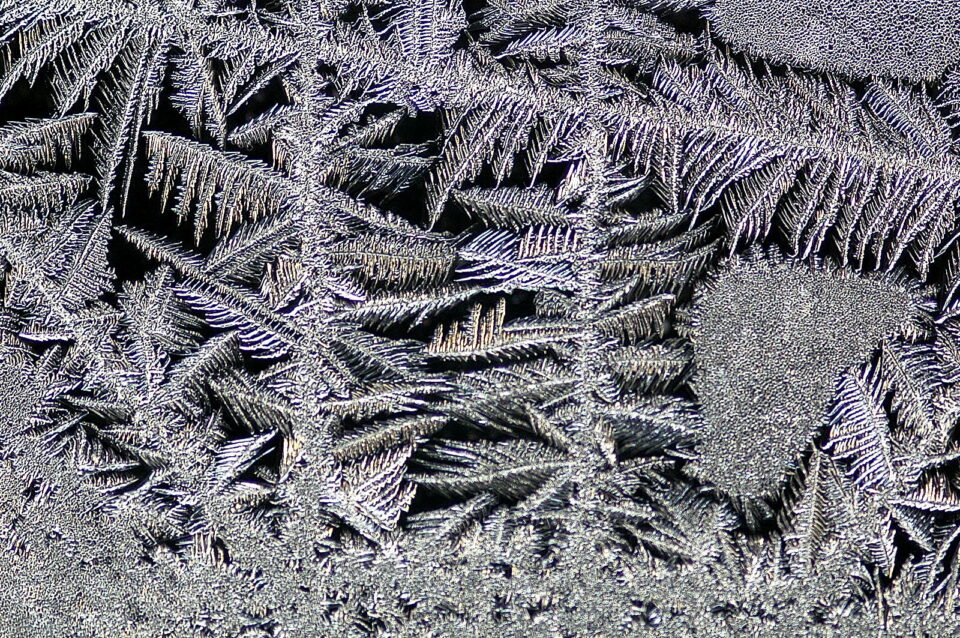
After a cold winter night, when you open the curtains or pull up the blinds, it’s a bonus to see delicate artwork of window frost ice. The images look like an artist with a fine brush has drawn feathering lines of trees, leaves, flowers, or even fern forests.
And when one takes time to further explore the winter environment, there’s an eclectic array of ice formation art outside. Mostly, it’s all free. Here’s a glimpse of some formations in nature’s winter ice gallery.
For starters, the window frost ice art happens when the outside pane of glass is exposed to very cold air while there is warmer, moist air on the inside. The result is creations of elaborate patterns of ice crystals that grow and branch out along the window glass, affected somewhat by slight imperfections on the window’s surface, such as dust.
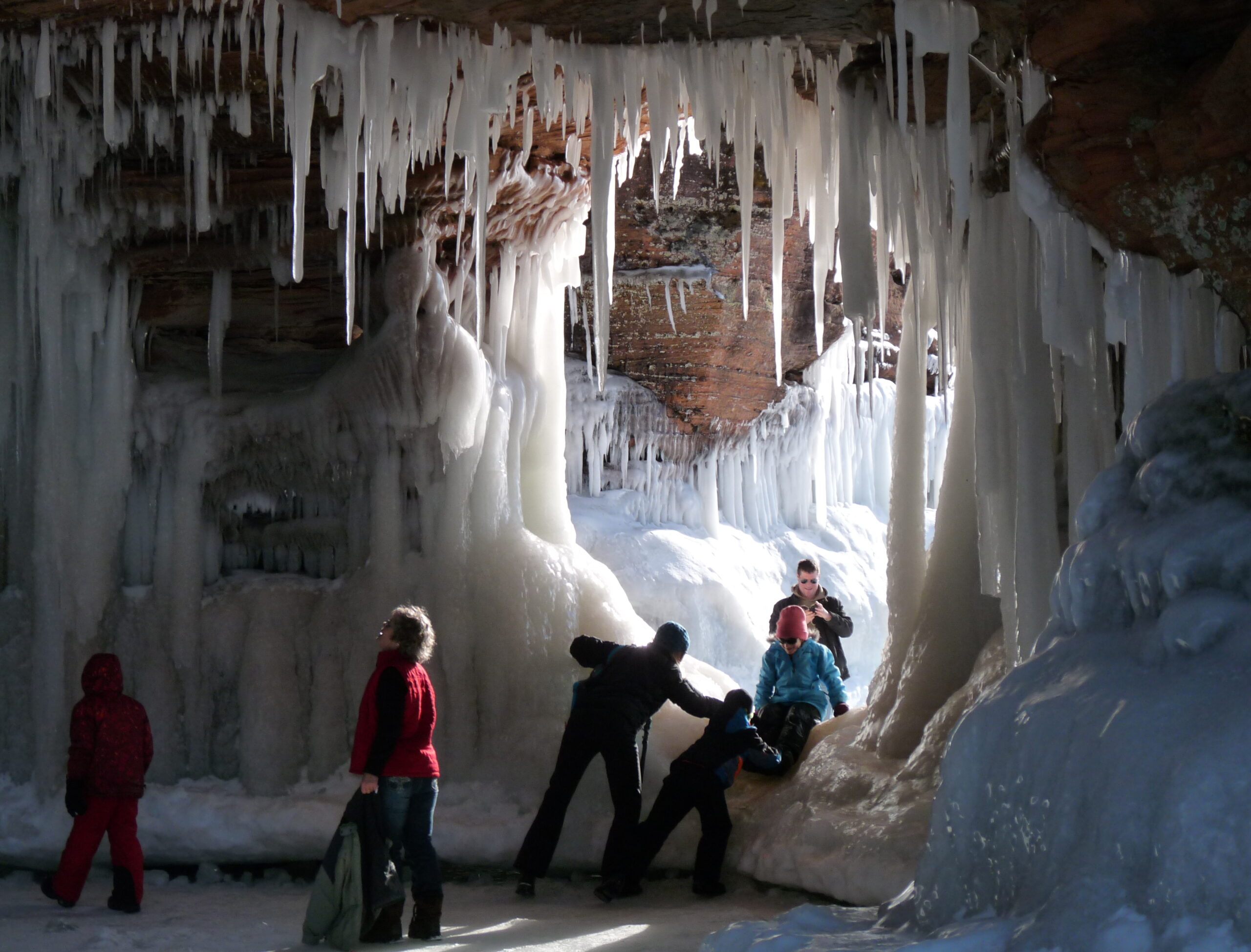
Among the most dramatic ice formations are shimmering “ice caves.” These magical spectacles usually form on mainland cliff faces, where a combination of wind, temperature, and crashing waves of cold waters splash and freeze in layers, creating intricate ice formations that look like caves. What’s inside the ice caves? There’s a fairy-tale scene of ice columns, arches, icicles, and chambers. Nature’s colours of blue, green, and white glimmer through layers of clear ice, the cave walls, and columns. There may even be a frozen waterfall to admire. Among the most famous sites on Lake Superior are along the lake’s north shore near Nipigon, Red Rock, and parts of the Lake Superior National Marine Conservation Area, as well as Wisconsin’s Apostle Islands. In 2019, The New York Times included Superior’s ice caves as one of “52 Places to Go.”
Spikey ice crystal formations called “ice flowers” can appear suddenly when freezing mist (water vapor) escapes through cracks in the thin layer of surface ice on rivers, lakes, and wetlands. A natural phenomenon in places such as Alaska, Canada, Norway, and the Antarctic, the delicate ice crystals are so fragile that even a slight breath of wind can damage them.
Fairly common in winter on Lake Superior and the other Great Lakes is “pancake ice,” circular ice discs with raised edges floating in the water. When temperatures drop to freezing, layers of slushy ice and tiny ice crystals (frazil) begin to form on the water’s surface. They get tossed around by waves and winds, forming them into flat, round circles resembling icy lily pads. As the pancake ice thickens, the discs collide, rotate, and bump into each other, and the edges get splashed with freezing water, creating raised rims. If you listen closely, you might hear the faint sounds of nature’s symphony as the ice circles tap against each other, making a unique rhythmic sound. Pancake ice can range in size from about a foot (30 cm) to 10 feet (3 metres) and can appear throughout winter.
Did you know there’s also a type of ice that combines with a fungus to produce “hair ice?” Looking like white candy floss and shaped like fine, silky hairs, hair ice grows on decayed, broken wood branches when temperatures are only slightly below 32°F (0°C).
One of the most surreal winter scenes on the shores of the Great Lakes is a beach full of “ice balls” (also known as “ice eggs”), sometimes numbering in the hundreds. They start out on the surface of freezing water as slushy ice or tiny ice crystals that get tumbled and rolled back and forth by the motion of waves and steady but gentle wind. As they are rolled, water freezes over the balls layer by layer, gradually shaping them into smooth, round, stone-like ice balls. They can also be found at the base of waterfalls. Ice balls can range from the size of a marble to football size, or even larger. For example, in 2016, giant ice balls reached 3 feet (1 metre) in size in Siberia.
One of the most beautiful displays of nature’s delicate ice art is “hoarfrost.” To form, it needs a calm, clear, and cold night with moisture in the air. That water vapor then freezes into light, feathery ice crystals directly onto surfaces such as trees and vegetation, creating a stunning winter scene with a white-hair kind of look. Rime ice is similar to hoarfrost but forms under foggy or cloudy conditions and is heavier and denser than hoarfrost.
And there are plenty more forms of ice masterpieces to find in nature’s winter gallery, such as carrot-like ice daggers, ice pellets, trumpet icicles, sand hoodoos, ice bubbles, frost flowers, rabbit ice, ice ridges, ice volcanoes, ice rosettes, and more.