
The Midwest Ice Racing Association (MIRA) has become a mainstay of winter in the Northland. Founded in 2011 to give children and adults an opportunity to thrive in a welcoming ice racing environment, the association has grown into a series of weekend races that bring together riders, families, and volunteers throughout the coldest months of the year.
Dalton Mains, the owner and operator of MIRA, has been part of that world for almost his entire life. “I started at about 5 or 6 years old,” he said. “When MIRA began in 2011, I started racing with them.” As he got older, he took on small tasks to help promote the races. When founders Denny and Diane Almer decided to step back, they asked if he wanted to take the reins.
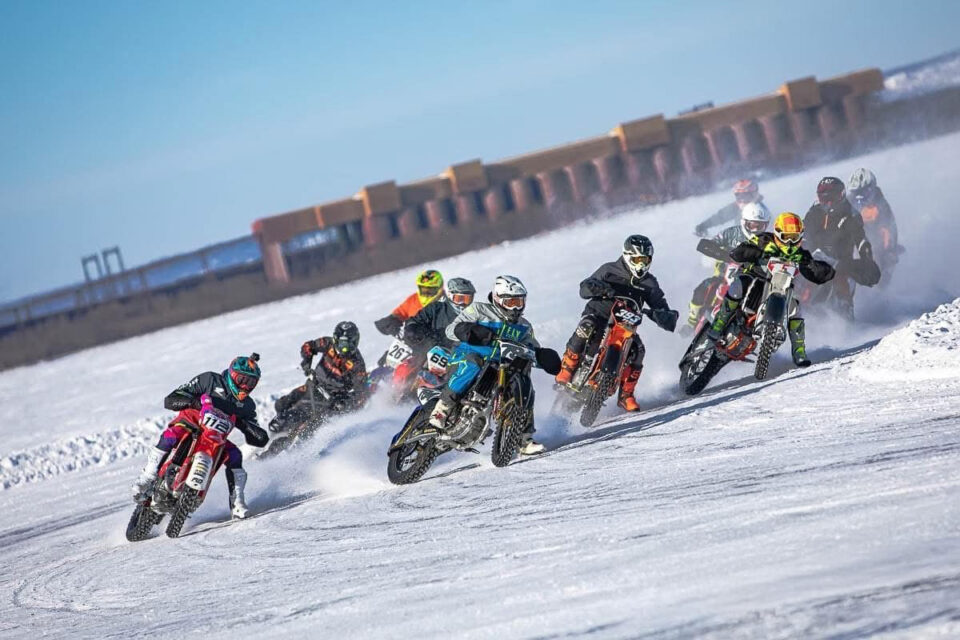
Today MIRA runs a wide range of classes: four-wheelers, dirt bikes, side-by-sides, and a newer division for motorcycles with studded or non-studded tires. The range of ages is even broader. “We have kids who are 4 or 5 years old, all the way through racers in their 70s,” Mains said. “Not very often is it 30 below and you see 300 to 400 people with smiles on their faces.”
Most of MIRA’s races take place on Barker’s Island and on Allouez Bay in Wisconsin. “Gates open at 7 a.m., and people start rolling in with their trucks and trailers,” Mains explained. Riders warm up at 8:30 a.m. with a few laps around the track before gathering for a quick safety meeting. Racing begins at 10 a.m. and often goes until dark. “It’s a full day of fun and adrenaline,” he said.
Of course, all of it depends on ice. “We drill a bunch of holes when we start getting over that 8-inch mark” of ice thickness, Mains said. MIRA prefers 14 to 16 inches before giving the green light. The team must also secure permits from the City of Superior and the Wisconsin DNR. “They want to ensure that everyone is safe and doing it safely,” he said. Even with solid ice, caution is always part of the equation. “Ice is never considered truly safe, so everybody takes extra precautions,” like parking farther away from each other.
Despite the extreme conditions, ice racing remains a quintessential Midwestern pastime. “Everybody thinks of racing in the summertime with nice weather,” Mains said. “But we race through the long cold winter months when no one is doing anything.” Events run almost every weekend, and the races encompass all levels. In the kids’ classes, Mains joked, “They’re just tooling along on their Sunday drives.” The pro class is a different story: racers can hit 70 to 80 miles per hour on the ice.
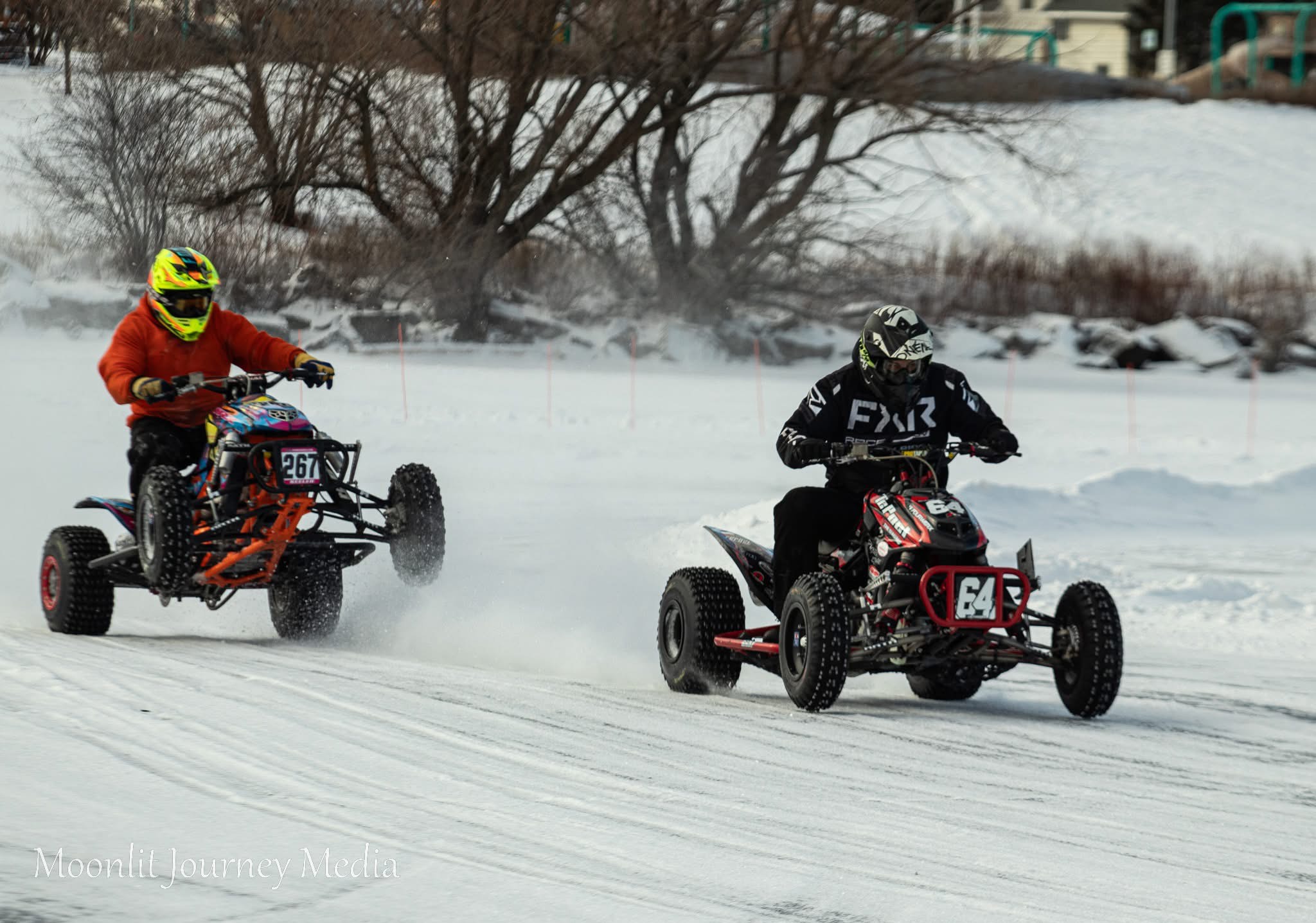
The association has grown dramatically since its early days. “When MIRA started, it started with one event,” Mains said. Interest surged, and soon there were four events, then six. Now, racers compete nearly every weekend in January and February, and interest continues to grow. Running each event requires about 20 to 30 volunteers. Mains oversees the overall operation: planning events, building the tracks, promoting the series, and ensuring safety. “I build the tracks about a mile long,” he said. “We keep everyone spread out, not bunched up, with safe corners. We want to see everyone go home with 10 fingers and 10 toes.”
To date, MIRA has never had the ice break beneath an event.
Marketing is simple: “Social media and word of mouth are the best advertising we get,” Mains said. MIRA communicates through Facebook, Instagram, and a weekly newsletter with updates on planning, weather, and meetings. MIRA collaborates with ice racing groups in central Minnesota and central Wisconsin to coordinate larger events and keep the sport robust throughout the region. “It’s very much a Midwestern thing,” Mains said.
Growing the next generation of racers is one of MIRA’s priorities. “I’m excited for the ongoing growth,” he said. “Young kids and families. It’s cool to see them grow and race every year.” Indeed, family is essential to MIRA’s success. “It’s a family event. It takes my whole family to put it on. My mom, my dad, three of my brothers, their girlfriends and fiancées, all of my friends.”
The Lake Superior Ice Festival remains MIRA’s biggest weekend of the year. Held the last weekend in January in Superior, it features Friday night racing under the lights and a full day of competition on Saturday. Sponsors like Fabick Cat help to support the organization’s capital expenditures, and volunteers plow tracks with pickup trucks or sweep the ice with skid steers to create a smooth racing surface.
The season wraps up carefully as temperatures change. “By the end of February it starts to get warmer, the ice gets wet on top, and the sun starts to beat through,” Mains said. “Some years we could race into March, but we don’t want to risk it.” When he’s not running races, Mains works for Messinne Greenhouse and Landscape in South Range, Wisconsin. “There’s no off-season,” he said.
The momentum built from community engagement has been essential to the success of the organization. As Mains put it, “Give us a chance. Come out one time and check it out; you’ll be back after that.”