

In the world of gaming, who remembers the popular munching hero of Pac-Man (1980) played on Texas Instruments back decades ago? Admittedly, that’s about my last time in the gaming world. But to keep with the theme of “gaming” for this month’s Northern Wilds, here’s a look at the origins and quirks of some sport gaming. (For example, is it true football’s ancient origins go back to China?)
With the Super Bowl having been played a few weeks ago, let’s start with football. American and Canadian football developed alongside, but were independent of each other. While modern-day football was codified in England in 1863, the root of North American football began with the 1874 football game in Montreal, Canada, between the universities of Harvard and McGill. However, the true early development in the game was with football in England, Ireland, and Scotland.
Even though both the U.S. and Canadian football have rugby-like rules, there are differences between the two. For example, Canadian Football League (CFL) teams use 12 players, while the American National Football League (NFL) uses 11. The CFL uses three downs instead of four; football fields in Canada are 110 x 65 yards, compared to the NFL’s 100 x 53 l/3 yards; and NFL goal posts are at the back of the end zone, while CFL goal posts are at the goal line. And while it’s the Super Bowl in the U.S., in Canada it’s the Grey Cup.
And that Chinese connection? Well, in 2004, the International Football Association officially recognized “Cuju” as the earliest recorded form of football, originating in China during the Warring States Period (476-221 B.C.).
One of North America’s oldest organized sports is lacrosse, a contact team game originating with First Nations people going back as far as the 12th century. It’s a sport where players pass, catch, and carry a rubber ball, using sticks with a netted pouch at one end; the object is to shoot the ball into the opposing team’s goal. The Canadian Encyclopedia website notes, “The early versions of the game involved large teams of Indigenous warriors playing over a field that could be over a kilometre in length.”
In the creation of basketball, both the U.S. and Canada can take credit. It was invented by a Canadian named James Naismith, who taught at Montreal’s McGill University until 1890, when he moved to Springfield, Massachusetts, as a physical education instructor at the International YMCA Training School (now Springfield College). That’s where, in 1891, he devised the indoor game of basketball using a soccer ball and peach baskets. Today, according to many lists of top sports, basketball is the world’s third most popular sport.
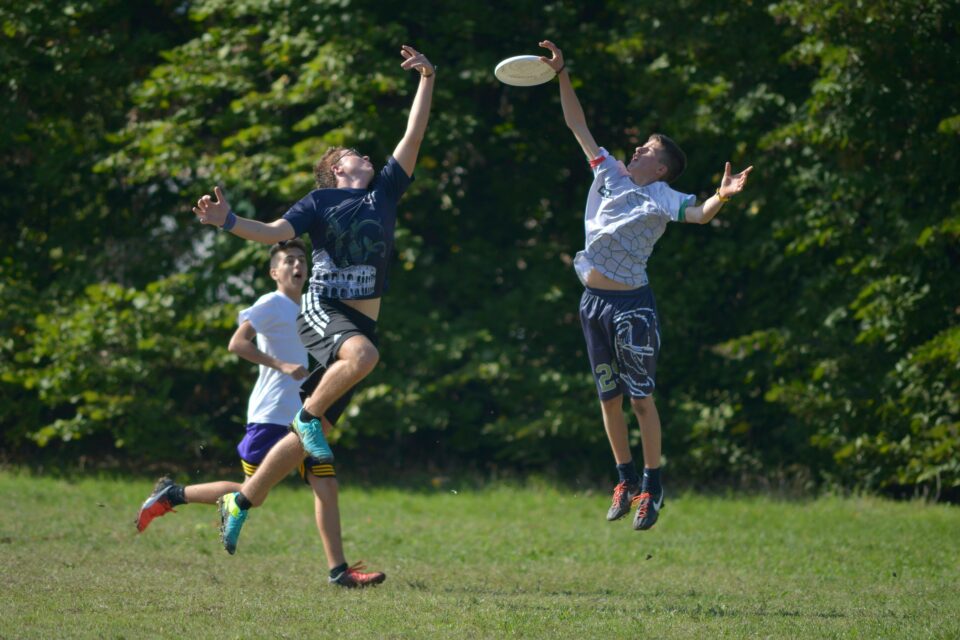
In the mid-20th century, some interesting new sports were created by U.S. innovators, like skateboarding in the 1950s; snowboarding in the 1960s and 1970s; and, in the late 1960s, the sport of “Ultimate” (unofficially Ultimate Frisbee), which is now recognized as a sport by the International Olympic Committee and is eligible for the 2028 Olympics. Ultimate was invented in 1968 by three men from Maplewood, New Jersey. Points are scored by passing the disc (which looks like a Frisbee) to a teammate in the opposing end zone. Latest figures show 7 million players worldwide, with over 5.1 million in the U.S.
Who has played Pickleball? In 2023, there were an estimated 48.3 million players in the U.S. and 1.37 million in Canada. Invented in 1965 on Bainbridge Island in Washington state by three friends—Joel Pritchard (later a U.S. congressman and Washington’s lieutenant governor), Bill Bell, and Barney McCallum—the game has two to four players and is played on a badminton court with a 34-inch-high net, using smooth-faced paddles (like ping-pong paddles) and a perforated hollow plastic ball. According to Pritchard’s wife, Joan, “The name of the game became Pickle Ball after I said it reminded me of pickle boats in crew where oarsmen were chosen from the leftovers of other boats.”
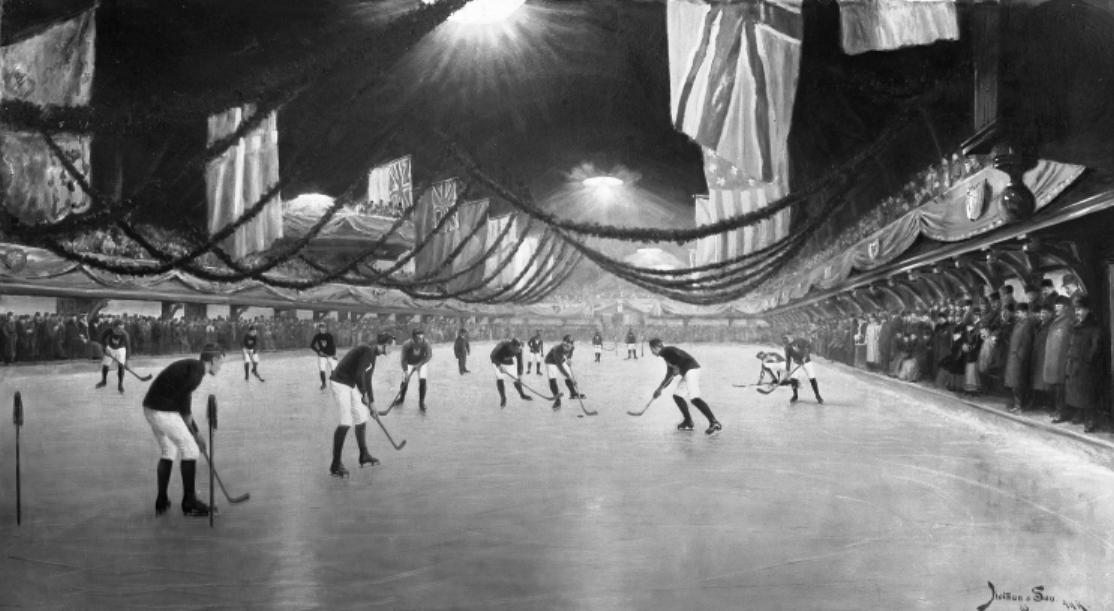
And then there is ice hockey. According to the Canadian Encyclopedia, “the origins of ice hockey have long been debated.” Even so, the International Ice Hockey Federation (IIHF) in 2008 officially declared that the world’s first game of organized hockey was played in Montreal in March 1875.
Modern-day hockey has its roots in the stick-and-ball games documented back to the 14th century, played in the British Isles—in particular hurling (Ireland), shinty (Scotland), and bandy (England). The oldest known use of the term “hockey” is found in the 1773 book Juvenile Sports and Pastimes by Richard Johnson.
So while Canada did not invent hockey, nor was it the “birthplace” of the sport, hockey researchers credit Canada with important developments in the game from the 1870s onward. By the early 20th century, the “Canadian rules” reshaped the game and dominated the international world of ice hockey.