

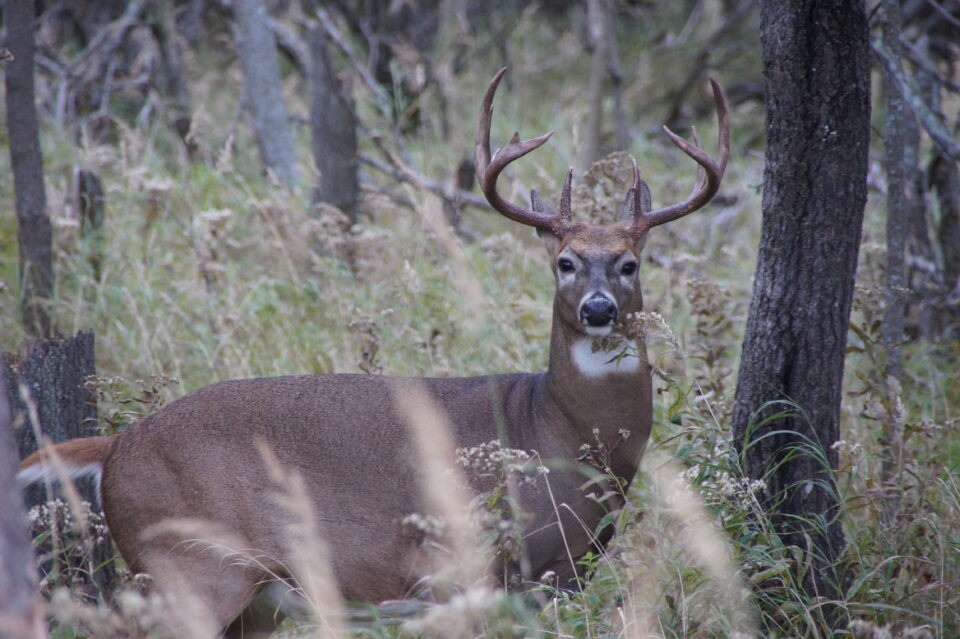
Whitetail deer often seem like a quiet species. Most of the time when we see deer, they don’t make a sound. However, the November rut turns deer surprisingly vocal. This is especially true for mature whitetail bucks. Bucks and does both call, but the male deer also become aggressive, fighting each other with the impressive antlers they grow. These vocalizations and fighting sounds are the calling cards of the whitetail buck.
Several of the truly great bucks I’ve seen harvested responded to a rattle or call. Dominant bucks in the pre-rut and rut period dislike having other suitors in the area. If they hear a buck grunt, they will often come in for a look. In the same way, the crash of antlers is a sure sign that two bucks are in that dominant deer’s space. That big guy may sneak in for a look, or he may come running.
Here is a guide to rattling and calling deer, and when it’s best to just stay quiet.
Rattling
Bucks spar with each other as soon as the velvet is off their antlers in September. The sparring starts tentatively, but by the time late October and November roll around, they are really battling. Buck fights are often swift, noisy, and can lead to wounding. The sound of antlers clashing is also loud and distinct. This is the sound you want to mimic when rattling in the bush.
You can use real antlers that have been taken from a harvested buck to rattle, or a variety of artificial antlers that sound similar to real ones. My preference is to use a bag of round sticks in mesh called a “rattle bag.” These bags are portable, light, and work very well.

The key is to emulate the sound of the bucks crashing antlers together. If you have a set of real or artificial antlers, try tickling the antler tips together before clashing the antlers with some force. With a rattle bag, roll the bag in your hand. Start light, and then go harder. I’d rattle for no more than a minute or two, and then wait about 20 minutes. Watch and listen for movement, or for the sound of an approaching buck. Sometimes the bucks will run right in, but more often they will sneak up silently for a look. If you don’t get an initial response, do another set of rattling, and then watch for another 20 minutes.
Calling Deer
Deer can make a variety of vocal sounds during the rut. The two main types of calls hunters use are doe bleats and buck grunts.
The bleat is a sound made by a doe or fawn. It is a pleading and plaintive call, not unlike a lamb. There are some mouth calls that can make this sound, but “bleat cans” work well and are compact. These can calls require that you flip them over, then back up to make a sound. A weighted diaphragm slides down and forces air out of the can. It is not loud, but a buck can hear it from quite a distance.
My last really good buck came in to that sound, like it was on a string. I knew it was bedding down back in the woods, off a field. At first light, I started making very soft calls and increased the frequency about every 15 minutes. An hour after first light, the buck showed right on the tree line—that was a mistake on his part.
For bucks that see a lot of hunting pressure, the doe bleat is extra effective. Generally, a couple soft bleat calls in a row is all that’s required. Occasionally, a doe may answer the call. Both bucks and does will be attracted to it if they are in the area and curious.
The mature whitetail buck has a number of vocalizations, but the majority are variations on a grunt. During the rut—the peak breeding period for deer in November—it’s not uncommon for bucks to walk through the woods grunting non-stop. At other times, the buck will use a single loud grunt as a threat to another buck. Commercial grunt tubes can mimic these sounds well.
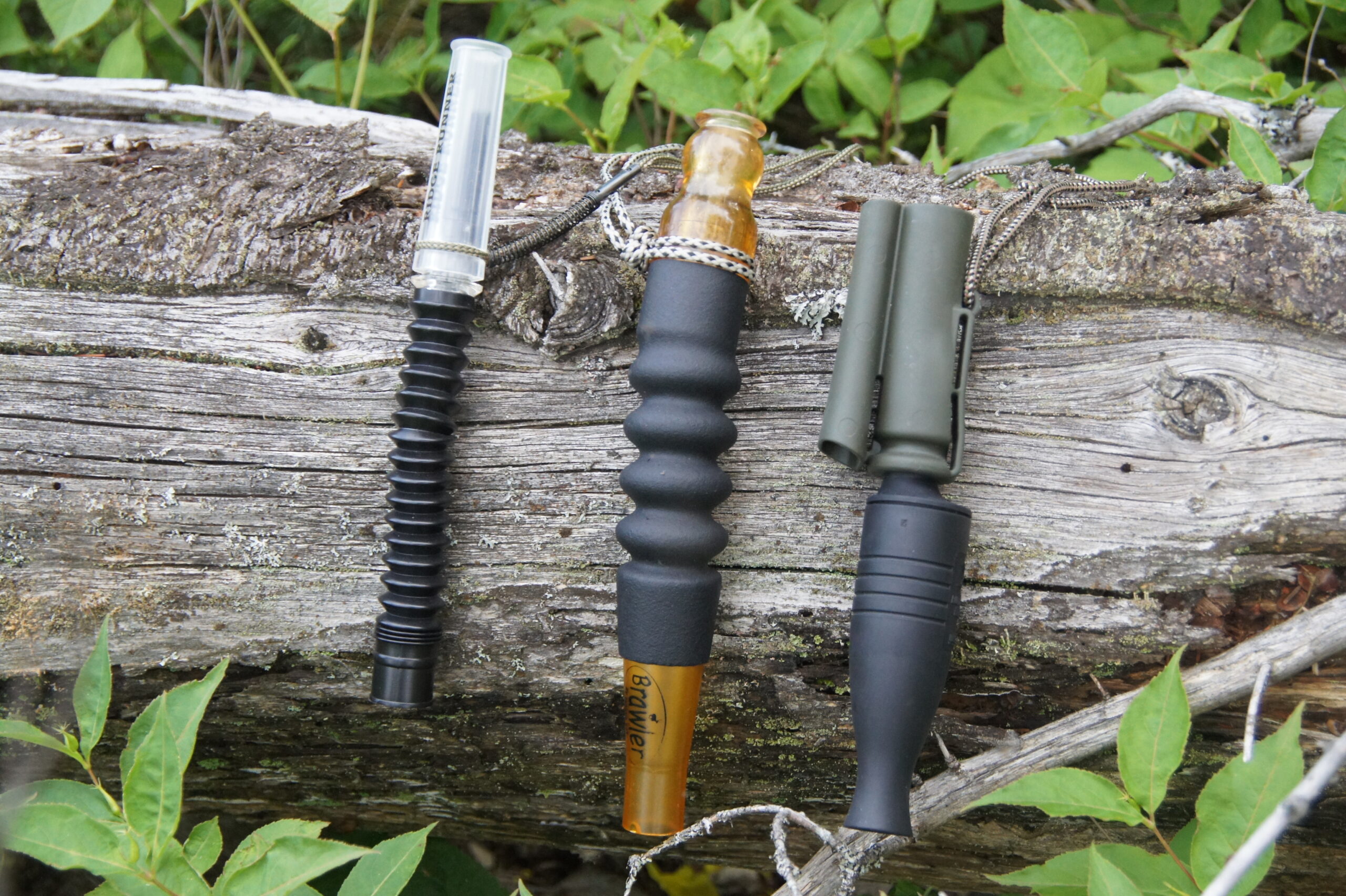
There are no hard and fast rules about grunting. I’ve found less is generally more with grunts, and I usually do two or three soft grunts in a row, and then stop. Occasionally, I’ll mix some grunts in with rattling. I’ve always had better luck with a thinner-sounding grunt that mimics a younger animal. The deep, throaty grunts sound good, but seem to intimidate all but the largest animals. I prefer to see more deer when possible and pick a suitable buck. Most of the time, any decent buck is just fine with me—you can’t eat antlers.
Staying Quiet
There are times when just being quiet, listening, and watching is the best bet. If bucks are chasing does, or if you are very close to animals, it is often best to just sit tight and be silent. If you hear an animal approaching, stop calling or rattling. Footfalls in the leaves or snow coming toward you are a sure sign that you have a buck’s attention. However, if a buck appears and you don’t have a shot, try a soft doe bleat or grunt. That soft call may be enough to make it walk out into the open or present itself in a better way. Trust your instincts.
Rattling and calling is an important part of the deer hunter’s arsenal. Don’t be surprised if the largest buck of your life shows up when you least expect it.