
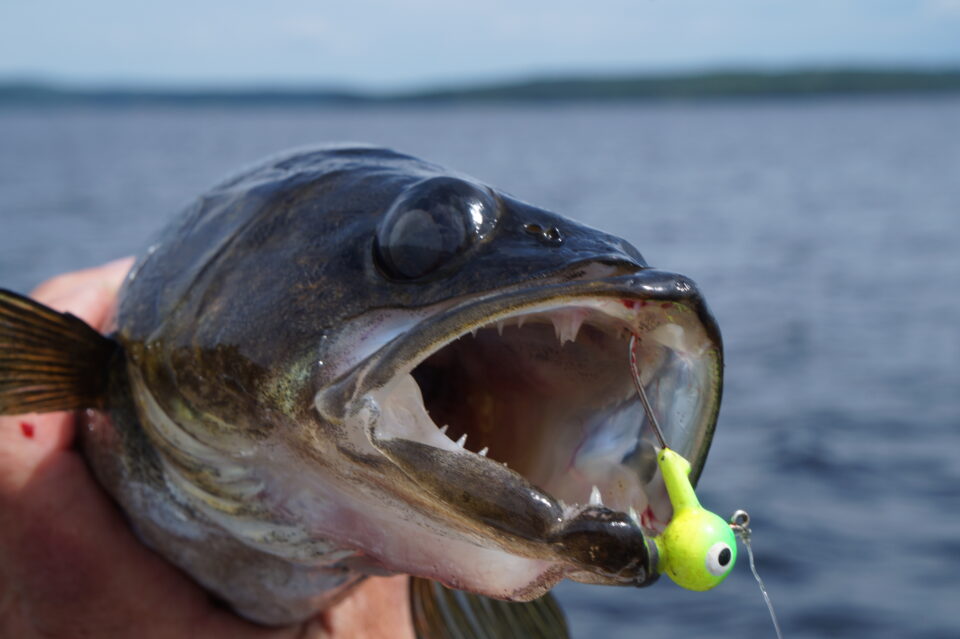
Walleyes are the favourite fish of anglers on both sides of the border between the United States and Canada. They are fun to catch, relatively widespread, and very good to eat. There are many ways to catch walleye, but no technique is more basic—and consistently effective—than jigging. Here is a look at the basics of jigging for walleye.
Jig Head Basics
The traditional jig head is a ball of lead with a hook protruding from it. The round jig head works very well in many conditions and is especially effective in lakes or low-current areas. Bullet-head jigs are more streamlined and track more easily in current and through grass and weeds. Stand-up jigs have a flat bottom that allows them to sit on the lake floor while the bait is presented on the hook above it. Banana-head jigs have an erratic flutter when jigged and are also good for dragging.
Some jig heads incorporate a small spinner that rotates when jigged. This adds extra vibration to the jig. The Whistler jig is the best-known commercial version of a spinner jig, although there are many others. Vibrating or rattling jig heads work especially well in dark or stained water.
Vertical Jigging
The most straightforward form of jigging is done vertically, usually below a boat. This technique works both in current and in lakes. It is effective for deep fish and when they are shallow.
The basic vertical jigging technique requires anglers to drop a baited jig—either live bait or plastic—to the bottom, then give the jig motion by lifting the rod tip up and down. Less jigging action is generally better than more, but the fish will let you know what works best. Start with a gentle lift-and-drop motion and work toward something more aggressive if needed. There are times when vigorous jigging action will trigger walleye, but more often a subtle presentation works best. Sometimes, just sitting in a rocking boat on a lake or river will impart enough action to the jig.
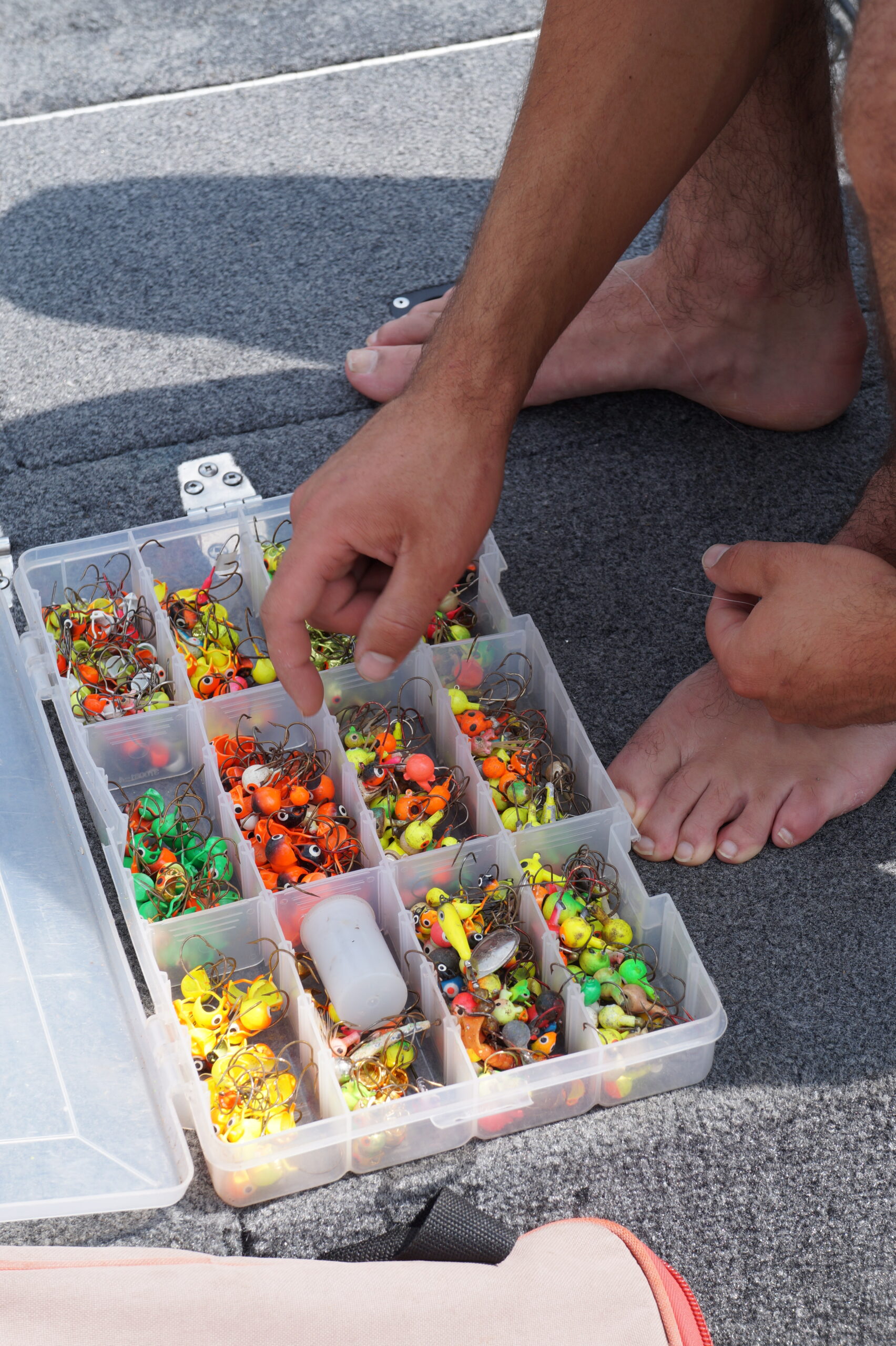
A 1/4- or 3/8-ounce ball-head jig is the standard for most walleye jigging. Longer-shank hooks work well on jigs with plastics, while shorter-shank hooks on jigs—like the Northland Fireball—get the nod for live bait. A lighter jig is better in shallow water. Heavy jigs are used where the current is strong and you need to reach the bottom fast.
Keep in mind that walleye suck in a jig, and the heavier the weight, the more force required to inhale it. Heavy jigs can equal missed strikes, especially with smaller fish, as they sometimes can’t quite get it in.
You can use a variety of rod-and-reel combinations for vertical jigging, from short ultralights to longer medium-action rods. Some walleye anglers prefer monofilament for vertical jigging because the stretch of the line adds a little cushion. If you use braided line, I highly recommend adding 18 inches of monofilament or fluorocarbon line as a leader. This allows some strike absorption and flex while fighting a fish.
Bait or Plastic?
The most basic presentation a walleye angler can make is live bait on a jig head. Minnows are generally the go-to bait. The bait will last longer when hooked through the nose and will have the most action.
Worms are very effective for walleye, especially as the water warms. A full nightcrawler can be used by hooking it directly onto the jig through the centre of the body. This allows both ends of the worm to wriggle enticingly. Pieces of worms can also be added to a twister, grub, or other plastic. Leeches are fished with the hook point directly through the sucker end, providing maximum wiggle from the leech.
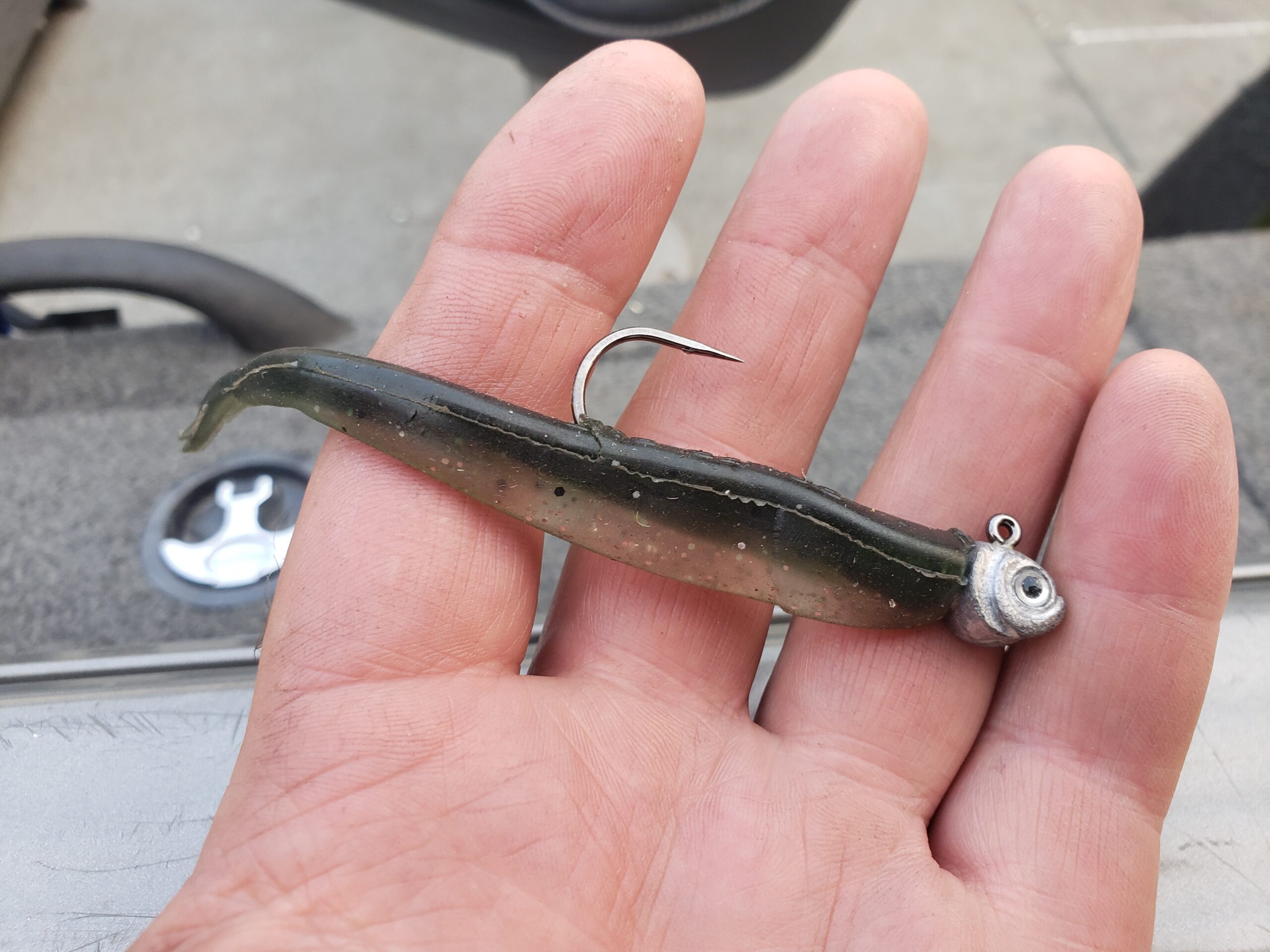
The classic twister body has never gone out of style when jigging. The body section is threaded onto the hook, allowing the tail to roll and vibrate. Some anglers are unsure whether the twister “curve” of the tail should be above or below the hook point. Although there is no wrong way to rig it, having the curve above the hook can sometimes lead to the tail getting fouled on the hook.
Minnow-imitating plastics have become a huge part of the walleye fishing game. There are a remarkable number of minnow baits to pick from, and they all have an application. Straight minnow- or shad-style baits don’t have much inherent action, but they have the correct profile. Paddle tails have a wobbling action that works best when cast and retrieved steadily.
I prefer a larger-gap, high-end hook and a jig head with a realistic eye. The Northland Smeltinator head has been my go-to for some time. If I were forced to choose one fishing presentation for all species, it would be a scented rubber Berkley Power Minnow and a 3/8-ounce Smeltinator with a 3/0 or 4/0 long-shank hook.
Does Jig Colour Matter?
Jig-head colour is something a lot of walleye anglers take quite seriously. Even a quick glance at a tackle store wall shows that bright colours are top sellers. Chartreuse, flame red, orange, pink, yellow, and fire tiger dominate the market. You will also see a lot of glow or UV paint on jig heads, which work especially well in dark water. In clear water, I tend to use more silver and gold- or bronze-coloured heads. Have a selection of colours, and don’t be afraid to experiment.
Jigging is a key part of any walleye angler’s arsenal. Use these basic guidelines this summer, and you may find yourself eating fried walleye a lot more often.