

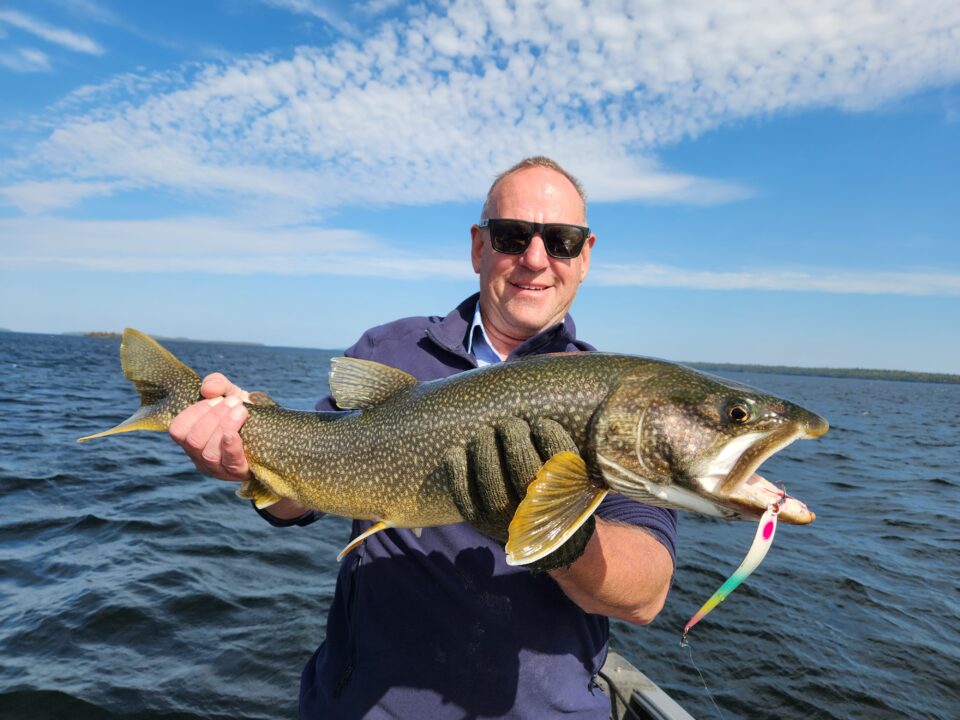
There might be some discussion about what the best lure presentation is for brook trout, walleye, pike, or muskie. But when it comes to lake trout, few people can argue with the effectiveness of a spoon. The flash, wobble, and pulse of a spoon are usually too much for even the grumpiest lake trout to ignore. Here are three classic spoons you should have in your lake trout tackle box, and the best ways to fish them.
Williams Wabler
As lake trout spoons go, the Williams Wabler is genuinely iconic. It features a beautifully simple design, with a wide wobble and strong pulse. My late grandfather, Ora F. Ellis, was the first angler I ever saw use a Williams Wabler. He swore by them for wire line trolling and kept each one buffed up and shiny. His favourite Wabler featured the silver finish, although he had enough gold/brass Wablers to convince me to have both on hand at any time.
The Williams Wabler is primarily known as a trolling spoon, and it really does shine when fished under power. I prefer a slow speed when trolling Williams Wablers—like 2 mph and under—as this seems to accentuate the wobble and flash of the spoon. If you troll too quickly, the Wabler may spin, which can create line issues. Always check your spoon in the water at the boat side to make sure it is running well at the speed you will be trolling. This simple habit will save you a world of grief.
Although you can certainly troll a Williams Wabler behind a downrigger, I’ve always found this classic spoon shines via line-direct trolling methods such as lead core, wire, three-way, or weighted flat line. The Williams Wabler is a go-to for flat line trolling with a heavy banana weight or three-way rigging in particular. The Wabler is also one of the spoons that seems to catch big trout when others don’t. I suspect the larger surface area creates a profile that looks like a herring or small whitefish, and that is what trophy lake trout like to eat.
You can also cast a Williams Wabler, particularly the smaller sizes. They are a great lure when trout are up on the tops of reefs or cruising the shoreline in the spring. Once again, a slower retrieve will bring out the wobble.
Lucky Strike Canoe Wobbler
The Lucky Strike company has a lot of great, classic spoons, and they nearly all will catch lake trout. However, when it comes to consistency, my favourite of all the company’s lures is the Canoe Wobbler. It has a long, fishy-looking profile that is a perfect trigger for lake trout feeding on smelt, shiners, and other thin-bodied baitfish.
The Canoe Wobbler can run at a variety of speeds, from very slow to moderately fast, and it has a tighter wobble than fatter-bodied spoons thanks to its smaller surface area and slender profile. The Canoe Wobbler is also a proven giant slayer. I was first introduced to the Lucky Strike Canoe Wobbler by a charter captain on Lake Nipigon about three decades ago. When I got onto the boat, every rod had a very large Canoe Wobbler rigged on it. When asked why he chose to run only this lure, his reply was, “because I like to catch big fish.”
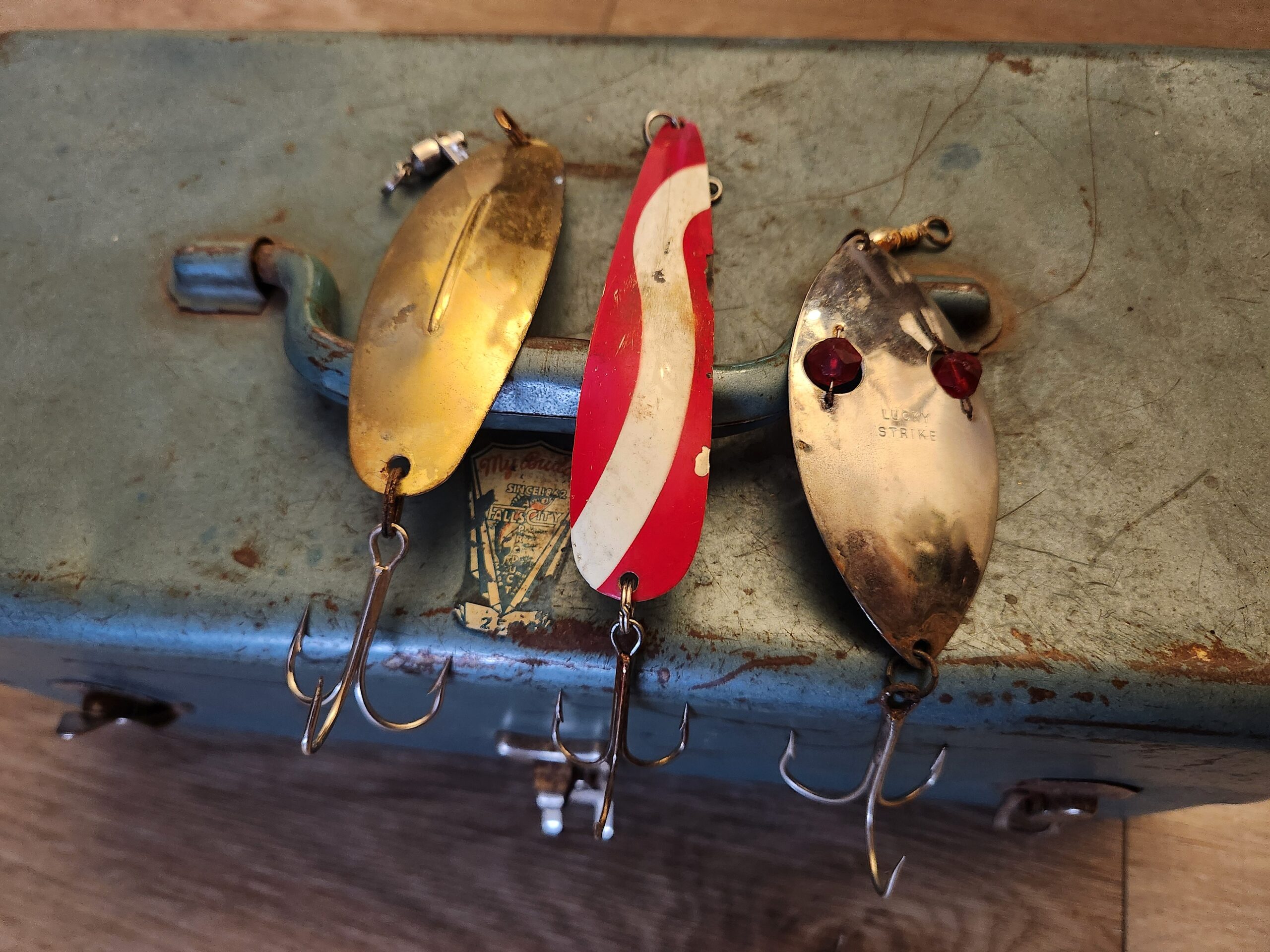
That day was an eye-opener, as several lakers topping 20 pounds were put into the net and many in the mid to high teens. The fish-catching abilities of the Canoe Wobbler were proven, and I’ve had some amazing catches with them since. The silver finish is a standard bearer and is tough to beat. However, the very traditional red and white with a silver back has proven itself many times, as has the pearl with a red dot near the hook and silver finish. The 5-inch Canoe Wobbler is my most-used size for trolling lakers, but for the mega giants, use the 7-inch.
Red Eye Wiggler
There are very few lures quite as recognizable as the Red Eye Wiggler. The one I have used the most is made by Eppinger, although Lucky Strike makes the very similar and equally effective Ruby Eye Wiggler (Red Flash). Through the years, I’ve acquired several old-school tackle boxes that were originally owned by lake trout anglers. One constant is the presence of one or more Red Eye Wiggler spoons. Some of them are silver spoons, some are bronze, but they all have those prominent red eyes.
The eye, which can be made of glass or plastic, catches the light and gives the appearance of a distressed prey fish and blood. Although the Red Eye is not as consistently used these days as it once was, it is still a lake trout catcher. Slow trollers who use wire line or lead core are especially fond of the Red Eye, as it can flutter and pulse at turtle-like speeds.
The Red Eye Wiggler has a unique shape, not unlike a Christmas ornament, with a point at either end. The spoon is also occasionally rigged with a treble hook at either end, as the two red eyes at the front of the spoon can be a target for trout. I’m not a fan of the two-treble set up, as I find it tends to get hooked up on the line, but it does improve the chance of trout hookup.
Silver and gold Red Eyes are the popular choices for lake trout. However, yellow with red diamonds, red/white, and black with a white stripe are also known trout catchers.
Lake trout fishing with spoons is a time-tested way to catch these great sport fish. Try some of the lures named above and have the best season ever in 2026.