

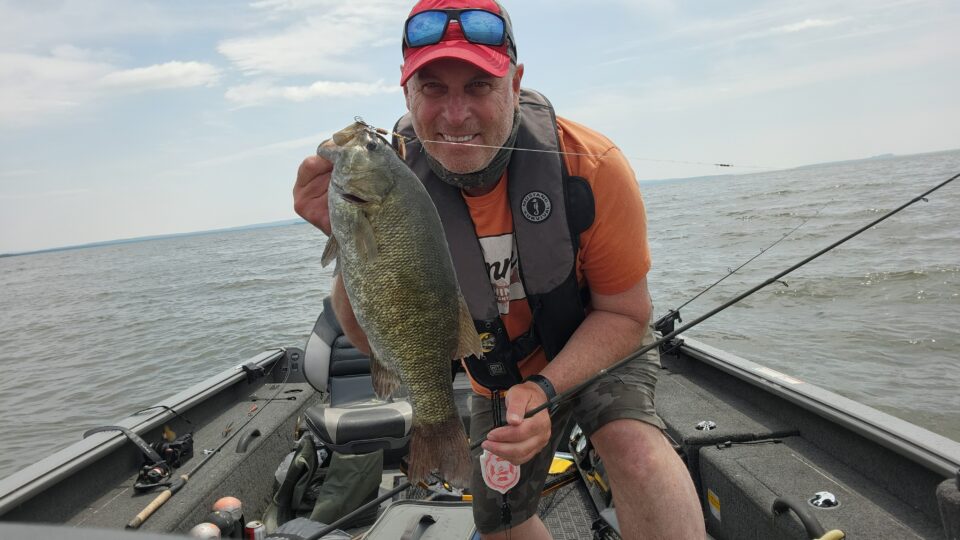
It was one of those mornings you dream of in the depths of February. The water was smooth, the air was warm, and there was nothing on the agenda except fishing. Bass had been exploding on the surface, and minnows were shooting out of the water. As I normally do in this situation, I tossed a topwater lure to the fish, but it was ignored. Anxious to cash in on the action, I cracked open a Plano container and saw a selection of Mepps Aglia spinners. The silver-bladed #4 looked to be about the right size and would make some flash. The spinner was cast out towards where the bass were making mayhem and then slowly reeled, causing the blade to spin and shine. The first retrieve was met with a hard strike, which was followed by a cartwheeling bass that immediately threw the hook. The second cast made it a little further before another smallmouth inhaled it. This fish stayed deep, and after a good tussle, I managed to bring the 3-pound bass to my hand. For the next hour, I hooked a variety of bass, all of them crushing that spinner with reckless abandon. The classic in-line spinner had saved the day again.
Historically, not much is said or written about in-line spinners for smallmouth bass. This is unfortunate, as when it comes to covering water and triggering strikes, the spinner is right up there with the best lures. Spinners are a lure that tournament anglers quietly throw when everyone else is fishing crankbaits or plastic. In lakes where minnows are a primary forage, spinners may be one of the very best choices.
Why a Spinner?
There are very few situations you will encounter where a spinner won’t produce. For instance, when bass are shallow or on the prowl, the spinner covers water and attracts fish with equal power. The vibration and pulse of a spinner blade can be felt by bass from a long way off. The movement of the blade spinning around the shaft of the spinner sends out vibrations that bass feel through their lateral line. This vibration can be even more intense if it’s emitted from a more concave spinner blade, such as those found on the Panther Martin. That sonic signal is a dinner bell for bass. A double-bladed spinner, like those on some EGB spinners, is another way to draw extra attention. When bass are holding in deeper water, a spinner worked more slowly and deliberately can draw fish up. Bass in currents are also very susceptible to spinners, as the flash and buzz of the blade as it washes by will often trigger a strike.
While the French blade and Sonic blades are perhaps the most familiar, there are also a wide variety of other spinner blade styles to choose from. The Indiana blade is a longer, narrower blade and has a tighter spin than a French blade. Indiana-blade spinners can be fished deeper and are also great when trolled, as they can spin at a higher rate of speed and stay deep. The Colorado spinner is rounder and will stay higher in the water column, even on a slow retrieve. Having a variety of spinners in several shapes, sizes, and colours will serve bass anglers well.
Spinner Bodies and Dressings
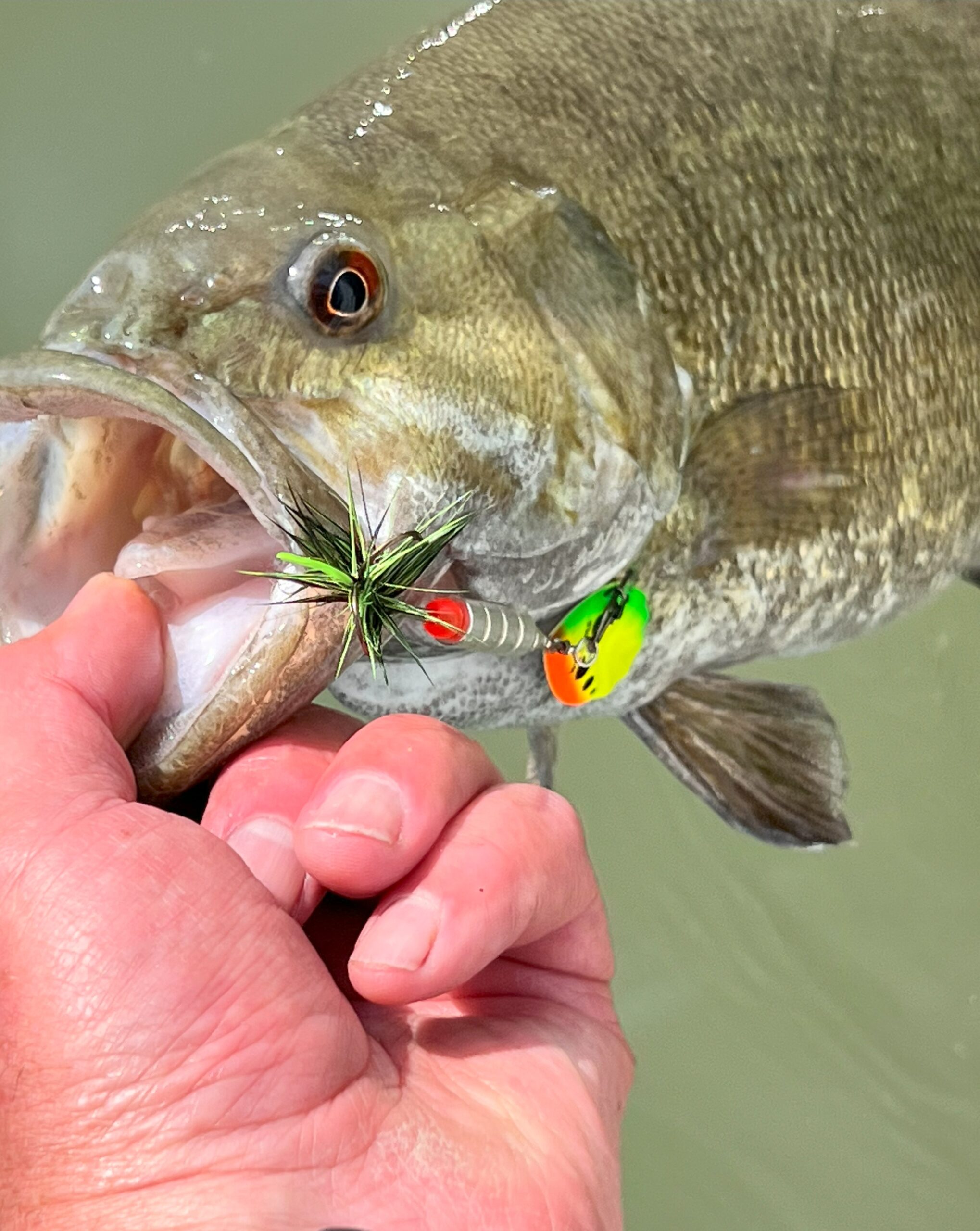
Typically, an in-line spinner has a treble hook on the business end. However, some spinners have fur dressings that add another layer of attraction. On spinners with silver blades, I like a dark dressing when bass fishing. Black and silver look like all kinds of minnows that bass eat, including smelt, shiners, or herring. On spinners with brass blades, brown and red dressings give off a crayfish vibe. Smallmouth have a hard time resisting a fleeing crayfish. There are a few other interesting options, including spinners with silver or gold mylar dressings. This really adds a ton of flash and movement.
Another of my favourites is the classic Mepps Mino. The Mepps Mino is a rubber minnow with a few extra hooks and a fishy profile that has proven itself through the decades. The Mino can be used behind a Mepps Aglia, Comet, or Long Blade for a little extra fish appeal.
Another addition you can make to a spinner is replacing the back treble with a single, long-shanked hook. Some spinners can be purchased with this option, or you can switch it out yourself. Add a rubber twister, grub, or tube to the single hook as a dressing. A single 3- or 4-inch twister is especially deadly on smallmouth when fished behind a spinner. You can change the colour of the twister for even more options, although I find white or black hard to beat. For the ultimate in enticement, a double twister can replace the single twister. There will be a whole lot of movement happening when that spinner works its way through the water column.
Where to Use a Spinner for Bass
Perhaps the most exciting thing a bass angler can see is bass busting minnows. You will see the minnows scattering, oils and bass tails coming out of the water. When fish are scattering baitfish, an in-line spinner run just below the surface will trigger bass like few other presentations. Another place to try spinners is on reefs and shallow rock where bass are digging around for crayfish. A brass, fire-tiger, or orange spinner matches the colour of a craw, as does a similarly coloured dressing. Spinners also work very well over weeds and timber. The physics of the turning blade allows the spinner to ride high and over the top of weeds and structure. It also produces a lot of vibration, which draws fish to the lure.
In-line spinners are an ultra-effective presentation for smallmouth and deserve a place in every bass angler’s tackle box. Try them out this year and be prepared for some arm-jolting strikes.