
One summer activity bird lovers may appreciate is bird banding, where trained naturalists catch, handle, and fasten numbered bands to birds. While exploring the North Shore, consider dropping in to observe summer bird banding events that occur annually at Sugarloaf Cove Nature Center in Schroeder and Wolf Ridge Environmental Learning Center in Finland.
Both centers offer bird banding programs that are part of a long-term research project called Monitoring Avian Productivity and Survivorship (MAPS). Sugarloaf Cove, Wolf Ridge, Hawk Ridge in Duluth, and the U.S. Forest Service all participate in the study, according to the Institute for Bird Populations. The institute plans and organizes the overall project, and passersby of all ages can participate in summer drop-in banding experiences for free.
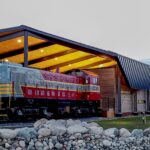
Sue Fuad, co-president of the North Shore Chapter of Minnesota Master Naturalists, highlights Sugarloaf Cove as a great family North Shore stop that offers bird banding opportunities.
“They have regular bird banding programs. And there is a mile-long hiking trail for a short walk,” says Fuad.
“The banding that takes place at Sugarloaf Cove collects data during the breeding season,” says naturalist Dominique Menard. Banding participants can see some changes firsthand, like the appearance of brood patches. These patches are bald spots on the belly of a nesting bird parent (mostly on females, but on males for a few species) that develop so the parent bird can more easily transfer heat to her or his eggs or chicks, according to Menard.
“It’s not something that you’ll see while birdwatching, but if you ever come see the bird banding at Sugarloaf Cove (or elsewhere) you might catch a bander blowing a puff of air on the belly of a bird. The bander is seeing if there’s a brood patch there,” says Menard.
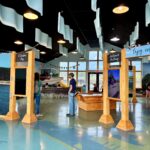
The site’s banding station offers visitors a chance to see what’s happening with the birds at Sugarloaf Cove. Sometimes special programs are even offered that explain more about bird banding and the birds of the area. Junior and seasoned nature explorers alike can drop in to learn more and get the opportunity to ask questions, as well as participate in other fun interactive exhibits and programs.
“If you look on the website, there is a calendar of activities for the summer. It is a unique nature center in that it is also adjacent to a designated Scientific and Natural Area with incredible geology,” says Fuad.
Sugarloaf Cove Nature Center has recently been installing some brand-new exhibits, so check ahead regarding adjusted hours. Beyond that, bird banding is weather dependent. Rainy or windy days may result in cancellation of sessions. So it is a good idea to call the center if in doubt, according to Menard.
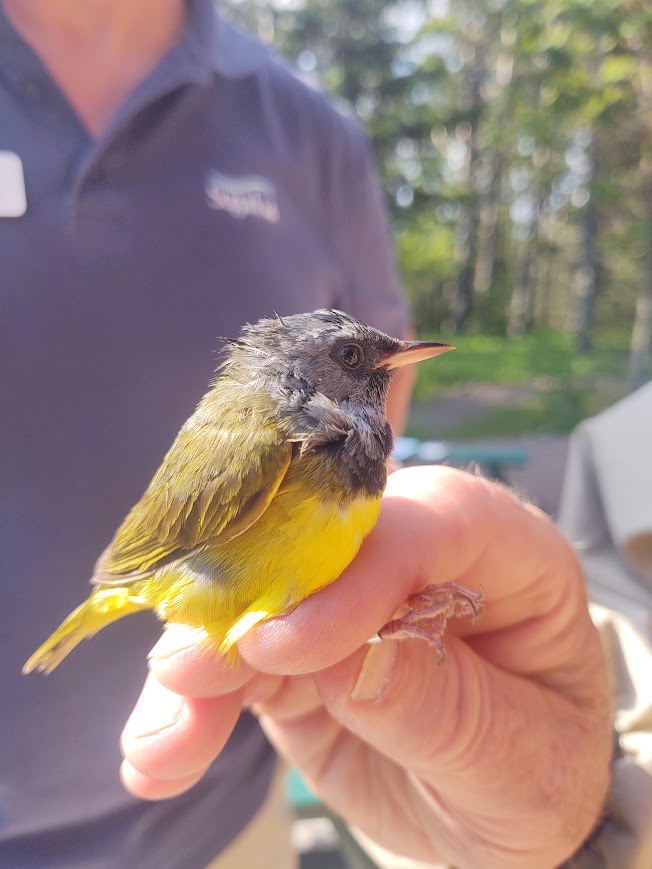
Weather aside, Menard highly recommends bird banding as one family-friendly North Shore activity. “Come to see bird banding at Sugarloaf Cove,” she says.
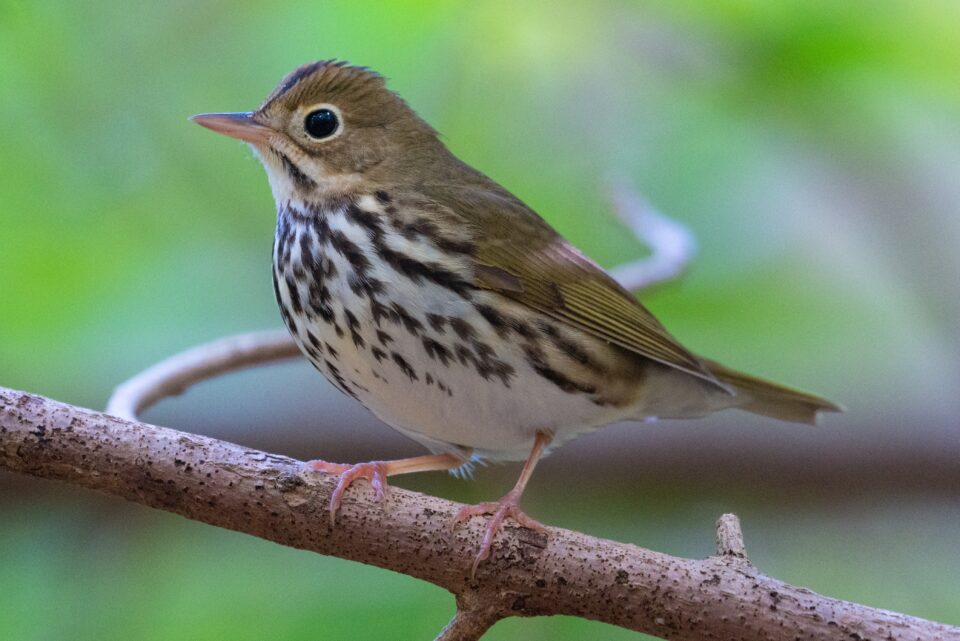
This will be Sugarloaf’s ninth season in the MAPS program, according to the last Sugarloaf newsletter. Last summer the cove’s banders captured and banded 235 new birds of 31 different species. Their top species last summer were American redstarts, ovenbirds, veerys, chestnut-sided warblers, Nashville warblers, least flycatchers, song sparrows, and red-eyed vireos. In particular, American redstarts and veerys return year after year.
Another family-friendly North Shore stop is Wolf Ridge Environmental Center, according to Fuad. Wolf Ridge offers free bird banding drop-ins throughout the summer as well: on July 8, July 15, July 22, and Aug. 5, from 7-11 a.m.
At the Forest Ecology Building (accessible via guest-friendly signage), visitors can observe beautiful migratory birds up close and personal, learn about their health and behavior, explore the banding process itself, and hear about how banding contributes to bird research, according to the center’s website.
Participants will witness bird handlers safely operate mist nets and use appropriate bird-handling skills to gently extract the caught birds from the nets. Attendees can also watch trained handlers identify the birds’ age and sex and record the data using established protocols. After the bird handlers collect data, they release the birds unharmed, according to the institute’s website. Witnessing the birds being released is an exciting experience, as participants get an intimate view of the birds.
As part of MAPS, this kind of bird banding has been taking place at the Wolf Ridge site since 1993, according to the center’s website. Naturalist/Informal Educator Lori Walewski manages Wolf Ridge’s participation in the project, as well as all of the connected bird data. “Bird banding and the associated research is a fascinating and involved process with many intricacies,” says Walewski. Since 1989, MAPS stations across the continent have collected more than 2.5 million sets of bird data connected to the capture and banding process, according to the institute.
Registration is not required for bird banding drop-ins at Wolf Ridge. Like those at Sugarloaf Cove, the programs are available to participants of any age and are weather dependent.
Families can easily incorporate bird watching into a day designed around a bird banding visit at either site. After observing bird banding and watching birds, attendees can also explore the Cornell Lab’s website to learn more about the birds they have seen. Together, these activities make for a well-rounded experience.