“I can think about things better with my hands full,” said Cooper Ternes, walking among his collection of cut cherry, birch, and walnut trees. A wooden bowl maker and Grand Marais resident, Ternes is embarking on a new journey of full-time wood turning.
Raised in St. Paul, Minn., Ternes studied religion and theology at Bethel University, guiding trips in the Boundary Waters when he could. Ternes arrived in Grand Marais in 2010 as an intern at North House Folk School: “At the time, I didn’t have a very clear plan of what I was going to do because nobody does.”
Ternes, who had already been exposed to wood turning through a family friend, embraced the role at North House, from cleaning classrooms to running the pizza oven. “Part of that experience” he said, “was having time and space to pursue craft and be interested in lots of different things and take classes.”
Originally, he thought about moving to Maine or Washington to live near the ocean, but, he recalled, “I just got to know so many good people here that I started finding ways to stay. I never did leave.”
Ternes worked stints with an electrician, in education, and in county social work, making wooden bowls when he could. Many of those bowls stayed in his family, from daily kitchen ware to celebratory baptismal bowls for his daughters. He stayed connected with North House, where he started an afterschool program in woodworking to serve students with whom he worked at ISD 166.
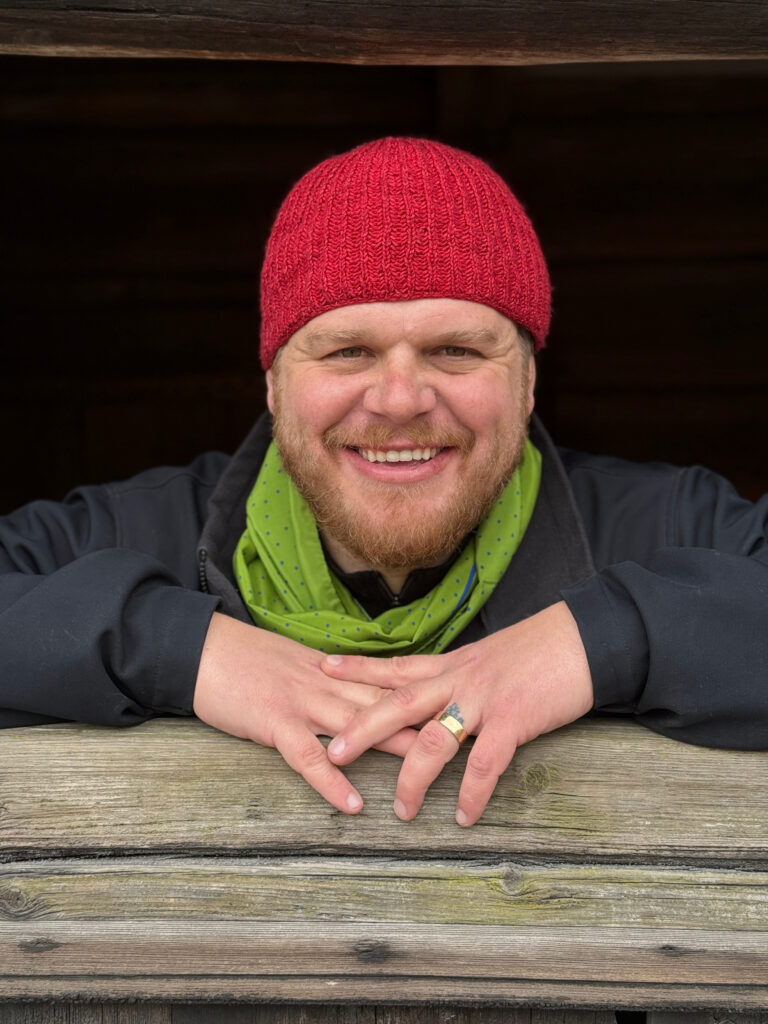
A year ago, the time was right for Ternes to shift to a full-time focus on wood turning. Once again, his relationship with North House was a linchpin, and he was accepted to its highly competitive Artisan Development program, designed to foster the “next generation of traditional craft artisans.”
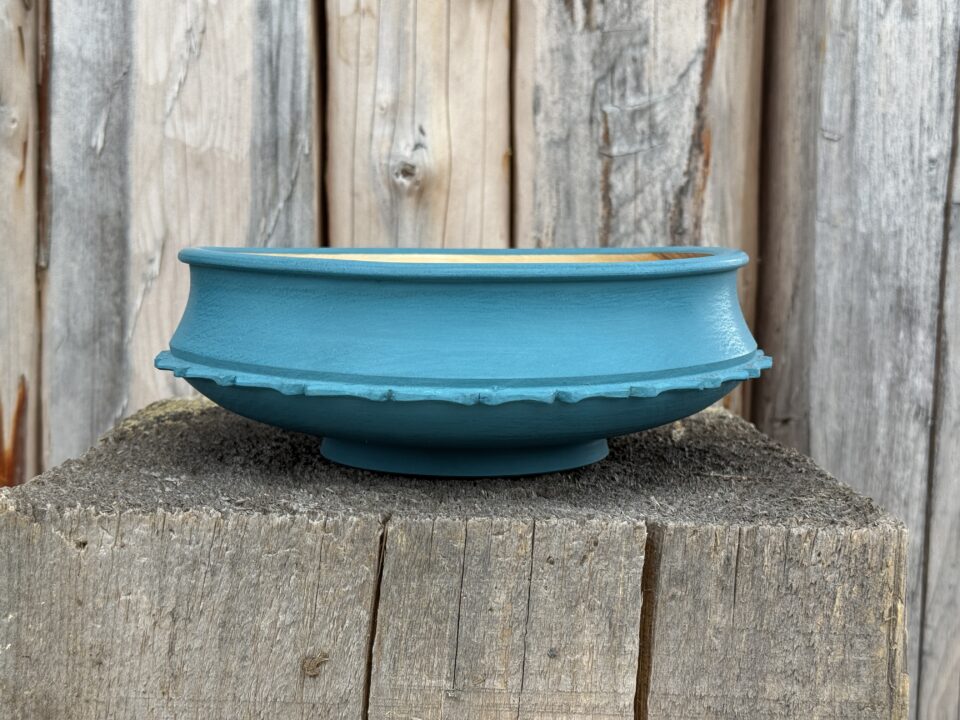
Ternes finds much of his inspiration in projects with a direct connection to his Norwegian heritage. Norwegian ale bowls are a favorite, although he has begun to explore hollow forms, as well.
Ternes’s work is driven by authenticity and focused on functionality. He creates pieces that showcase tool marks rather than a fully sanded surface. “I think of what I do in terms of pottery, the closest analogy as far as the other arts. Some potters use tools to smooth out everything, and that’s their aesthetic. And some people want their finger marks on there. In pottery, I’d be more on the side of leaving finger marks. There’s real honesty to a cut surface that you’re not trying to hide anything or cover up.”
He also wants to ensure that his pieces are used actively and become a part of the daily lives of people who purchase them. His daughters still eat from the Norwegian ale bowls that he carved for them years ago: “The beautiful things that I’ve made are valuable because they remind me of, you know, chubby little hands, holding it and drinking their milk.”
For Ternes, his work is “connecting with people, what we do around the table. Sitting down together and eating is like a very important way that we connect with the world and with each other. I think we have a real problem with having too many things.” Instead, Ternes seeks a different kind of materialism, rooted in surrounding himself and his family with items that have “meaning and beauty.”
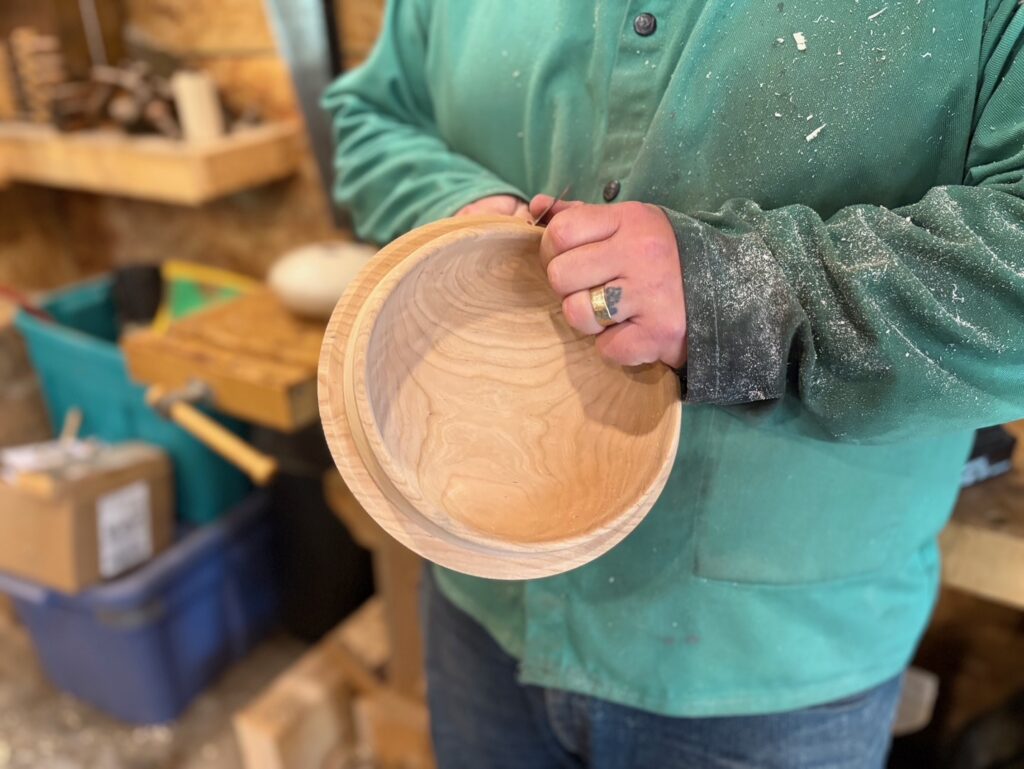
This philosophy extends to Ternes’ tools, many of which he fabricates himself. While his collection is prodigious, he knows the origins of each, pointing out one from North Carolina, another from Sweden, another from Norway. “There’s stories in every drawer, every knife.”
In March, Ternes traveled to Sweden with North House, visiting museums and makers around the country, including at Sätergläntan, North House’s sister school in the Dalarna region. “They have a wonderful library that I spent many hours going through, book by book by book.”
Particularly meaningful for Ternes was the opportunity to meet with the son of Wille Sundqvist, an icon of the green woodworking movement. The conversation, according to Ternes, “really helped me get my head around how to talk about the why [of my work], helped me to figure out how to say what I’m interested in about this—the tradition part of it, not for tradition’s sake, but for connection’s sake.”
In addition to serving as board president for Art Along the Lake, Ternes is preparing for upcoming art shows, including the Grand Marais Arts Festival, the Minneapolis Powderhorn Art Fair, and a holiday festival at the American Swedish Institute.
Even as Ternes’ network expands across the globe, his focus remains on connection: with self, with nature, and with art. “I’m much more connected to the forests as someone who makes things out of wood. [In turning], there’s a meditative quality, where you get into that flow state that everyone is seeking ways to access, and this is how I get to it. Some people do that through singing in a choir or going to church. I feel more personally integrated when I’m turning than almost any other time.”