
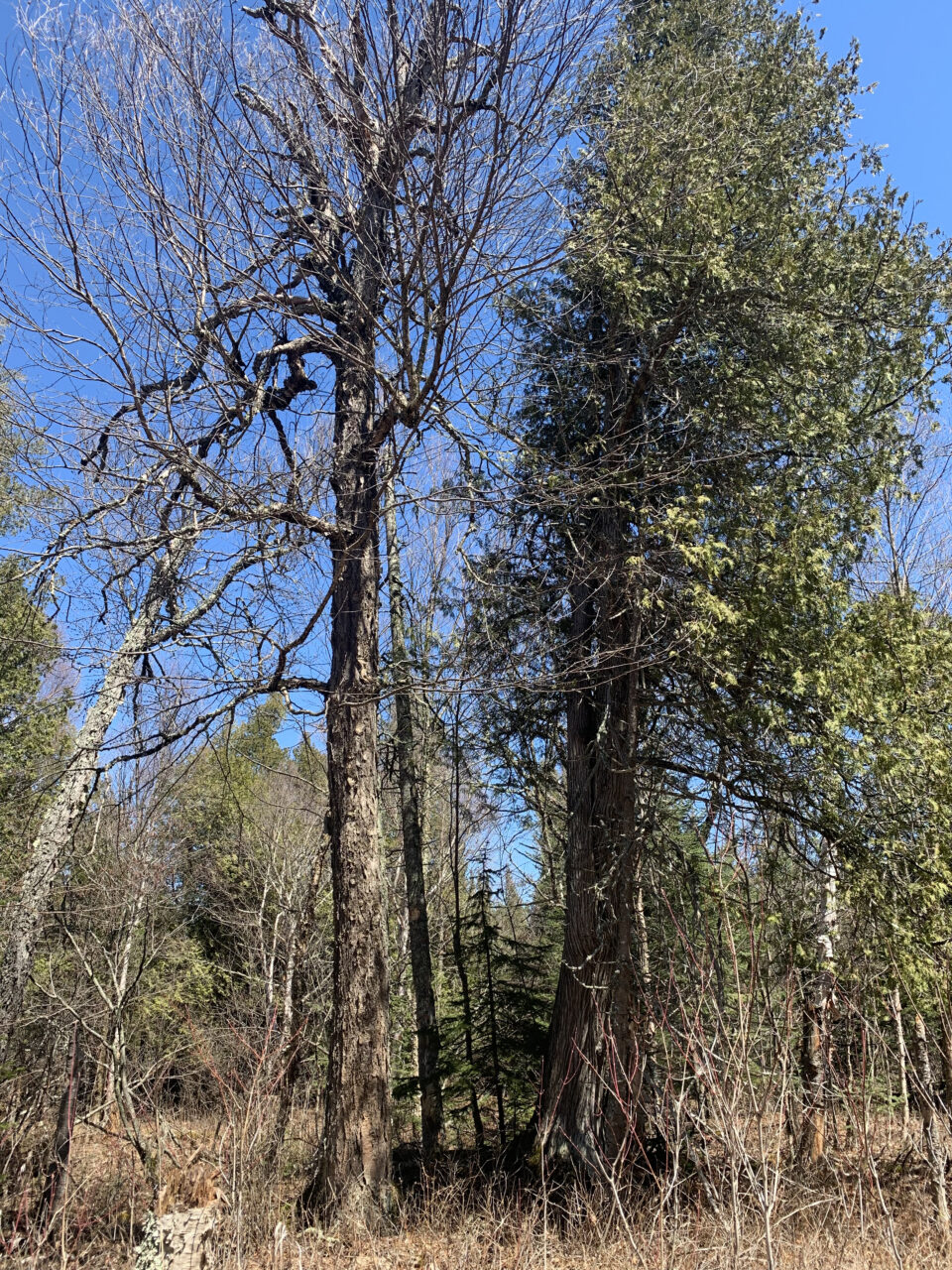
Towering pines, weathered cedars, and scrappy yellow birch clinging to the ancient bedrock have long defined the rugged beauty of Minnesota’s North Shore coastal forest. The history of logging followed by devastating wildfires that burned up the logging slash left behind a barren landscape at the turn of the century. Changes in land use, development, and the arrival of whitetail deer have continued to further alter this landscape, leaving many areas with shorter-lived species like aspen, paper birch, and balsam poplar in declining forest health. But the good news? The forest is being restored, one seedling at a time, and landowners are playing a vital role in bringing back the North Shore’s iconic woodlands.
The North Shore Forest Collaborative (NSFC) has been leading the charge in this effort since its formation in 2011, working with private landowners, conservation groups, and public agencies to restore long-lived, later successional forests. Much of the land near and adjacent to Lake Superior is privately owned, so providing education and resources is vital to landscape scale reforestation. Through partnerships, outreach, and hands-on restoration projects, the NSFC is demonstrating that even small landowners can have a lasting impact on the landscape. Healthy coastal forests provide vital foraging, hunting, and nesting opportunities for wildlife, shade and water filtration for fisheries, and increase the northwoods feel that attracts visitors every year.
A Growing Movement: Landowner Participation
In just one year, 250 landowners signed up for the NSFC’s Woods Walk Advisory Program, and 120 free site visits were completed by local forestry experts. These visits provided tailored recommendations on tree planting, invasive species management, and forest health improvements. Funding for free woods walks was provided by a grant from the Legislative-Citizen Commission on Minnesota Resources (LCCMR).
During these visits, many landowners expressed concerns about aging forests, spruce budworm outbreaks, deer pressure, and low species diversity. NSFC’s work has focused on mitigating these threats by promoting tree planting strategies that enhance resilience and providing cost sharing services. Advisors have recommended species like white cedar, white pine, yellow birch, sugar maple, and red and bur oak—trees that can thrive in the region’s challenging conditions while supporting a richer forest ecosystem.
This upcoming season will be the second and final year of this LCCMR funded program, but for those who are unable to get a free woods walk, NSFC partners have been creating educational materials to share their expert guidance on which tree species to plant, how to control invasive species, and what available cost share programs exist and what contractors could be hired to do the work.
Overcoming Barriers to Reforestation
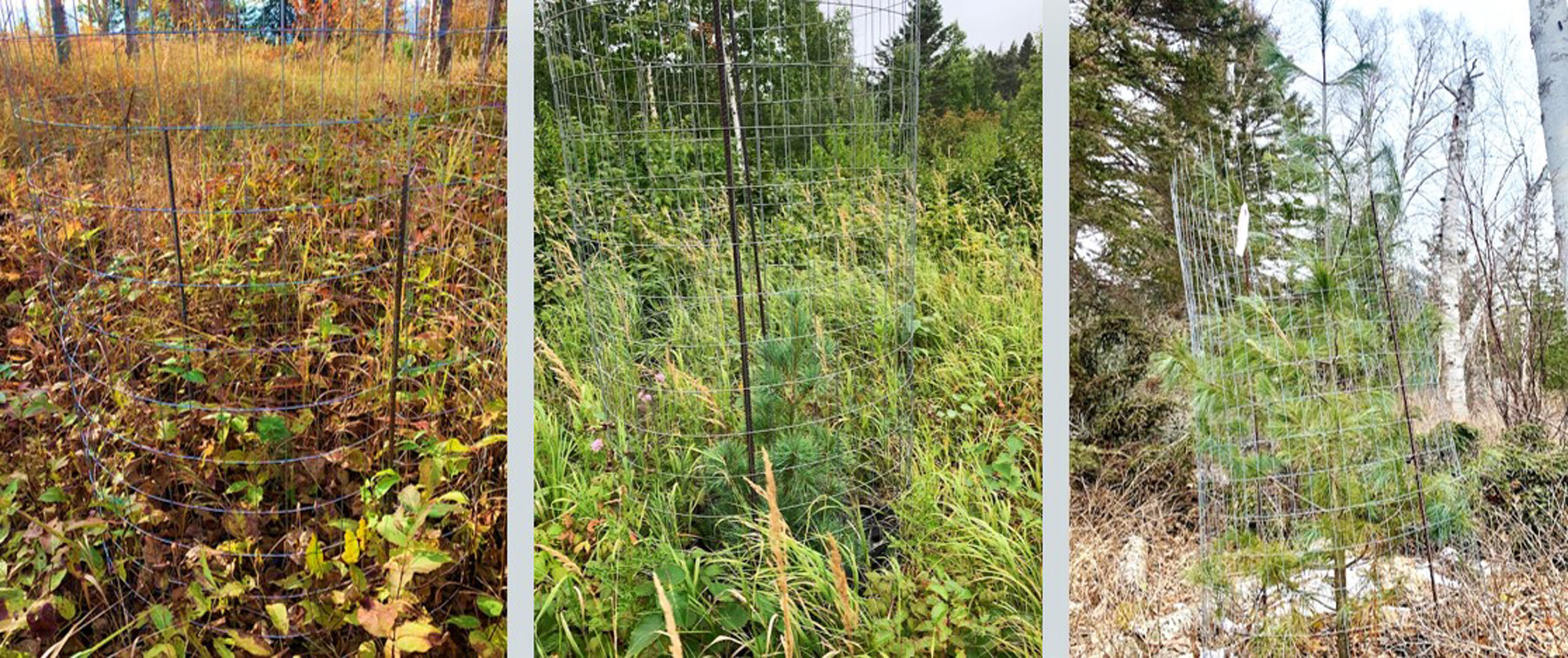
Restoring a forest isn’t easy. Landowners have cited barriers such as the cost of fencing to protect from deer browse, seedling availability of specific species, and the physical demand involved with managing their land. To address these hurdles, NSFC connects participants with cost-sharing programs, tree seedling giveaways, and expert guidance to make restoration more accessible.
The NSFC Fencing Program, generously funded through the Weekes Family Foundation, provides financial assistance to landowners to purchase welded wire fencing to prevent deer browse. In 2024 alone, 2,221 seedlings were planted and protected through the program. Since the program began, 89,330 seedlings have been planted by participating landowners. This doesn’t include the numerous landowners who purchase fencing materials on their own or are reusing fencing as their original seedlings grow beyond the reach of deer.
To meet the need for tree seedling demand, many NSFC partners supply landowners with free seedling giveaways or low-cost tree and shrub sales, including the Soil and Water Conservation District’s annual tree and shrub sale and Let’s Plant Trees, Hedstrom Lumber, Castle Danger Brewery, Johnny Appleseed Effort, and NSFC’s annual seedling giveaways. Many of the white pine supplied on the shore are provided free from the MN Power Rajala Woods Foundation to partners. Public partners, such as the U.S. Forest Service, the Nature Conservancy, and the MN Department of Natural Resources to name a few, are responsible for planting thousands of seedlings along public lands within the North Shore each year to improve and restore the forest, often prioritizing riparian shorelines and areas of groundwater recharge. Other public partners such as the Soil and Water Conservation Districts, Minnesota Land Trust, MN DNR, and Natural Resources Conservation Services provide cost sharing programs and land trust opportunities to further protect and improve private lands.
Join the NSFC Community
Every tree planted today is a step closer to restoring the North Shore’s legacy forests and improving forest diversity and resilience. Whether you have an acre or a hundred, your efforts matter. By joining the NSFC network, you can be among the first to know about all the reforestation opportunities and workshops available on the North Shore. Together, we can ensure that future generations will enjoy the iconic forests we all love that define this remarkable landscape.
Want to get involved? Visit northshoreforest.org to learn more and plan how you will make a positive impact to our North Shore forests.—North Shore Forest Collaborative