
Magnificent structures, masterful craftsmanship, and murder—the Glensheen Mansion has a rich and impressive history. Touring this iconic estate is an immersive experience that transports you back in time and surrounds you with early 20th century opulence incomparable to other museums.
Also, it may be haunted.
Glensheen is well known for the highly publicized murders that occurred there in 1977, but there are many more things to appreciate about this unique place (and the Congdon family who called it home) that don’t receive as much recognition.
History
“The thing that surprises people the most is the authenticity of the mansion,” says Lead Interpreter Blake Romenesko. “Since Glensheen belonged to one family, all of our furniture, art, books, and fixtures are original to the house,” he explains. “It is truly a time capsule.”
Glensheen Mansion’s story begins in 1890 when the Mesabi Iron Range was discovered—the largest iron ore deposit in all of North America. Chester Congdon, a lawyer in St. Paul at the time, decided to shift his focus from residential and farm properties to representing men buying into the iron ore industry.
Soon Congdon was rubbing shoulders with Pittsburgh steelmaker Henry Oliver, and eventually Andrew Carnegie—the richest man in the world. After the steel industry was consolidated in 1901, Congdon began investing in iron ore properties himself, and he quickly became a millionaire. He used his wealth to build a legacy on the shore of Lake Superior in Duluth, with his wife Clara, and kids.
“Glensheen began construction in 1905, and the family moved in at the end of 1908,” Romenesko mentions. “The finished product was an English-inspired country estate on 22 acres with gardens, a boathouse, carriage house, gardener’s cottage, and a 39-room, 20,000 square foot mansion.”
“The Congdon family lived at Glensheen for about 70 years before giving the property to the University of Minnesota,” he explains. The museum has been operating since 1979.
Buildings and Grounds
The Carriage House is often the first building visitors notice, and occasionally newcomers mistake it for the mansion. It contains stables for horses and livestock (adorned with Tiffany tiles), a tack room, milking parlor, storage, employee quarters, and maintenance space for carriages and automobiles. Vehicles were stored upstairs using a lift.
North of the Carriage House, situated next to a beautifully tended garden space, is the Gardener’s Cottage (used as office space today). A large variety of produce and flowers are still grown on the grounds with a commitment to historical accuracy, and the food is donated to Second Harvest Northern Lakes Food Bank.
On the lake shore sits the pier and Boathouse, possibly the only structural boathouse left on Lake Superior. It once housed the Congdon’s 53-foot yacht, called Hesperia. Concerts on the Pier draw big crowds here during the summer.
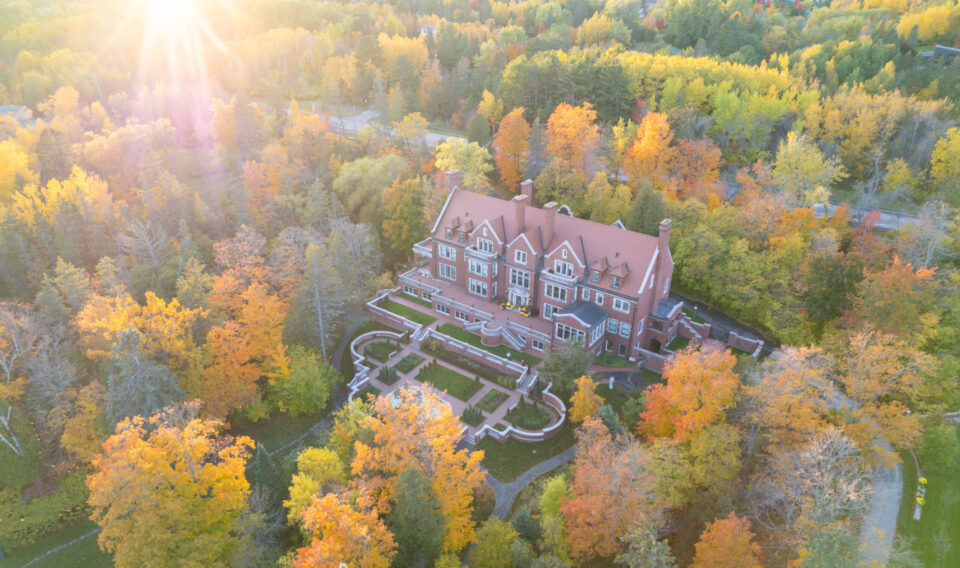
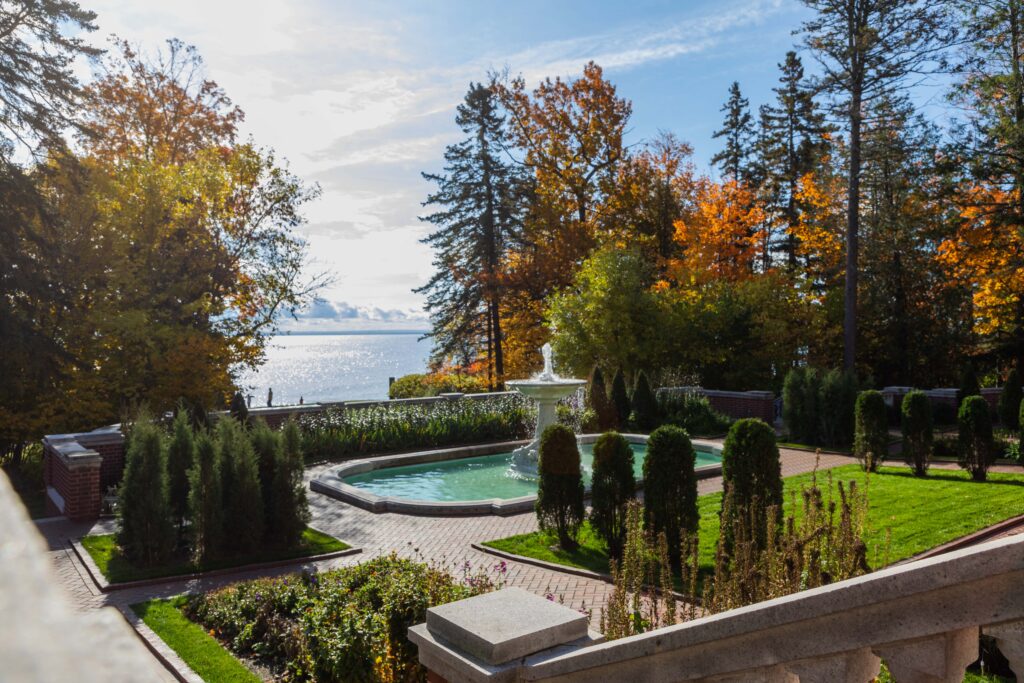
Situated between two creeks and overlooking the lake, Glensheen Mansion looms majestically behind a beautiful fountain and gardens. Congdon named the mansion by combining the words ‘glen,’ inspired by the landscape of the area, and ‘sheen,’ referring to the village of Sheen in Surrey, England, where his family originated. Glensheen means ‘shining glen.’
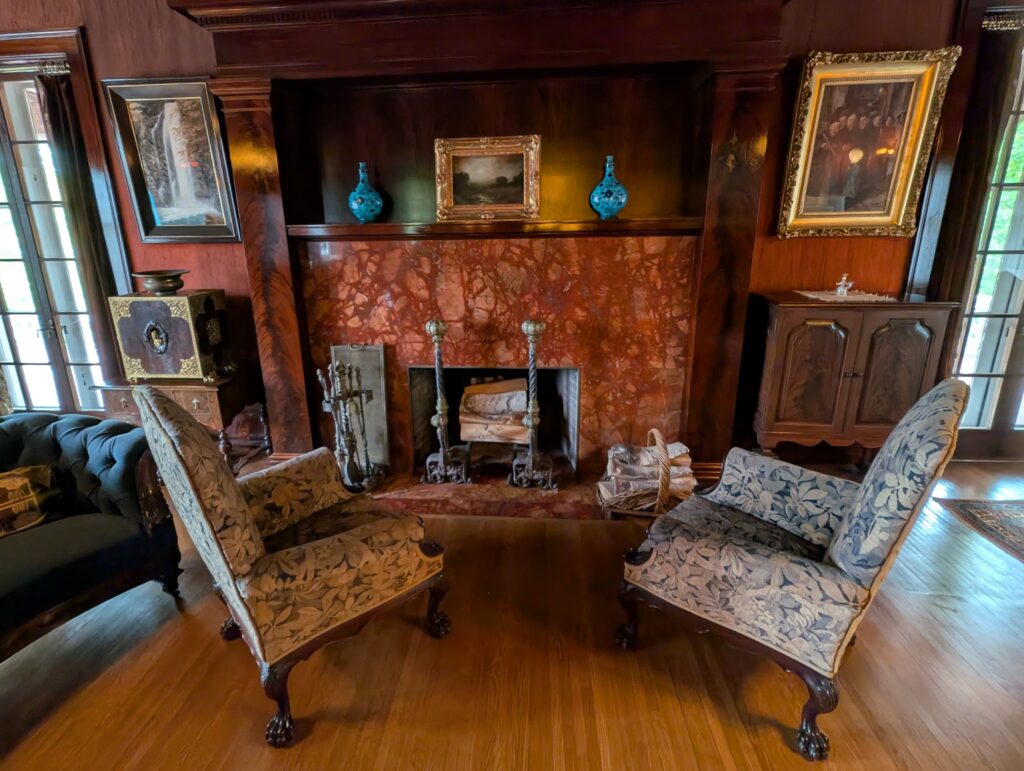
Inside the mansion are five floors, including the basement and attic. Expensive adornments, furnishings, and collections are found throughout the home, set up and displayed as they would have been when it was occupied. There are surprises to be found around every corner, like envelopes addressed to Mrs. Congdon near a hallway, Chester Congdon’s top hat resting on a chair in his room, and a ‘sitz’ bath in the master bedroom—a small tub used for soaking below the waist.
Romenesko mentioned his favorite feature is the abundance of stained glass, produced by the Linden Glass Company, that adorns windows and entrances to rooms around the mansion. Much of it is done in the Prairie School style, a progressive design movement that took inspiration from the Midwest prairie landscapes to “create an innovative style unique to America.”
“The stained glass works very well to both blend and contrast this new American style with the older European and Colonial styles that Glensheen is primarily based on,” he explains. The famous architect Frank Lloyd Wright was known for his use of Linden Glass as well.
Maintaining a historic mansion and grounds is not an easy task, and the work is never-ending. Slowing deterioration and preserving integrity is a priority, both inside and out. Currently, the lake side of the mansion is being tuckpointed to fix problems with moisture.
“All buildings have issues, many of those issues come with age, but Glensheen challenges also come with its size,” Romenesko says. “We have a grounds crew of about half-dozen gardeners, and a number of historic housekeepers keeping the house clean.”
Murders and Hauntings
On the morning of June 27, 1977, elderly Elisabeth Congdon and her night nurse, Velma Pietila, were found murdered in the mansion. Elisabeth was smothered under a satin pillow in her bedroom, and Pietila was beaten with a candlestick on the main staircase.
Roger Caldwell, Elisabeth’s son-in-law, was arrested and later convicted of the crimes. Marjorie Caldwell, Elisabeth’s adopted daughter, was also arrested, but later acquitted. Inheritance was thought to be the motivation. The multifaceted story has fascinated people for nearly 50 years.
“The murders are a draw to the mansion, and we recognize it is a part of the history of the estate, however we do not dwell on the event too much,” says Romenesko. “There have been four books written on the topic and there is plenty of information, and speculation, online.”
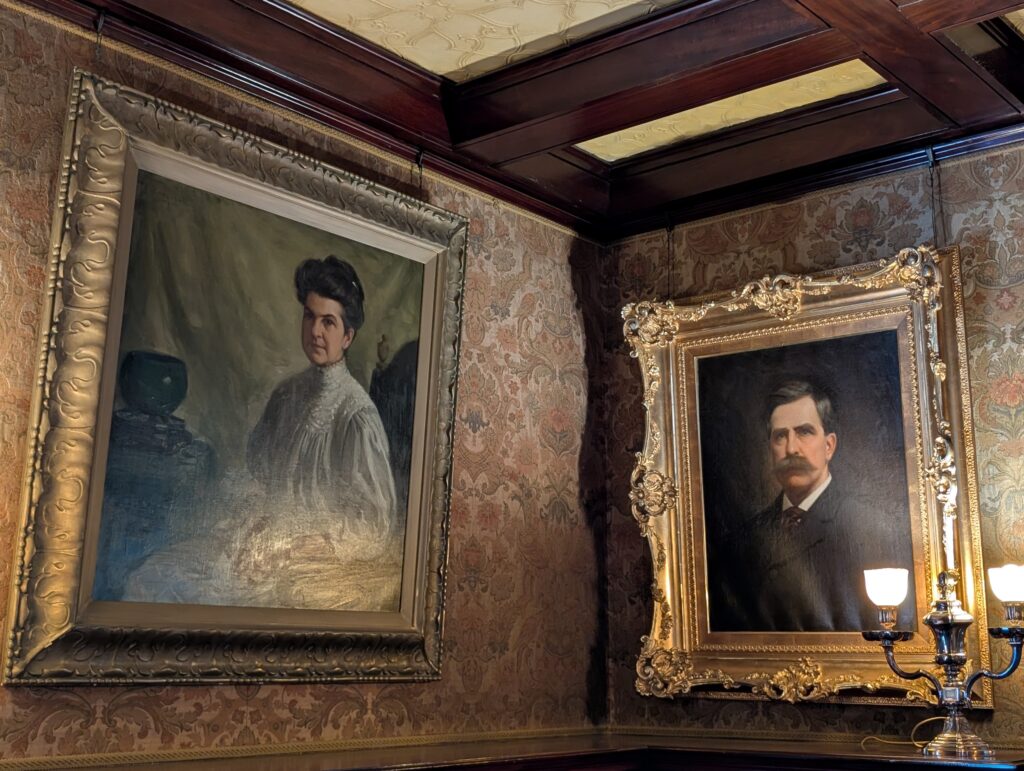
Also found online are first-hand accounts of spooky experiences, including cold spots where the murders took place, faces in windows, sudden feelings of sadness or joy, flickering lights, objects changing places, and shadowy or wispy figures moving through hallways and rooms.
Others remain skeptical.
“It’s kind of funny in that working at Glensheen made me stop believing in ghosts,” Romenesko shares, mentioning a strong interest in the paranormal growing up. “Working at Glensheen for the time I have, I see how rumors start, stories evolve, and simple things become mysteries,” he explains.
“While I will say I do not believe in ghosts, those rare moments when I am alone in the dark mansion at night, my mind might think otherwise.”
Glensheen Mansion Today
A well-preserved, maintained and unique historical place, Glensheen Mansion has many stories to tell.
Tours are available daily, with self-guided tours being the most popular option. Visitors may also choose to book a ‘Lock and Key’ guided tour that shows areas not otherwise available to the public and provides insights about the lives of those who worked and lived at Glensheen.
Autumn is an excellent time of year to explore the estate, especially if you’re seeking a spookier experience. Special Lantern Tours are available on Friday and Saturday throughout the month of October. These guided, family-friendly evening tours offer a more intimate journey through the estate, lit only by lantern glow. “The tour highlights things you may have missed on daytime tours, or things that really shine at night,” Romenesko mentions.
A Glensheen Speakeasy event takes place on Tuesday, Oct. 14. Tickets to this History Happy Hour include a complimentary drink, light hors d’oeuvres, and an engaging talk about prohibition by historian Tony Dierckins. Must be 21 years or older to attend.
If you’re limited on time and budget, a self-guided tour of the grounds is only $5, which includes the Carriage House, gardens, lake shore, wooded area, and courtyard.
For all ticket options and more information, visit glensheen.org.