

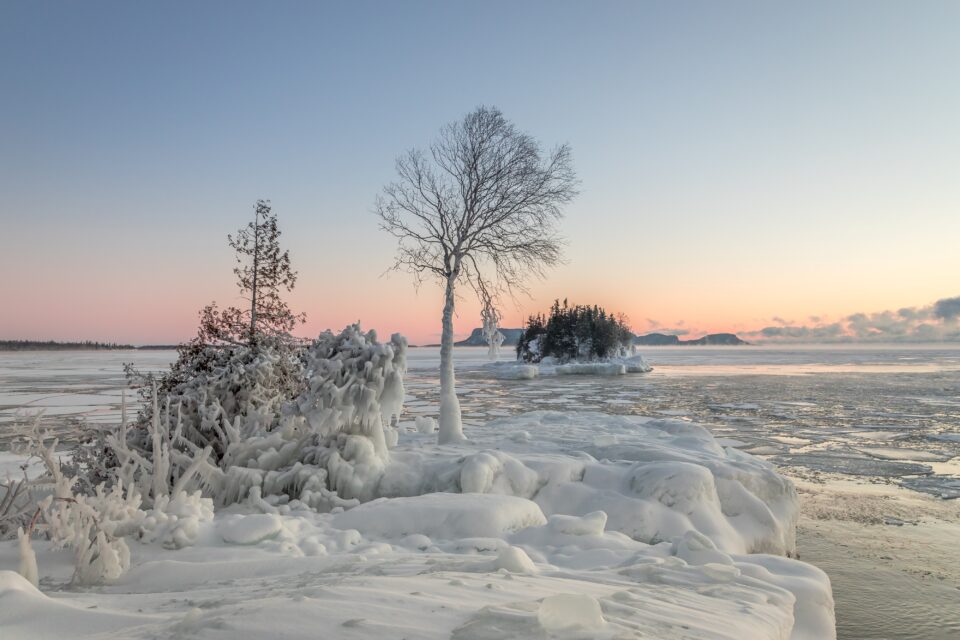
The many creatures that inhabit the Northern Wilds have all evolved with their own ways of adapting to winter cold. While some animals turn to a deep sleep, others remain active and thrive in deep snow and freezing temperatures. Let’s take a look at three animals—bears, frogs, and salamanders—to see what evolution has given them to help them survive the cold. Maybe we humans can adopt some of these
adaptations, too.
Stealthy Sleepers
Most people associate hibernation with bears, but that’s not quite right. Bears aren’t true hibernators. Animals have to be fully asleep all winter to be true hibernators. Examples include woodchucks, jumping mice, and bats. Bears, on the other hand, enter a different state called winter lethargy, or torpor. The stealthy bears get their long winter sleep, but are still able to be aroused. That’s how females are able to give birth to their cubs—typically in January or February—or respond to threats that show up at their dens.
Still, bears undergo significant physiological changes in winter. Their heart rates can drop to as low as 8 to 10 beats per minute, their body temperature falls, and they breathe slowly, all in an effort to conserve energy.
To prepare for winter, bears enter hyperphagia in fall—a physiological state of intense eating designed to build up fat reserves. Chel Anderson, author of North Shore: A Natural History of Minnesota’s Superior Coast, says black bears are building up their brown fat reserves during hyperphagia: “Brown fat is key to bears. We humans burn fat, and calories of any kind, by shivering to stay warm. But bears don’t do that. Bears produce heat from brown fat at the mitochondrial level. It’s a very different way of making heat than how we humans stay warm. It’s very efficient.”
Incidentally, humans can also produce some brown fat. “It’s only in the last 15 years or so that we’ve understood that our bodies also respond some to the cold by making brown fat in real specific body areas,” Anderson explains. “If one is exposed to cold starting in the fall, by February, you’re much more able to deal with cold than you were in October or November. So we do adapt to the cold too, but we have a tiny tool kit in terms of physiology compared to the bear.”
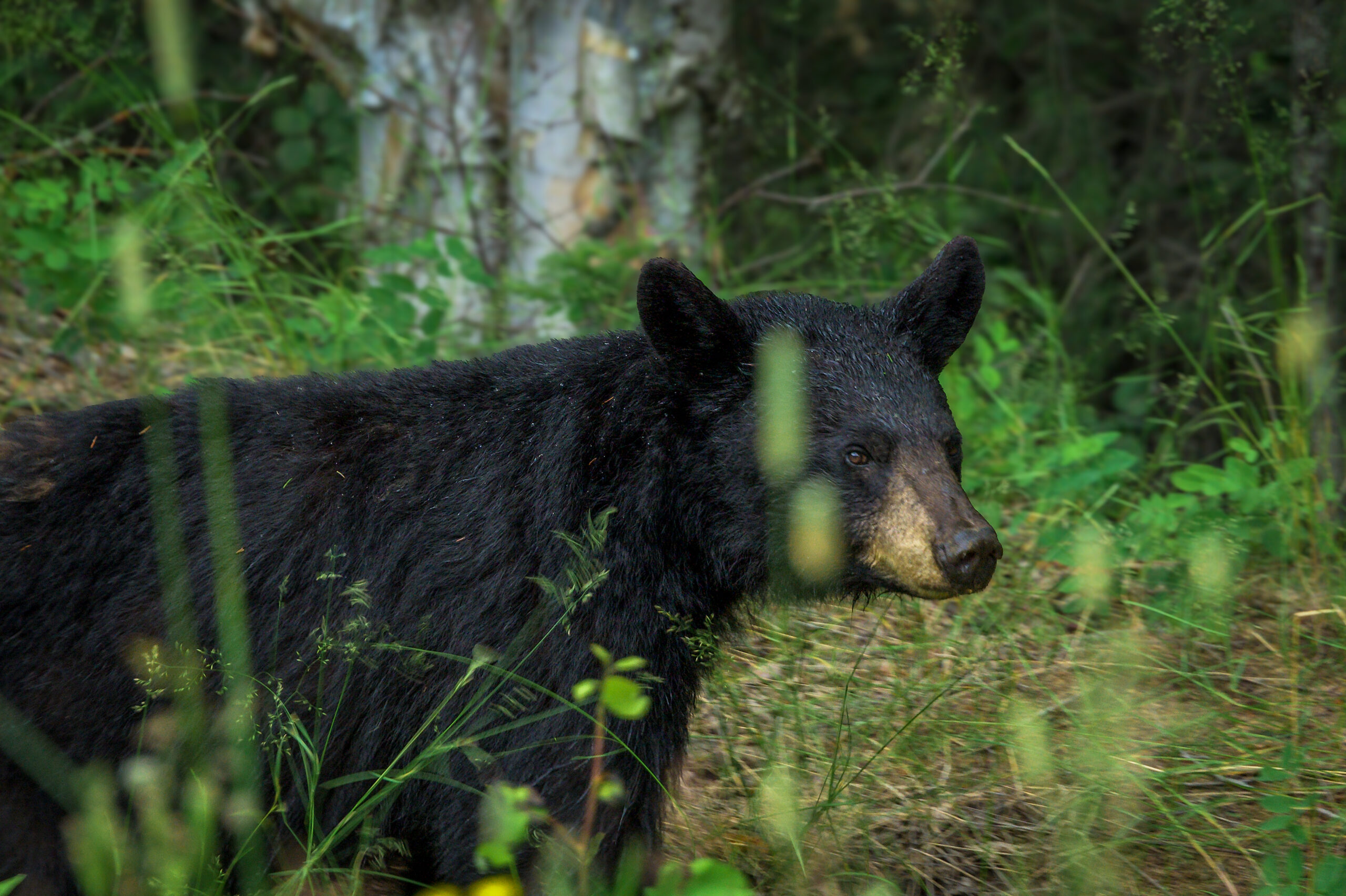
Another misconception about bears is that they snooze the winter away in nice, cozy dens. In fact, bears have a wide variety of winter dens, including simply leaning up against a log. Females that may be giving birth make the greatest effort to find a better shelter. But generally, a bear den could be just a big windthrow with lots of debris surrounding it. “I’ve seen bears pull materials in after them under a downed tree for cover,” recounts Anderson. “I’ve also heard of dens that had no particular cover, other than what snow falls.”
Bears seem to have it all—gorging themselves in fall, staying warm with their efficient “furnace,” and sleeping practically anywhere they want come winter.
Freezing Frogs
Another evolutionary masterstroke can be seen in frogs. How do they manage to overwinter in the Northern Wilds with no fur coat? There are actually two different ways frogs have adapted to survive the deep cold.
Wood frogs, spring peepers, and chorus frogs all live on land, entering the water only for mating in the spring. Thus, they spend their winter in the woods. To do so, they’ve evolved the ability to move water out of their cells into intercellular spaces by producing lots of glucose. The intercellular water turns to ice, but the frog’s cells are protected by their glucose “antifreeze.” That’s right—some frogs actually freeze solid yet don’t die. These frogs first burrow under leaf litter or rotting logs. They camouflage themselves as best they can, then enter hibernation. “You can’t wake them up. They feel like an ice cube,” says Anderson. Once spring comes and the ground starts to warm, they gradually thaw out of this deep state of hibernation.
“I love going around the woods in winter and thinking of how many spring peepers and wood and chorus frogs are sleeping under us,” recounts Anderson.
Aquatic frogs, meanwhile, need to stay unfrozen. Frogs are ectotherms, so their bodies can become a similar temperature to whatever the ambient temperature is. This means aquatic frogs’ activity slows way down in winter. Their state of winter dormancy is called brumation. To survive brumation, aquatic frogs bury themselves in the bottom substrate of lakes or ponds—but not too deeply. They need to keep breathing through their skin, and can only do so through direct contact with oxygenated water.
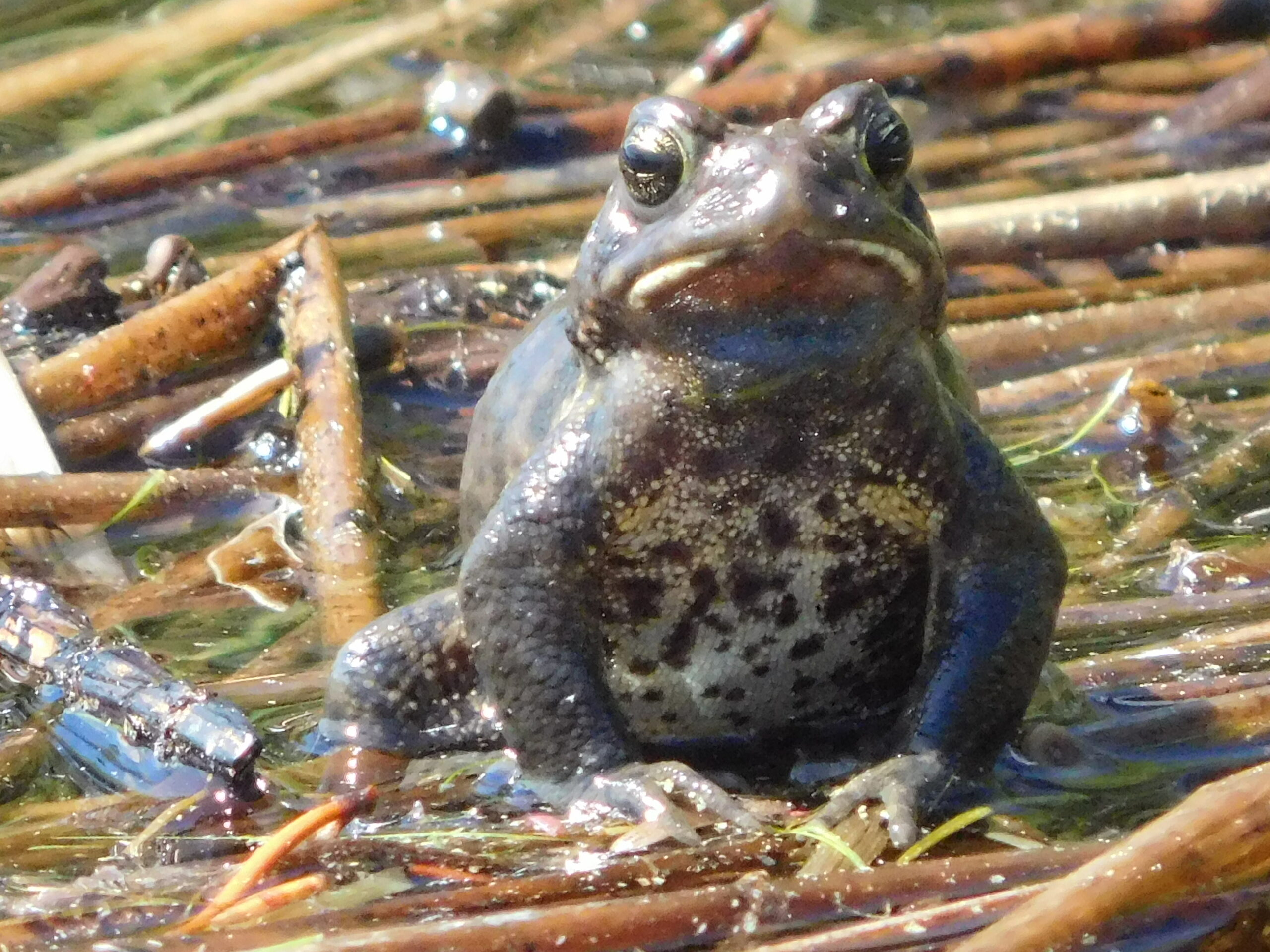
Another option for aquatic frogs is to overwinter in the densely rooted bases of sedges growing at the margins between the water and the forest. Frogs can burrow and wedge into the base of this vegetation and camouflage themselves. When you see a mink or otter working the edges of open water in winter, they’re looking for brumating aquatic frogs and invertebrates.
Subterranean Salamanders
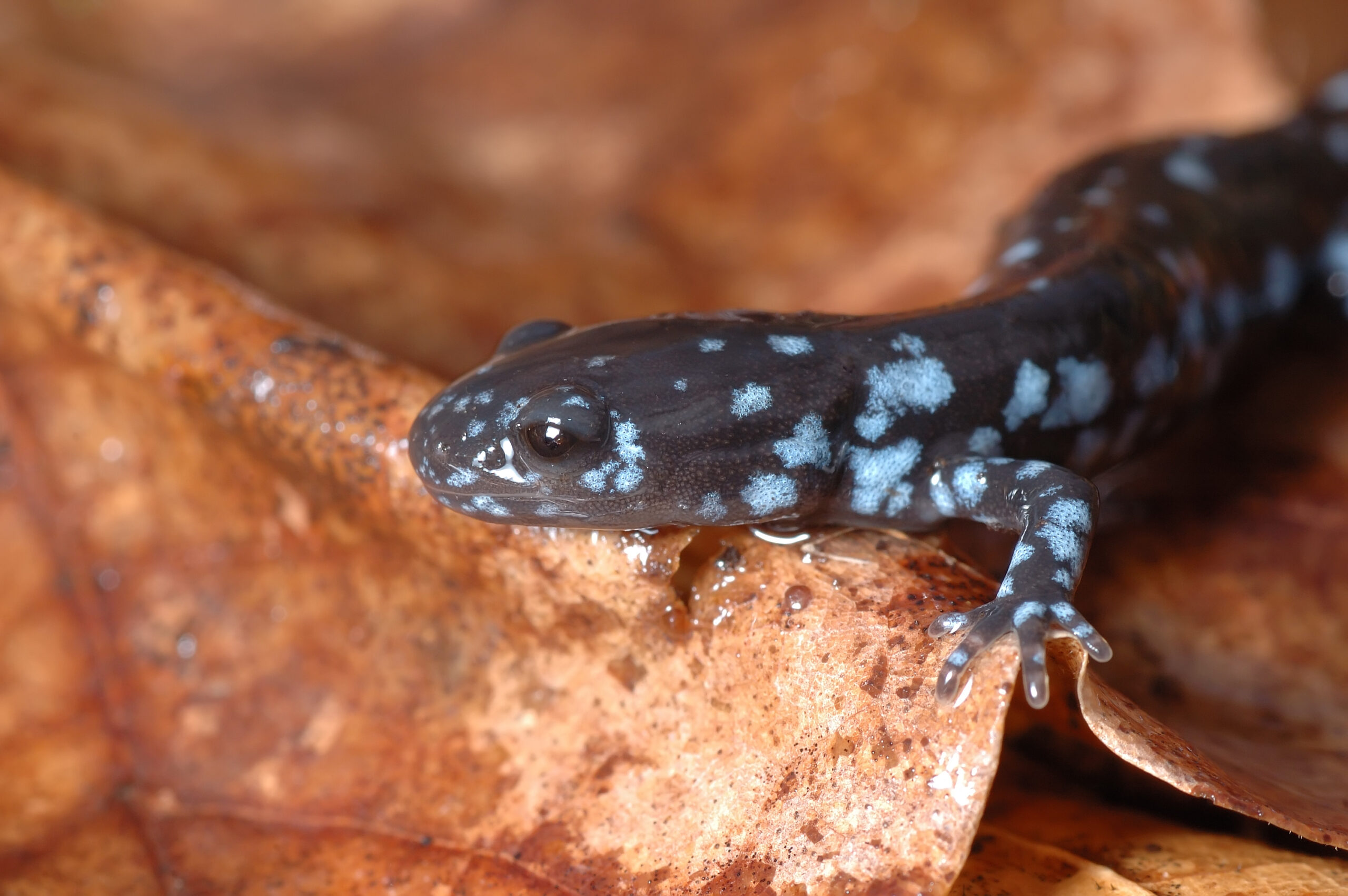
Anderson has a whole chapter in North Shore: A Natural History of Minnesota’s Superior Coast about blue-spotted salamanders, which fall between other creatures in terms of winter survival tactics. On the one hand, they can’t freeze like wood frogs. Salamanders have to get down into the ground, below the frost line, where they won’t get much colder than freezing. “If you think about where we live, that’s no simple task,” explains Anderson. “Salamanders aren’t equipped to be great diggers. I love imagining how these seemingly delicate and fragile animals manage to find their way into some naturally occurring underground corridor. Maybe they’re using a place where a root died and has decayed enough for the salamanders to burrow into a narrow little tunnel?” Anderson asks.
While salamanders brumate, they need to remain semi-active. They can forage for invertebrates in early cold before they need to get below the frost line. Then they re-emerge when the first rainy nights of spring arrive, throwing caution to the wind and jaunting above ground as early as March or April.
Thrive, not Survive
There are also many animals in the Northern Wilds that remain active in wintertime. These animals have evolutionary adaptations that allow them to thrive in snow and cold. Take moose, for example. Their long, thin legs have evolved for walking in deep snow, and the hollow hairs in their fur keep moose well insulated.
“Winter-active animals have to be able to stay warm in the cold, which for endotherms requires finding enough sustenance to keep their furnace going. Their physiology has to be able to accommodate the foods that are available in winter. For some creatures, like the moose, those are some big changes,” notes Anderson. In winter, moose switch from eating leafy green foods, including aquatic plants, to woody browse such as twigs, buds, conifer needles, and tree bark. “For others, like the lynx, bobcat, and fox, whose diets are more wide-ranging in other seasons, the diversity of available foods decreases, and their winter diets lean more heavily on hunting or scavenging other animals,” explains Anderson.
One other example of winter adaptation comes from an animal that has been extirpated from our area, despite being native to the Northern Wilds. Woodland caribou are well equipped to handle deep snow and have a diet manageable even in the depths of winter. They eat lichens, both arboreal (on trees) and on the ground. “One of their physiological adaptations is large hooves that they use to dig through the snow to get to lichens on the forest floor,” explains Anderson.
Woodland caribou were extirpated from our area by humans at the end of the 19th century through over-logging and human-driven changes to the region’s forests. The Slate Islands on the Ontario shore of Lake Superior are the closest remaining woodland caribou herd to today’s Northern Wilds.
Next time you’re outside in winter, remember those froggy ice cubes just chilling all winter long, or the determined salamanders somehow moving deep into the earth with their tiny feet. Animals can teach us a lot about how to beat the cold if we follow along.