
Gichigami and the Polar Vortex
By Erin Altemus
When your life is a combination of living off grid, running sled dogs, and using various machines to “survive” off grid and back in the woods, it sometimes feels like winter is one long mishap.
From 2013 to 2021, we owned a property off the Gunflint Trail on Mush Lake. Forty-three acres tucked between Pine Mountain and the Brule River, the lone cabin on a small lake that was 3 miles from the plowed road. For the first several years we owned the place, we couldn’t drive all the way to the cabin, and for the first two winters, we couldn’t even plow part way in, so my daily commute involved snowmobiling 3 miles to the Gunflint where we parked our vehicles.
The winter of 2013-14, our first winter at Mush Lake, was the year of the polar vortex. At night, the temperature remained below zero for over three months. There was plenty of snow (maybe too much) and the cold was relentless. My husband Matt signed up to run a race the first weekend of January called the Gichigami Express, a short-lived race that involved three stages—one stage each day for three days, each stage about 60 miles. That weekend the cold was so severe, the governor cancelled school for the following Monday. Businesses closed and activities were cancelled. But dog racers are a hardy bunch, so the race went on despite wind chill temperatures in the -50 F to -60 range.

By the second day of the race, several mushers had already scratched due to frostbite problems and also to truck problems. Our diesel sprinter van was no exception. Before the third stage of the race, from Devil Track back to Grand Portage, our diesel van had stalled out. Matt was dead set on finishing the race, however, so we put out a call to anyone available who could haul us and dogs from the hotel we stayed at to the race start. Nancy Lang helped us out and we made it just in time to get the dogs hooked up and Matt on the trail. He finished the race in 9th place, also last, but still in the purse money. After the race, with temperatures now 20 below zero and windchills of -60, we had to find a way home. Another musher, Matt Groth, provided a trailer. I can’t remember whose truck we were in.
Upon arriving back at our parking spot, we found our house sitters hadn’t made it out of our cabin. Matt started walking. He walked the 3 miles in, and the snowmobile wouldn’t start, so Matt and the house sitters walked the 3 miles back out. For a guy who had just endured a brutal three-day race, this was a lot. Finally, we hooked up the dogs and ran them back into the cabin. Needless to say, we started looking for a new dog truck shortly thereafter.
Spoiler Alert: This One Ends Badly
By Joe Shead
It was one of those rare days when the fishing was so good, you hated to quit. Crappie after crappie came up my ice hole. In fact, the bite was getting even better as afternoon wore on and nightfall approached. But I had to quit early because a snowstorm was approaching, and even on bare roads I was at least an hour and a half from home.
I’d covered half the distance before the snow started in earnest. Within a half hour, the location of the road’s center line and shoulders was a guessing game. I was going 35 mph tops, aiming for what I thought was the middle of the road, but Highway 2 north of Two Harbors doesn’t get a lot of traffic when it’s snowing 4 inches an hour. I only met three or four vehicles and when we approached, we had to do a little dance and figure out where we could drive without hitting the other person or putting our vehicles in the ditch.
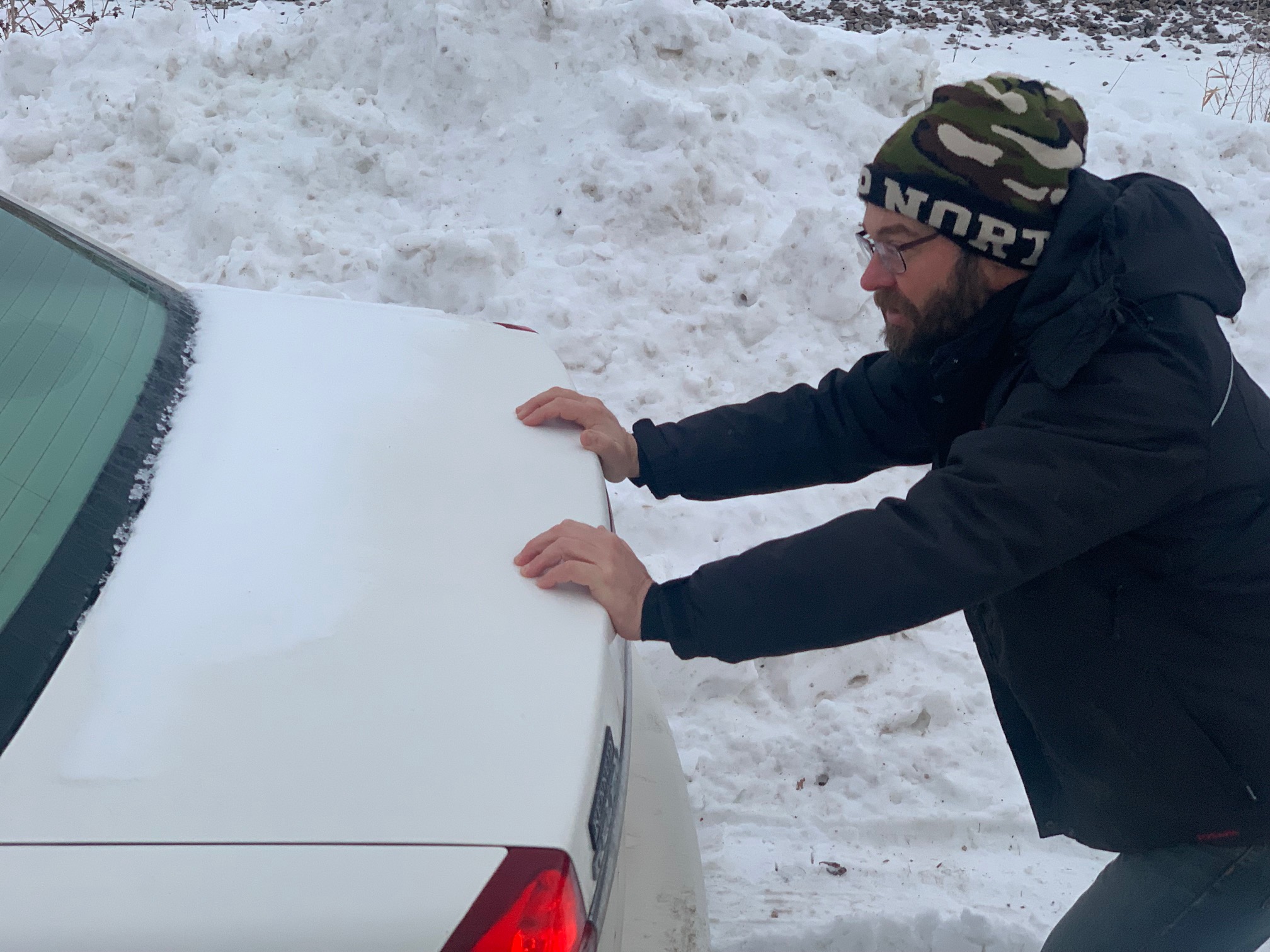
About 15 miles from home, I saw a car at an intersection. It looked to be stuck, so I stopped and turned around. Sure enough, the couple in the vehicle had pulled over at the intersection to clean the car’s wiper blades and got stuck.
I figured between myself and the man we could push the car back to the road. Unfortunately, they had spun their tires so much that the road under the tires had turned to glare ice. We could rock the car, but that’s it.
After a few minutes, they were ready to give up. “Can you call a tow truck?” they asked. Nope. No reception. And besides, I just knew we could get their car out.
I had an idea. I began breaking branches off nearby balsams. I figured with something under those tires instead of glare ice, we could get some traction.
It worked! We got the car moving and halfway back to the intersection. The man and I had to run after the car as the woman got a head of steam and spun toward the road. We caught up and pushed again. The tires clawed for traction, and slowly the car gained momentum up a slight incline. The car stalled again as the man and I raced forward to give it one more shove. We just needed about 10 more feet, and the car would be back on level ground and on the main highway. I lunged forward, and this time I snatched defeat from the jaws of victory: Instead of pushing on the trunk as I had been, for some dumb reason, I pushed on the spoiler mounted atop the trunk. Oh, we got the car back on the highway all right. But unfortunately, in the process, I popped the spoiler off the trunk. The couple was satisfied to be back on the road, but I sheepishly walked up to the woman and handed her the spoiler from the rear of her car. It’s true: No good deed goes unpunished. I guess we’ll call that one a draw.
Lessons Learned the Hard Way in Winter
By Naomi Yaeger
When I was a little girl, we lived in Maine. I was either in kindergarten or first grade when I went to a friend’s house to play. She lived in a trailer out in the country.
We were outside when we decided to walk to a barn we could see in the distance. We set off across snow-packed fields. I was wearing brand-new boots my parents had just bought for me. They were fashionable by late-1960s standards: yellow fake fur inside, with a fake-leather—some kind of plastic—exterior. At the time, most people didn’t know much about plastic, especially plastic winter boots. Go-go boots were popular then.
Partway there, I told my friend my foot was cold and that I wanted to turn back. She insisted the barn was close and that we should keep going. I complained again, and then something changed. I told her my foot didn’t hurt anymore.
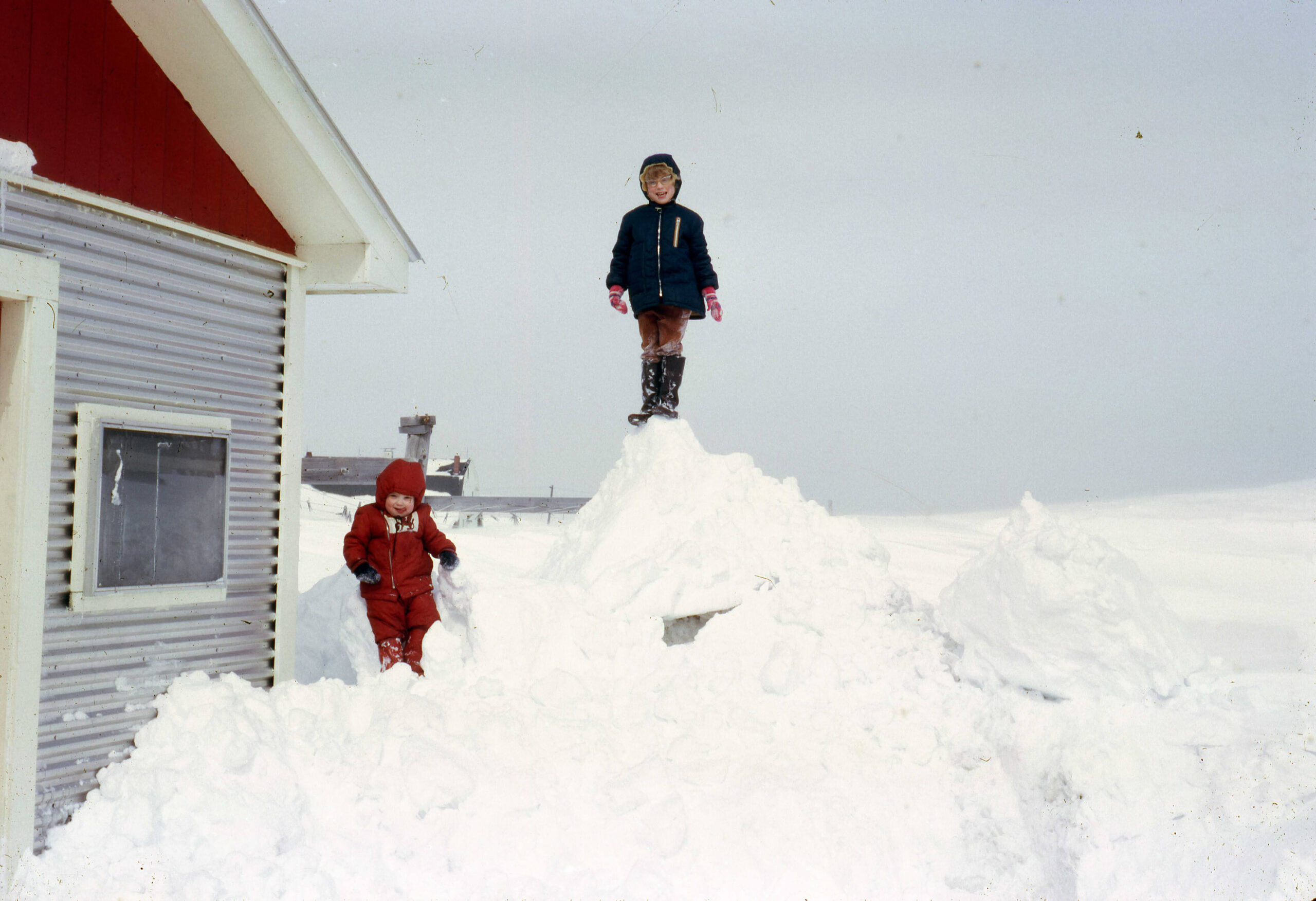
At home, I told my parents my foot didn’t feel right. They didn’t pay much attention at first. They had affectionately nicknamed me “Hippity Hop,” so when I began hopping around the house, they assumed I was being playful. It took a while before they realized I wasn’t teasing.
At the emergency room, after my foot warmed up, the doctor told me he needed to drain the blood. The room was clean and sterile, bright in a way that made everything feel more serious. He was a family friend we called Doc Allison, recognizable by his long dark hair, back when most men still wore buzz cuts. He looked at me and said, “We need to draw the blood out.” He used a long needle and inserted it into my toe. I remember thinking how long the needle was.
After that, my parents always bought boots for warmth, not fashion. Most winters, the boots were oversized, meant to be worn over my shoes.
Into adulthood, even in lean years, I’ve always made sure I had warm boots. In the North, that’s not a luxury—it’s part of living here.
Sometimes You Need to Trust a Stranger
By Victoria Lynn Smith
At the last moment, as I drove down a slick, snow-packed, narrow country road, I saw a chunk of snow, about half the size of a football. I decided to drive over it instead of swerving around it.
My two-and-a-half-year-old son and I had just come from visiting my grandmother Olive, who lived at the Middle River Nursing Home in rural South Range, Wisconsin. It was after Thanksgiving. We’d recently had a large snowfall, and subzero temperatures had settled in. The sky was a bright icy blue.
I figured I would hit a soft lump of snow, but instead a thud rattled the front end. Air whooshed from the front driver’s-side tire, causing the car to list. I pulled over, carefully avoiding the ditch.
It was 1988. There were no cell phones. It was bitter cold, and I couldn’t see any houses nearby. If I walked for help, I risked heading in the wrong direction, taking even longer to find a house, then perhaps finding no one at home. My small son couldn’t walk far, and I couldn’t carry him for long. I frowned at the flat tire and wondered if I could change it, something I’d never done. I didn’t have long to think about it. A man in a pickup truck passed by, stopped, backed up, then parked in front of me. He’d noticed the flat. Dressed in an insulated work jacket, a baseball cap, and winter gloves, he looked old enough to be my father.
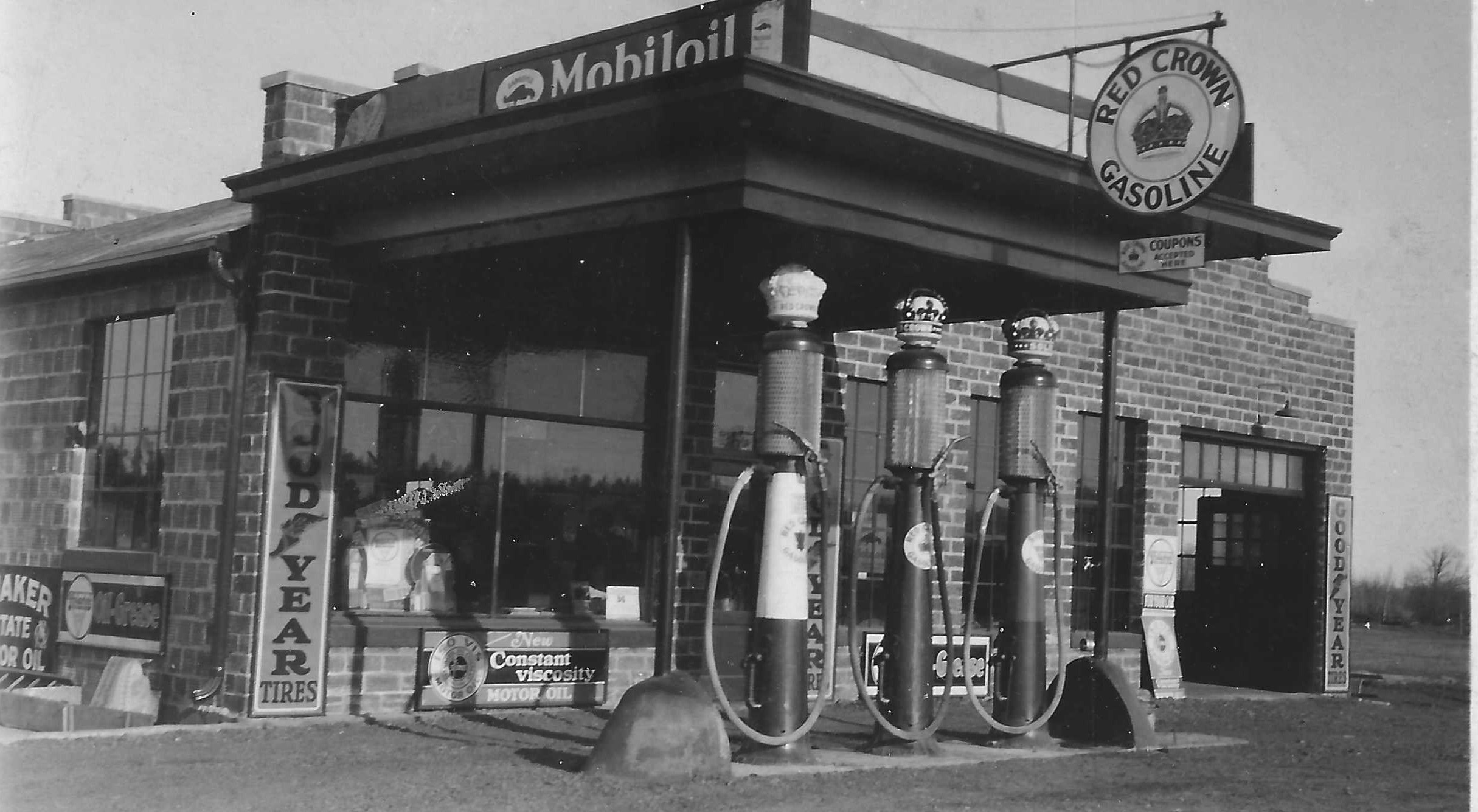
After some small talk, which included words about the recent snowfall and the current cold snap, he went to work, as if stopping to change a stranger’s flat tire was part of his daily routine. He discovered my spare was flat and offered to take it to his garage where he had an air compressor. My son and I were welcome to ride with him.
Serial-killer thoughts raced through my head. For a few frantic moments, I pondered telling the man we’d stay with the car while he drove home to inflate the spare. It was so cold though. I could’ve let the engine run, but I worried about carbon monoxide poisoning. And, I worried if my son and I waited in the car, we might be rear-ended by a vehicle on the narrow road. I decided to trust the stranger.
The man’s garage was clean, organized, and well-lit. Off to the side, hanging from a rafter was a gutted deer carcass; it was deer season in Wisconsin. Well, I thought, it’s not a person. We chatted while he filled the spare tire with air, then tested it to make sure it didn’t leak. We returned to my car. He changed the tire, and I thanked him. We waved to one another as he drove away.
Nearly four decades have passed since the stranger’s kindness. Now, when I think about him, I think about my grandpa George who owned service station in Gordon, Wisconsin. My aunt Coralee told me that in the 1930s, 40s, and 50s, he sometimes went out at night on service calls in harsh winter weather to rescue stranded motorists. If it was unsafe for people to continue their travels or their cars weren’t drivable, he brought them home to spend the night, an invitation always followed by a hot breakfast. Grandma Olive fretted about him going out at night in bad weather. “Why do you have to go?” she’d ask. And she feared having strangers in her house, but Gordon didn’t have hotels, just a campground, which was closed in winter.
Grandpa George would remind Grandma Olive he went out because if his family became stranded in bad weather, he hoped someone would help them. Grandpa was a pay-it-forward guy. He would’ve felt a kinship with the man who stopped to help his stranded granddaughter and great-grandson on a cold winter’s day.
Sawing Off More Ice Than I Can Chew
By Chris Pascone
One of my winter camping thrills is sawing a sight hole in the ice. To do so, use your auger to drill four corner holes, then connect the four corners with your ice saw. Once disconnected from the surrounding ice, the massive resulting chunk becomes buoyant, and can either be forced under the surrounding ice, or (potentially) lifted out of the hole, to be seen and admired.
Sometimes, if you want to extract the ice chunk, you need to drill a fifth, center hole, too, and do four extra cuts to turn the big rectangular ice chunk into four smaller triangles. Why? The ice chunk can weigh hundreds of pounds in a deep ice year. How else will you get that out?
Of course, human greed can easily get in the way. Take me, for example…
I joined my friends Jeff and Ruurd for our annual ice camp in January 2022. It was a real winter. We made the trek into Kemo Lake, about 25 miles northwest of Grand Marais, and I set up my tent right on the frozen lake in preparation for some bountiful days of ice fishing. We had been here before and knew the native lake trout were cooperative. I was aiming to sight fish for them in shallow water, so I could observe the fish bite my lure, even though we had caught them in deeper water previously. Blunder #1.
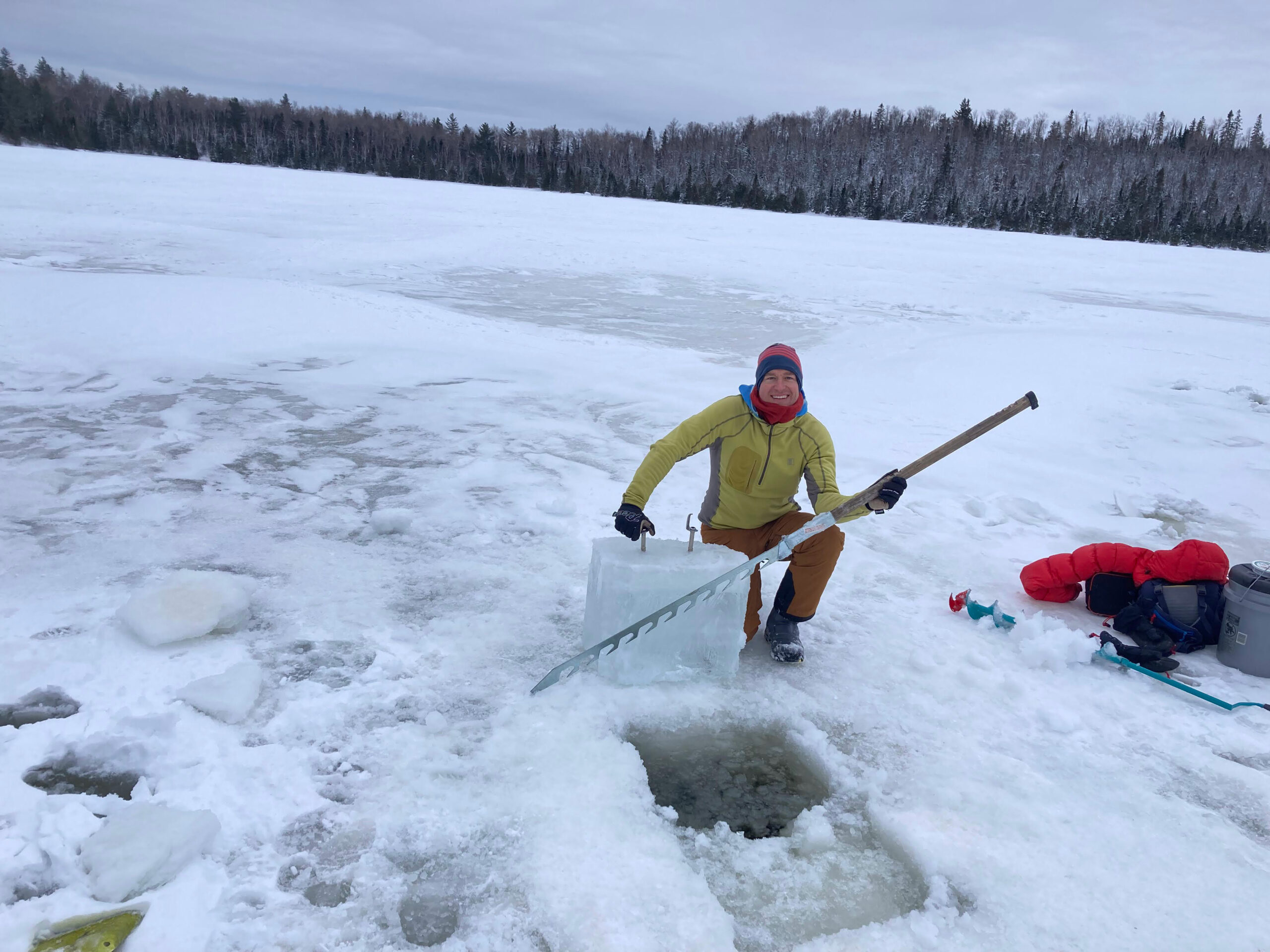
The next morning, I started drilling my four corner holes. I was rather shocked when the ice turned out to be over 2 feet thick. So shocked, that I never bothered checking the water depth below the ice sheet. I was just estimating that it should be about 8 feet deep where I was cutting—about equal to the water clarity for Kemo in general, and good for sight fishing to bottom.
I spent a good hour just drilling the four deep corner holes with my rather dull auger. Then it was sawing time. Let me tell you, sawing through 2 feet of ice is a hellish chore. Still, the fabulous fishing I was anticipating below kept me going. It took at least another hour to connect the four corners with the saw. Now two hours in, I had yet to put a fishing line in the water.
Finally, I got the ice chunk to float up. Of course, I really wanted to admire the results of my labor up on the frozen lake surface, but I knew it would be smarter to just push it under. I tried pushing. Couldn’t get it under. My friends joined me to help. It still wasn’t going under. Was it too big? Too heavy? We used more force. Finally, blunder #2 dawned on me: I had cut the hole in a spot so shallow, there wasn’t enough space before bottom to squeeze the chunk under the surrounding ice. We were jamming the chunk against bottom with every push.
I had no choice but to face up to my stupid mistake. Even if I got the chunk out, I was going to be fishing in an incredibly shallow spot where no lake trout would go. It was only five feet deep here, and half of that was ice.
Still, I had to complete the job, to satisfy my own lunacy. The only choice was to pull the ice chunk out. I screwed my ice screws into the chunk, hoping to pull it up and out with brute force. Nope. Another half hour of hemming and hawing got me nowhere. Meanwhile, my buddies were catching trout after trout and throwing uneasy glances in my direction.
About this time another person we knew, with a cabin on a neighboring lake, swung by on his snowmobile to check on us. Oh perfect, I thought. I’ll tie the ice screws with rope to the snowmobile, and he can haul the ice chunk out with his sled. Blunder #3.
The “rope” (actually just paracord) immediately snapped right at the ice screw. Thank God the paracord broke instead of my $70 ice climbing screws.
In the end my obsession with extracting the ice chunk became a complete failure. I gave up, and went to start all over again, sawing a new hole from scratch in deeper water. A note to self—don’t saw off more ice than you can chew.