
February is the deep heart of winter in the North. At this point in the year, spring is months away and snow is usually in ample supply. As many a seasoned resident has noted, the secret to making a life in this region lies in the art of loving winter. But what about making art out of winter?
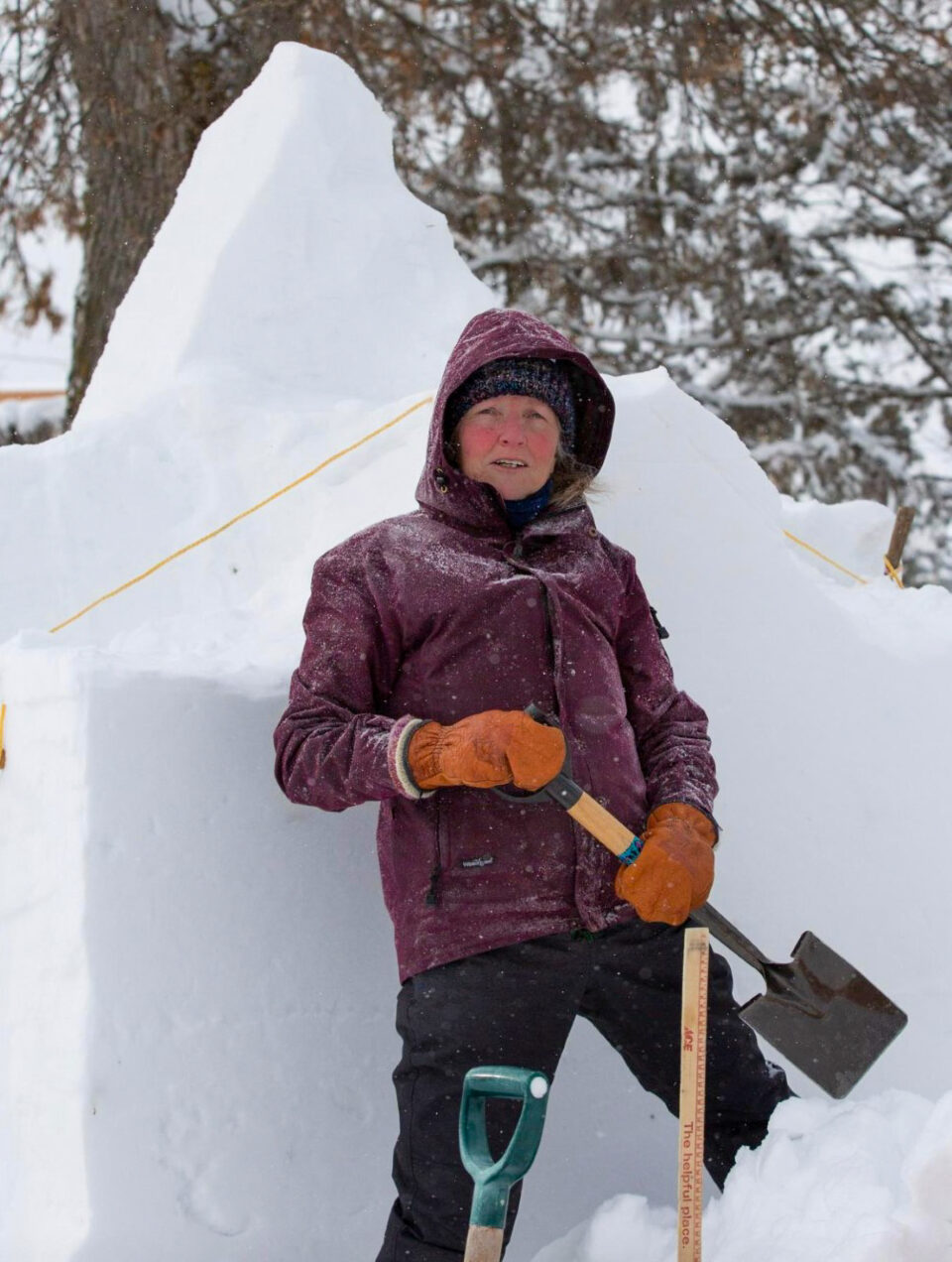
Each year, a group of snow sculptors from around the globe come to Ely to do just that. At the Snow Sculpting Symposium, a highlight of the Ely Winter Festival, held Feb. 5-15, dozens of artists carve breathtaking sculptures from the season’s most abundant material. One of these sculptors is Ely’s own Nancy Scheibe, an artist whose lifetime of work has spanned mediums including sculpture, mural painting, scratchboard, stained glass, and more.
“I’ve always been fascinated by the many ways that snow presents itself. It’s a fascinating thing to me,” Scheibe said.
The snow sculpting process includes two interesting ingredients: planning, and unpredictability. Each carver begins with an 8-by-8-foot or 12-by-12-foot block of snow, which are all set up in Whiteside Park. Using tools like shovels, tin cans, garden tools, and curry combs, Scheibe and her team of friends have three days to bring her vision to life.
“The design is entirely up to us,” Scheibe said. “I generally make a small clay sculpture of what I want to carve and take photos from each direction. Then I put a one-foot grid on it so I can show my team, and we can figure out where we’re going.”
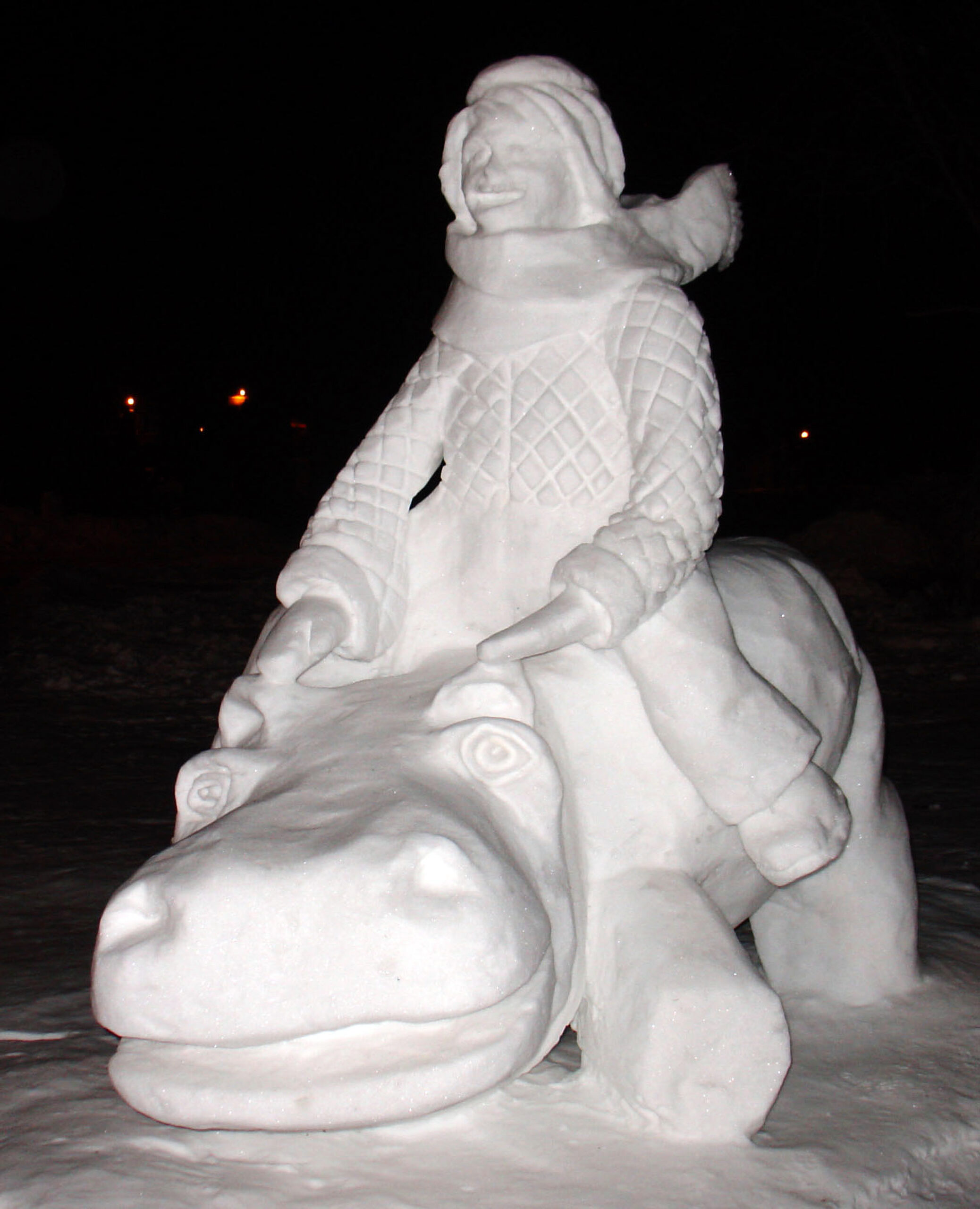
This year, Scheibe is carving a tribute to Jane Goodall. While her plan is in place, the actual carving process is where the unpredictability comes in. The elements play a crucial role in the creation of a snow carving, something no amount of planning can account for. In a good year, the snow blocks might be pristine; in other years, they might be filled with flecks of dirt or chunks of ice which, if the sunlight strikes them, can act like a prism and sear a hole in the piece. Temperature is a big factor in the carving process too. Snow becomes harder when it’s cold; subzero temperatures mean Scheibe can take more risks, as the snow is nice and crisp for carving. Meanwhile, warm temperatures are destabilizing and can send whole sides of a sculpture sliding to the ground. With snow carving, repairing a mistake is anywhere from tricky to impossible, but it’s this element that not only adds a bit of adventure, but brings the carvers together.
“One year I decided to do a delicate piece, and as soon as I started carving I realized there was a huge crack down the middle, which rendered what I’d wanted to do impossible,” Scheibe said. “But a couple other carvers came over, and between us we came up with an alteration that stayed in line with my intent but would hold up.”
As the days progress, some of the most incredible shapes begin to emerge from the snow blocks. Visitors go from guessing what the blocks might become to admiring the detailed works emerging before their eyes. Finally, after much work, the moment comes for Scheibe to lay down her tools and take it all in.
“When we finish a carving, I step back in amazement about what has been created. It never gets less magical,” Scheibe said.
In early February, nobody knows how long the winter will last, and the same is true for the snow sculptures. Unless there’s a risk of collapse, they’re usually left to melt with the rest of the winter’s snow. Not knowing their lifespan is part of the whimsy of these sculptures, and perhaps their impermanence is a reminder to embrace winter while it’s here, even—and especially—before the signs of the next season arrive.