
Depending on where you live in the Arrowhead region, your garbage might have a longer commute than you do. For years, if you live in southern St. Louis County or in Cook, Lake, or Carlton counties, your garbage has been ending up in Superior, Wisc., at the Moccasin Mike Landfill. That will soon change. And depending on where you live, it may affect your garbage bill.
Each week, trash is hauled to Duluth’s Resource Renew (formerly the Western Lake Superior Sanitary District), where collection trucks unload at a transfer station in West Duluth. The waste is pushed into larger trailers and driven to the Moccasin Mike Landfill in Superior.
That arrangement is expected to change this July. Trash will be trucked to landfills in Virginia, Keewatin, or Canyon.
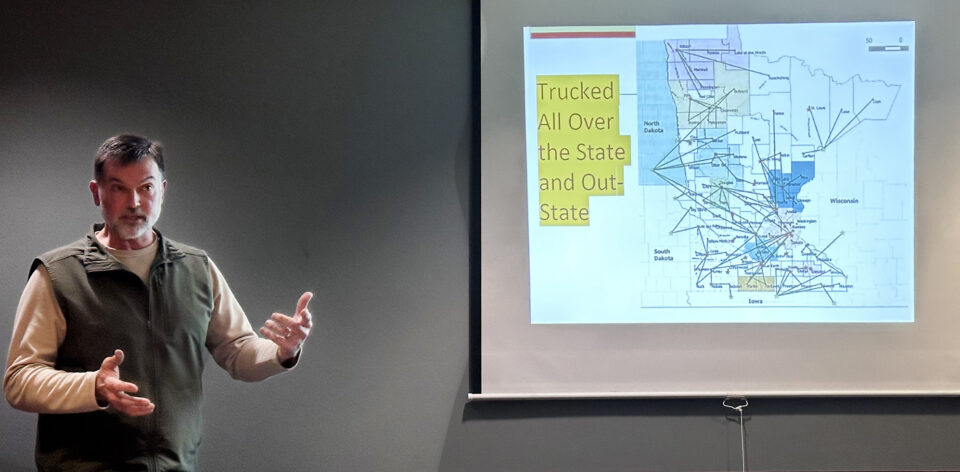
At a recent Duluth Engineers’ Club dinner at the Incline Station, Brett Ballavance, a professional engineer who specializes in landfill design and regulation, explained what that shift means—and how Minnesota’s waste system has evolved. The title of his talk was, “Where Does Our Waste Go? Where’s it Going Next?”
“The older crowd here remember a day when we had approximately 1,500 dumps,” Ballavance said. “Every town had a town dump back in the day.”
In 1973, Minnesota had 1,500 dumps, which were replaced by 140 permitted landfills.
The Moccasin Mike Landfill is now nearing the end of its life. Ballavance said it is “basically full,” with only “a little bit more capacity” remaining. When Duluth and surrounding counties began sending waste there, it filled much faster than it would have if Superior had used it alone—“they probably would have had 50 years of landfill capacity” otherwise. Surrounded by wetlands, the site cannot expand. Superior may keep it open briefly for its own use, but the regional disposal route is winding down.
When that happens, much of Duluth’s trash is expected to head north to the St. Louis County landfill near Virginia, adding miles to each load.
From Town Dumps to Engineered Landfills
Those early disposal sites were largely unregulated. After the federal Resource Conservation and Recovery Act of 1976 and Minnesota’s Waste Management Act of 1980, standards tightened. By the early 1990s, new landfills were required to include engineered protections: compacted clay liners, thick geomembrane barriers, and leachate collection systems. That transition marked the beginning of what Ballavance calls the modern engineered landfill.
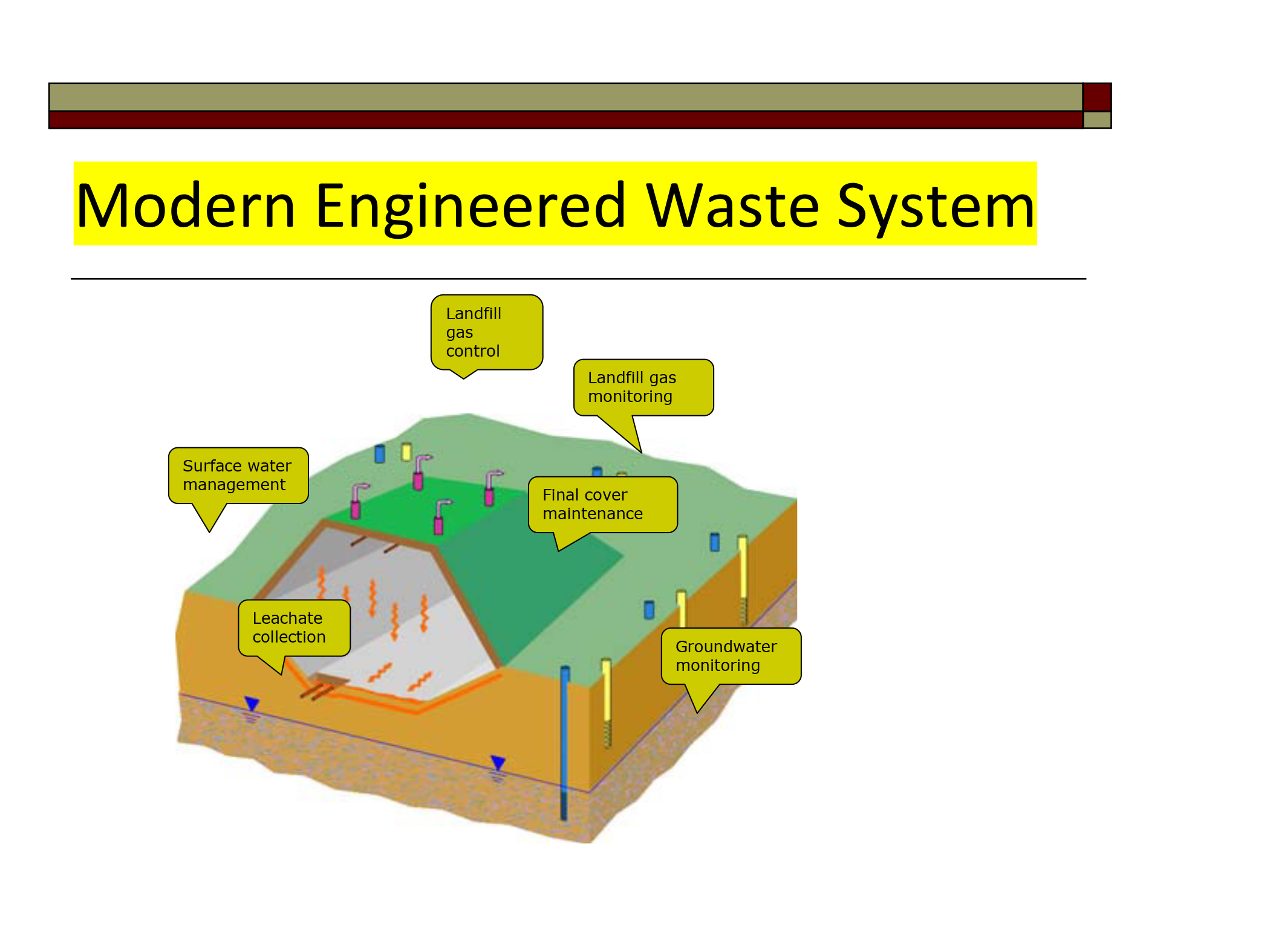
Modern landfills, he emphasized, are designed to protect groundwater and surrounding ecosystems.
“We can’t have landfills without a diaper underneath them,” Ballavance said. “You put in a liner system, collect the leachate, and treat it. It’s engineered.”
Today’s sites use clay and synthetic liners to prevent contaminated liquid from reaching aquifers. Gas wells capture methane as waste decomposes, and some facilities recover that energy.
“A modern engineered landfill is highly effective,” he added. “You’ve got liner systems, leachate collection, gas management. It’s designed to protect groundwater.”
Three Types of Waste—Three Different Systems
Minnesota categorizes waste into three primary types. The first is municipal solid waste—everyday household garbage. Minnesota has 21 permitted municipal solid waste landfills statewide, with relatively few located in the northern part of the state.
The second category is construction and demolition waste, including drywall, lumber, and roofing shingles. While once considered relatively inert, many construction-and-demolition landfills are unlined, and dozens statewide have documented groundwater contamination issues. Regulators are considering new liner requirements that could close smaller facilities and raise disposal costs.
The third category is hazardous waste. Household hazardous waste—such as paints, solvents, and certain chemicals—must be handled through designated collection programs and cannot enter regular landfills.
Most of us roll our garbage carts to the curb without thinking about what happens next. But in a region defined by wetlands, forests, and the Lake Superior watershed, where groundwater feeds trout streams and drinking water alike, how we manage what we throw away is part of the landscape, too.