

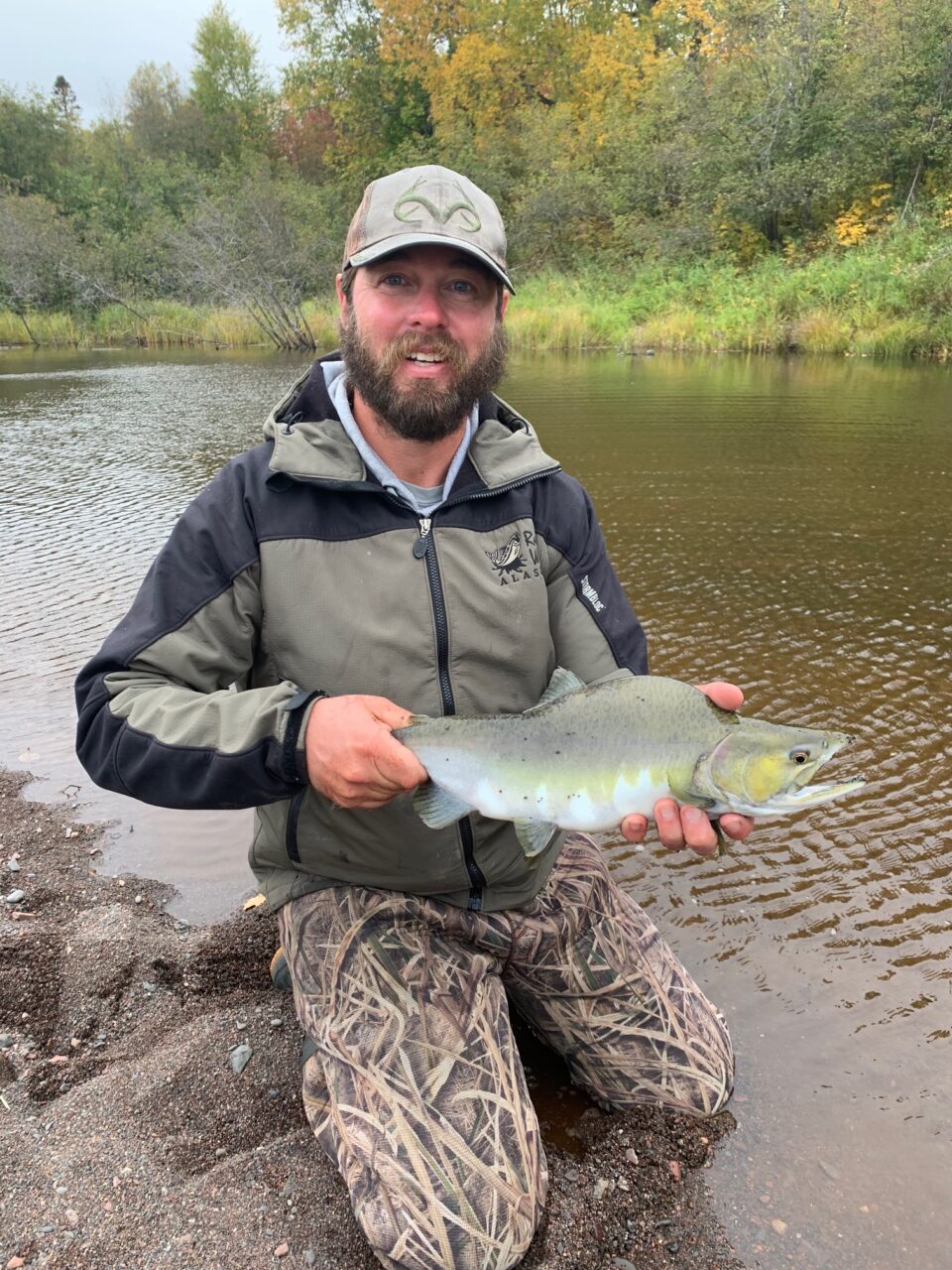
Most of the trout and salmon species found in Lake Superior were not native to the lake. Steelhead, brown trout, and chinook and coho salmon were all introduced. But perhaps the most improbable species to show up in Lake Superior is the pink salmon.
Pink salmon (as well as chinooks and cohos) are native to the Pacific coast where they spawn in streams, then migrate downriver to the ocean for a few years before returning to their natal stream to spawn and die. Both chinooks and cohos were introduced to the Great Lakes to devour invasive alewives—a small, nonnative species that made it up the St. Lawrence Seaway and then used to die en masse, washing up on beaches and stinking to high heavens. So, they were brought here intentionally to solve the alewife problem. But the pinks? They were an accident!
Ontario wanted to stock pink salmon in Hudson Bay, so the province acquired about 800,000 pink salmon eggs from British Columbia’s Skeena River in 1955 and brought them to the Port Arthur Hatchery along the Current River. In 1956, fingerling pink salmon were loaded on a seaplane and delivered to Goose Creek for stocking. The 750,000 or so fish didn’t survive the stocking. For unknown reasons, about 21,000 fingerlings remained in the hatchery, so they were essentially flushed down a sewer that flowed into the Current River, which is a tributary of Lake Superior. Amazingly, this relatively small accidental stocking of fish no longer than your fingers managed to survive and actually started reproducing. In 1961, a few pinks were caught in the Nipigon and Pigeon rivers. From there, their numbers increased.
Pink salmon typically have a two-year life cycle. And like all Pacific salmon, after spawning, they die. So, pinks began showing up in streams in the fall of odd-numbered years to spawn. But over time, some fish began living for three years in the lake’s cold, nutrient-poor water before maturing, so some fish began spawning in even-numbered years as well.
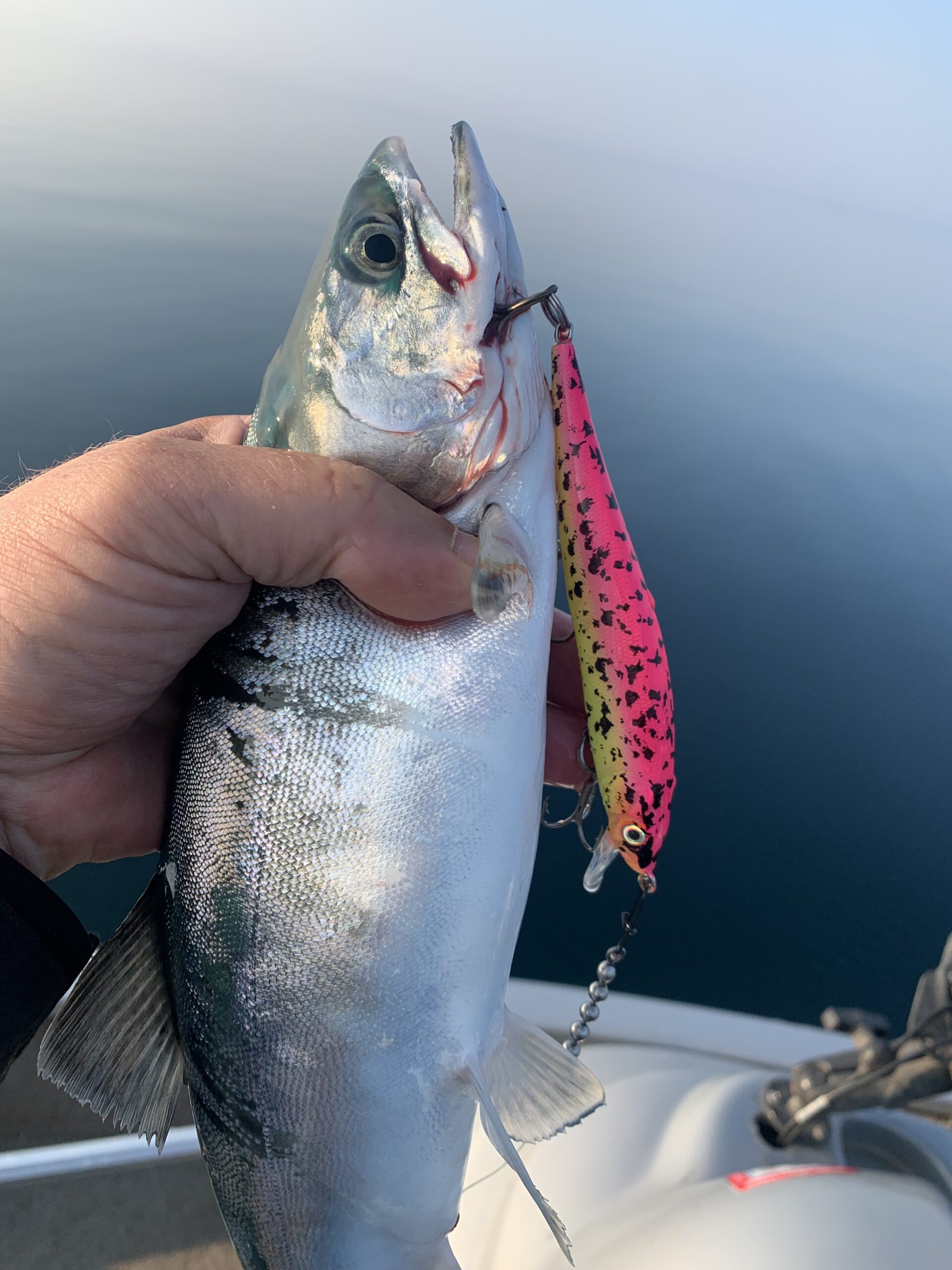
Pinks are small fish. An adult spawning male measures only about 16 inches long. They are sometimes caught while trolling on the lake. They generally only run a foot or so in length and can be hard to detect on your line, especially on large boats. Silvery fish caught in the lake are decent eating, but they are best eaten fresh, not frozen.
In August and September, pinks run up tributaries of Lake Superior to spawn, particularly after a good rain raises the water level. It’s a good time to try to add a new species to your angling list, but even if you’re not a fisherman, it’s just plain fun to watch these fish swim around in shallow water, where males fight for position and the chance to court a female.
The fish are cylindrical out in the lake. They are generally silver, with a pink and blue sheen when caught just right in the light. The inside of their mouths is black, and they have oval spots on the top of their backs and throughout their tails. Pinks change color when they enter streams to spawn. They turn olive green, with dark ovals on the back and tail. They typically get a pink wash along the center of their side. They also have white on their lower side, just above the belly. Although females retain their cylindrical shape, males develop a hooked jaw called a “kype” and a pronounced hump on their back, which gives them their common name “humpy.” Once pinks develop their spawning colors, the flesh is poor eating.
Unlike chinooks and cohos, young pinks head out to the lake rather than staying in the stream after hatching. This gives them a leg up because North Shore streams have low flows most of the year, outside of spring runoff and heavy rain events.
It’s amazing to watch these relatively small fish work their way upstream, over rapids, pulled by a deeply rooted desire to fulfill their destiny of spawning one time, only to perish shortly after.
The improbability of pink salmon surviving one accidental stocking seems astronomical, but they are in Lake Superior to stay. This fall, head down to the mouth of nearly any North Shore stream and you’re likely to see these little salmon carrying on their spawning tradition.