


In winter “life is played out on the anvil of ice and the hammer of deprivation. For those that endure until spring, existence is reduced to its elegant essentials.”—Bernd Heinrich, Winter World: The Ingenuity of Animal Survival
This is a story of why wolves need snow to survive. It’s also a story of a time in earth’s history when winter’s white blanket is disappearing, leaving wolves and countless other species in peril.
The ancient Greeks and Romans believed there were four elements: earth, fire, air, and water. But as Terry Tempest Williams and Ted Major write in their book The Secret Language of Snow, “Perhaps they should have added one more—snow.”
In winter, snow covers some 16 to 18 million square miles of the Northern Hemisphere, according to the National Snow and Ice Data Center. Now, scientists are discovering the many ways snow is critical to the lives of animals in northern latitudes. A deep and long-lasting snowpack insulates the soil from frigid air temperatures, prevents plant roots from freezing, and provides animals with winter housing—and in the case of wolves, food.
Tom Gable, lead scientist for Minnesota’s Voyageurs Wolf Project, is one of a breed of researchers sometimes called winter, or snow, ecologists. The science of snow ecology—the study of the relationships among animals, plants, microbes and their snow-covered environments—is coming into its own. Not a moment too soon, biologists like Gable say, when one discovers how important snow is in the lives of so many species, including wolves.
Those thoughts echo the findings of Russian naturalist A.N. Formozov, arguably the father of snow ecology. Formozov conducted his research in the 1930s and 40s in remote Siberian forests. “The presence of snow cover in the biosphere is, in its direct and indirect results, one of the most important factors in nature,” Formozov states in his 1946 report, Snow Cover as an Integral Factor of the Environment, and Its Importance in the Ecology of Mammals and Birds.
Out in the Cold
Far from Siberia in distance but not in habitat, the Greater Voyageurs Ecosystem (GVE) is a 2,338-square-kilometer (903-square-mile) boreal forest that includes Voyageurs National Park and federal, state, county, timber company, and privately-owned lands south of the park. The landscape “is typical of southern boreal forests,” state Gable, Austin Homkes, and Joseph Bump, all of the University of Minnesota, in a 2024 research paper in the journal Ecology and Evolution. Voyageurs’ coniferous, deciduous, and mixed forests are dotted with bogs, wetlands, and lakes.
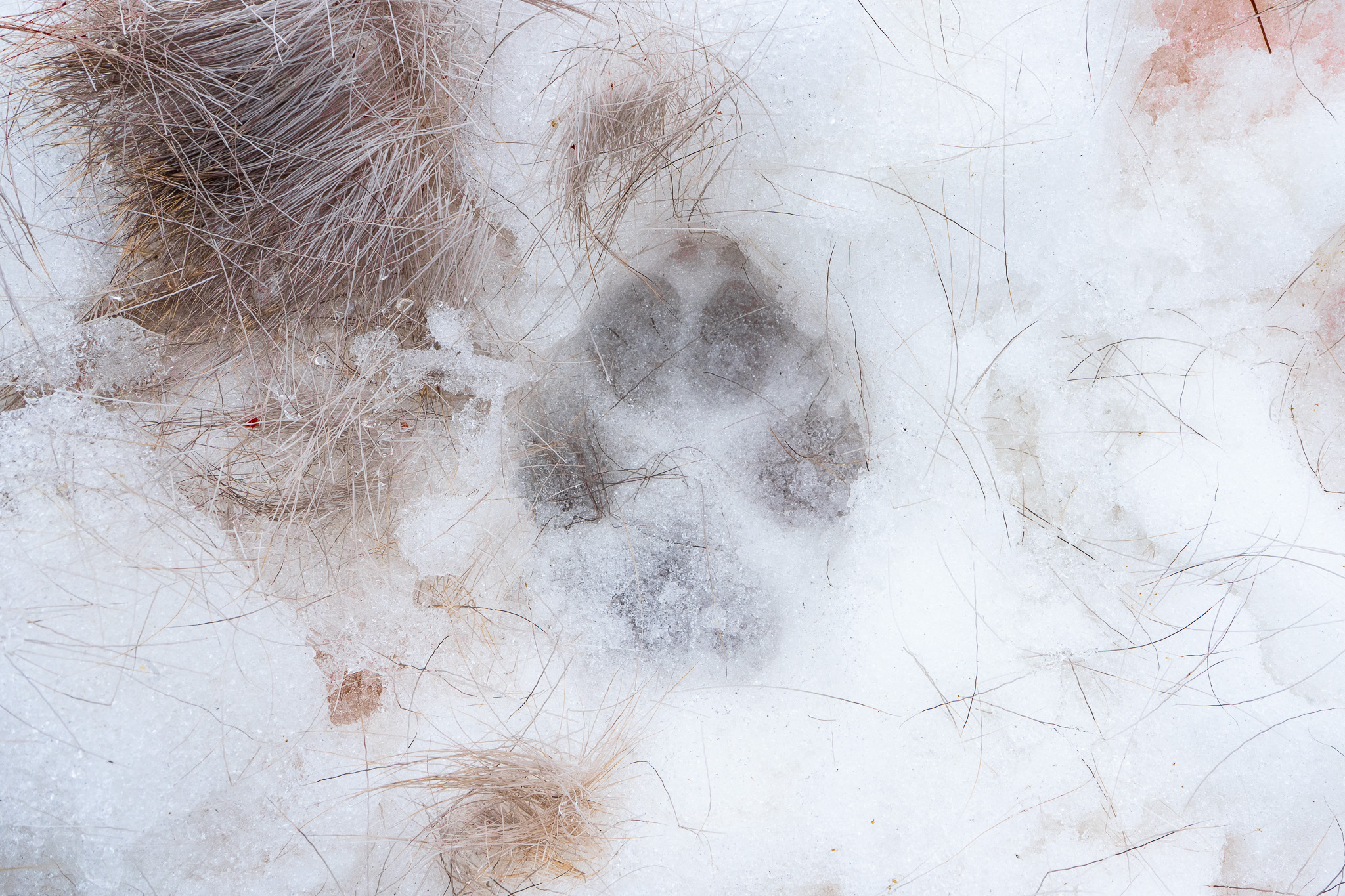
Winters in Voyageurs are long and cold, with snow usually covering the ground from November through March, sometimes through May. Voyageurs wolves’ primary prey is white-tailed deer, with beavers and fish also on the menu when waters are ice-free from April through October.
“Of particular interest, given current and expected changes in winter conditions,” write Gable and co-authors, “is how kill rates of wolves on deer during winter vary with…snow depth and duration of snow cover. Predation rates of wolves on deer are generally low during mild, shorter winters and relatively higher during severe, long-lasting winters.” In a high snowfall area in the Upper Peninsula of Michigan, for example, kill rates of wolves on deer almost tripled from the beginning of winter (0.32 deer per wolf per day) to the end of winter (0.95 deer per wolf per day). The change was a result of increasing snow depth throughout the season.
Deeper snow favors wolves over deer. In deep snows, the low green plants deer eat are covered, leaving them without an easy food source. And deer can’t outrun wolves through heavy snow. In low-snow winters, however, wolves often go hungry.
“Small adjustments in winter conditions can flip the scale in favor of deer or wolves,” says snow ecologist Emily Studd of Thompson Rivers University in Kamloops, British Columbia. “Snow is likely impacting deer ease of movement, ability to escape attack, and health due to nutrition. Low or short snow seasons often allow herbivores [such as deer] to maintain higher condition and high speed, keeping them out of harm’s way.” Deep or long snow seasons do the opposite. With wolves and deer in winter, “when one wins,” Studd says, “the other loses.”
Balmy Winter Hits Minnesota
The winter of 2023-24 was the mildest winter in recorded history in Voyageurs National Park and much of northern Minnesota, according to the Midwest Regional Climate Center. “The winter was especially notable for the lack of snow,” report Gable and colleagues. Total snowfall was 110 centimeters (3.6 feet) with average monthly snow depths from December 2023 to March 2024 ranging from 0.8 centimeters (three-tenths of an inch) to 14 centimeters (5.5 inches).
Snow depths never topped 30 centimeters (11.8 inches) which, states Gable, “stands in stark contrast to the preceding year when snow depths exceeded 30 centimeters [11.8 inches] for 117 days. The lack of snow was accompanied by unseasonably warm temperatures (average temperature during December 2023-March 2024 was 6 degrees Celsius [42.8 degrees Fahrenheit]) warmer than average temperatures during that same period from 1990-2023.”
Gable, Homkes, and Bump estimated kill rates of wolves on deer before, during, and after the mild winter. The rates were low in fall (0.009-0.018 deer/wolf/day), peaked in February (0.050 deer/wolf/day), and quickly declined to 0 deer/wolf/day by April. “The kill rates of wolves we observed in winter were some of the lowest kill rates documented,” the researchers report.
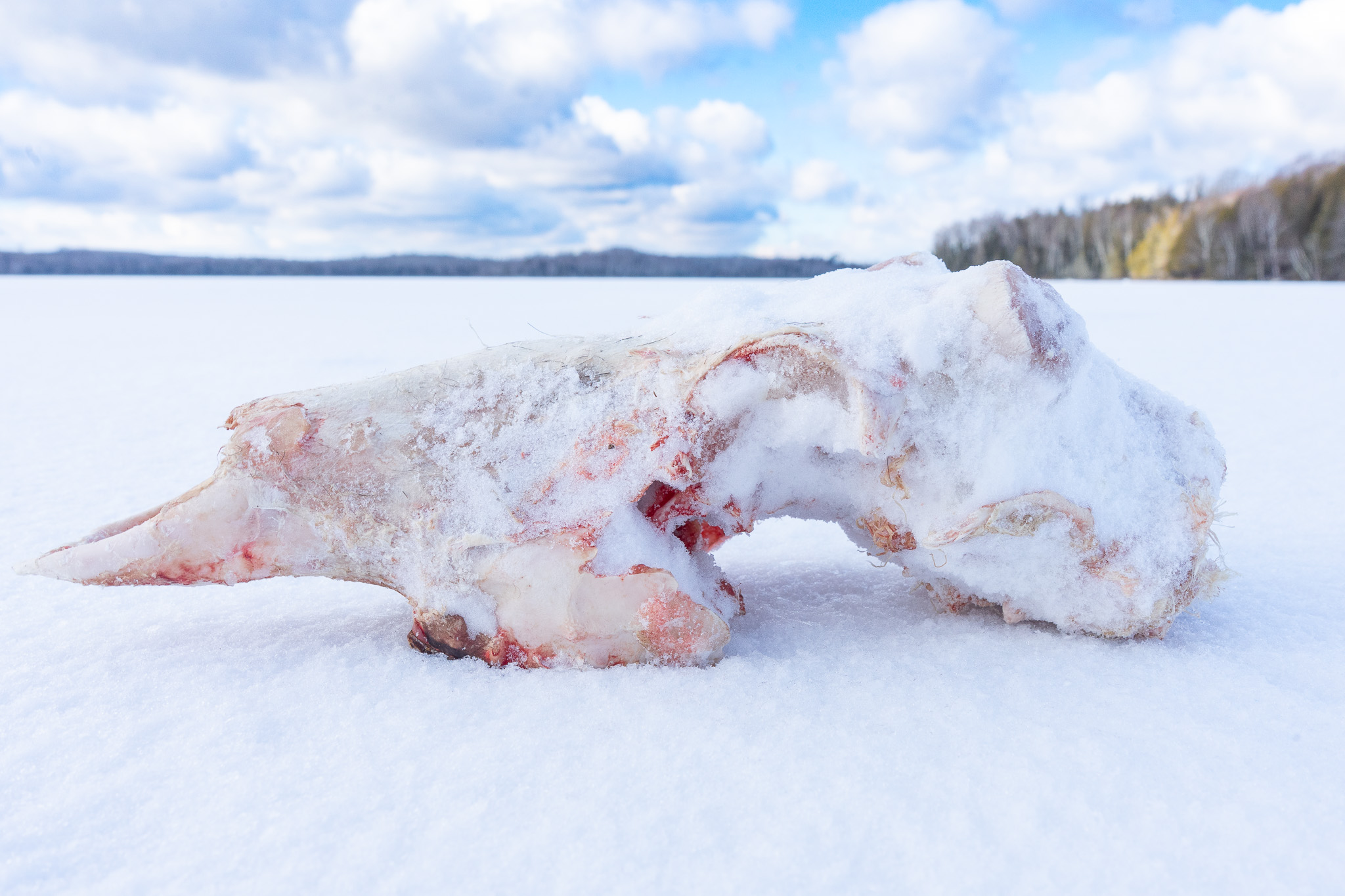
“Wolves in the Greater Voyageurs Ecosystem appeared unable to catch and kill a sufficient number of deer to meet their daily energetic requirements during winter 2023-24, and thus most wolves likely lost weight during winter, a period when wolves are typically in peak physical condition,” the scientists found.
The study also shows that “winter conditions are the primary driver of deer population change in northern climates,” the biologists say. Indeed, Gable has seen “increases in our annual deer population estimates over the past two years, likely because of consecutive mild winters.” Wolves are left to eke out a living, including scavenging on carrion.
Minnesota’s 2024-25 winter was also warmer than normal, continuing the state’s trend of milder winters. The GVE wolf population in 2024-25 was 44.7 wolves per 1,000 square kilometers (386 square miles), Gable and colleagues report, a decline of 19 percent from the previous year.
Wolf biologist David Mech, founder of the International Wolf Center in Ely, which supported the research along with other organizations, says that the Voyageurs study “adds important details to the relationship among white-tailed deer survival, winter conditions, and wolf predation, and greatly furthers our understanding of the significance of winter weather in determining deer population changes.”
Wolves in a Warmer Future
In recent decades, winters in northern climes have significantly warmed, according to scientists at the Minnesota Department of Natural Resources, with average daily low temperatures in winter rising more than 15 times faster than summer high temperatures between 1970 and 2024.
University of Minnesota Climate Adaptation Partnership researchers say that Minnesota has experienced the most significant winter warming of any state in the contiguous U.S. “Most of the warming has been concentrated during the coldest months of the year,” they report. “By mid-century (2040-2059), average annual temperatures in Minnesota are projected to increase by 3.8-4.5 degrees Fahrenheit.” Shorter snow seasons will result.
What will happen in a world where snow slowly fades away as the decades pass? “How wolves and other species adapt as climate change continues,” says Studd, “is critical to how well they will fare.”
For now, the future for wolves in Voyageurs National Park and beyond looks brightest in a snow-white winter.