
The Northland is being invaded!
These aliens may not be from outer space, but they are unwelcome, destructive visitors creating havoc in our local ecosystems.
Invasive species are plants and animals that are not native to the area, and that also cause harm. Their presence causes unwanted changes to the environment, hurts the economy, and sometimes presents a threat to human health.
From strange creatures in our lakes to giant creeping weeds, invasive species are moving and spreading all around us. How did they get here, and what can we do about them?
Aquatic Invaders
We live in the land of lakes, and this abundance of water is important to all kinds of life forms that depend on it. When foreign invaders threaten the fragile balance in these waters, it creates a cascading negative impact.
“What are some of the ways invasive species don’t create problems?” asks Amanda Weberg, tongue in cheek. She is the Aquatic Invasive Species program supervisor with the Cook County Soil and Water Conservation District, a grant-funded position she has held since 2015. She was also recently elected chair of the Statewide Aquatic Invasive Species Advisory Committee.
Weberg lists the spiny waterflea, rusty crayfish, mystery snail, and sea lamprey as some of the most problematic aquatic invasive species (AIS) in northeastern Minnesota.
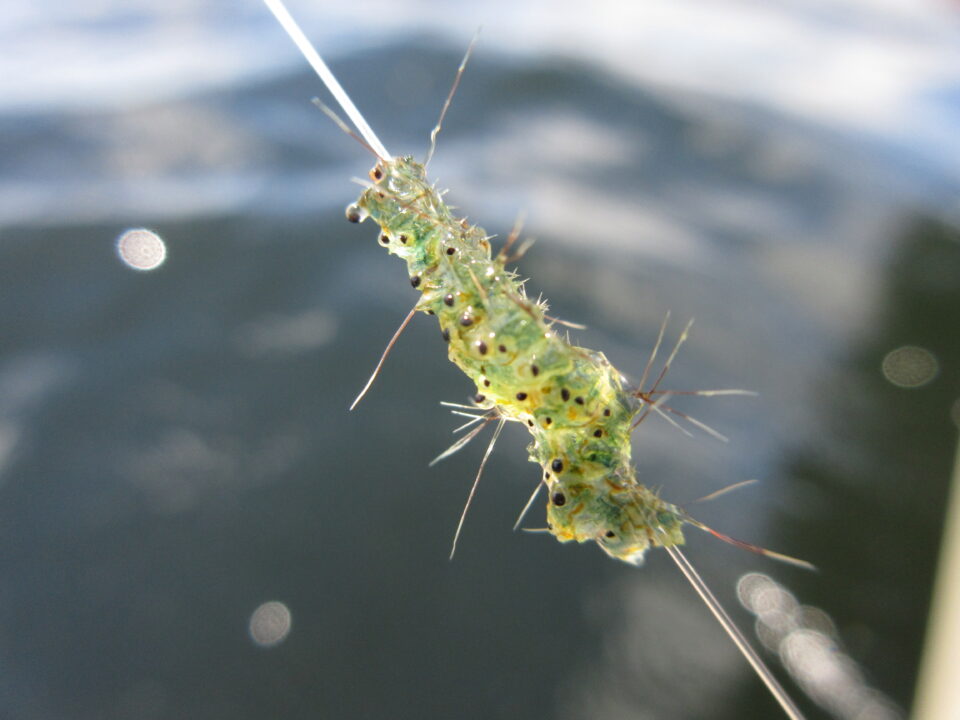
Spiny waterfleas (Bythotrephes longimanus) originated in Europe and Asia, where they live in the Baltic Sea and Caspian Sea. They were accidentally transported in the ballast tanks of cargo ships and discharged into the St. Lawrence River in the early 1980s, and by 1987, they had infested all of the Great Lakes.

“These small crustaceans have long, spiny tails that are not digestible to our native fish,” Weberg explains. “Fish in spiny waterflea’s native range have a second set of teeth further in their throat that snip the spiny tail off. When our native fish eat spiny waterfleas, the spines stay piled up in their stomachs.”
Spiny waterfleas also eat daphnia, a small freshwater crustacean zooplankton regularly consumed by native fish species, like walleye. When this food source is less available, fish struggle to make it through their first winters.
Spiny waterfleas often resemble gelatinous globs, like wet cotton, when they attach to fishing line, potentially clogging reels and other equipment. Unfortunately, there are no known eradication methods once they infest a body of water, so the focus is on preventing their spread through mandatory “Clean, Drain, Dry” protocols for boaters, public reporting of new infestations, and education.
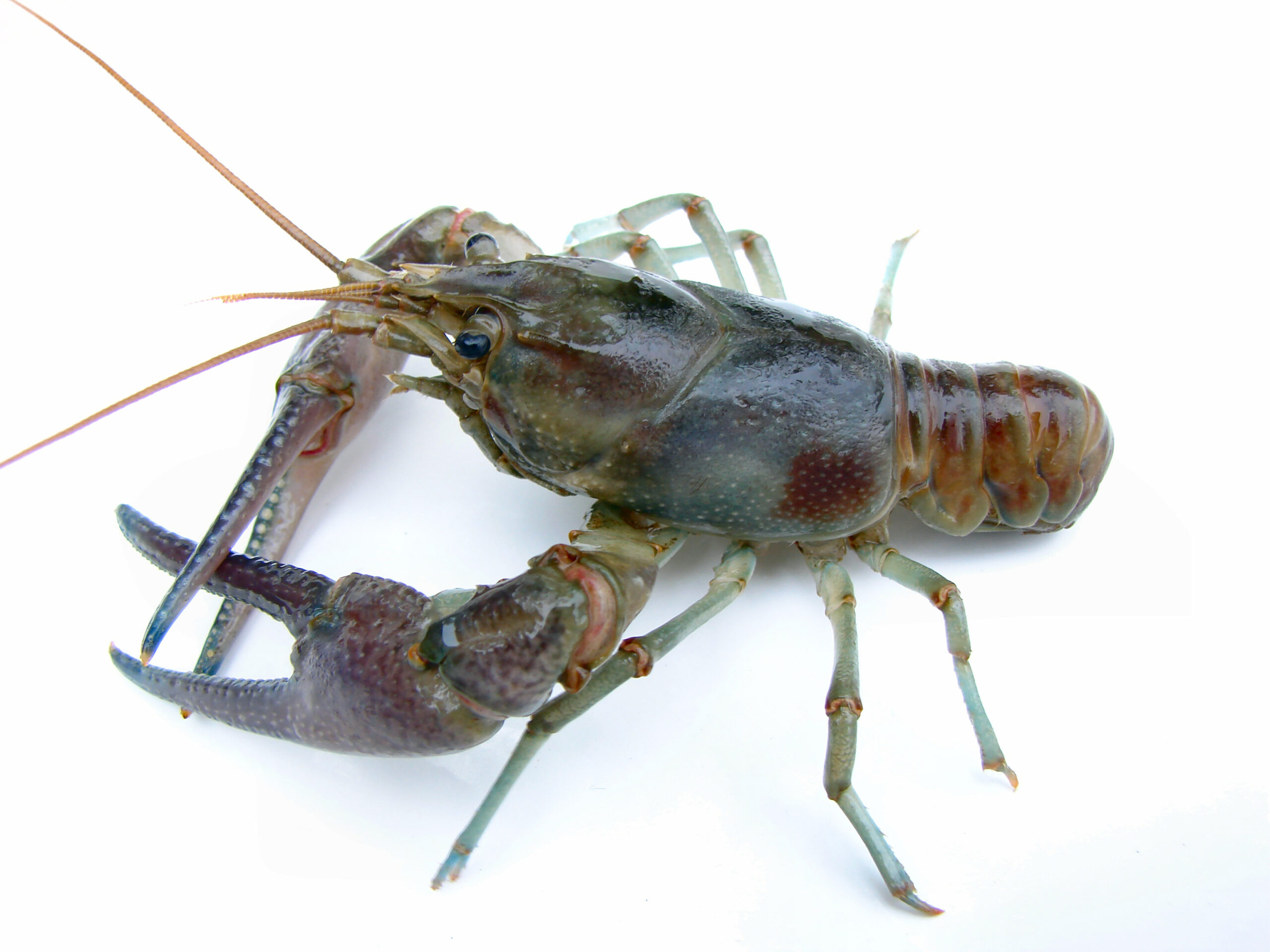
Rusty crayfish (Faxonius rusticus) originated in the Ohio River Valley, and they made a home in the Northland as released bait and aquarium pets.
“Rusty’s are larger than Minnesota’s native species and will outcompete native crayfish for food and shelter,” Weberg says. That makes the native crayfish easier targets for predators. “Once rusty’s are introduced into a water body, it takes less than three years to displace the native species,” she adds. Additionally, they destroy the aquatic plants that provide sheltered nursery habitat for young fish, amphibians, and reptiles.
Rusty crayfish can be identified by a rust-colored spot on the sides of their carapace, though they look similar to local crayfish, especially when young.
There are initiatives to control this AIS. “Rusty crayfish can and are trapped extensively in certain lakes,” Weberg explains. “Removal of the invasive crayfish can keep the population small enough that smallmouth bass can predate to maintain a manageable rusty population.”
Mystery snails (Cipangopaludina chinensis) originated in Asia and entered the U.S. as a food source and aquarium pet. They were released in the U.S. in the late 1800s, and populations were first recorded in Minnesota in the early 2000s.
“Mystery snails create large populations with mass die-offs,” Weberg says, which fouls the shorelines and beaches. “Mystery snails are also a carrier of trematode parasites that can kill animals that prey upon them.”
Like the spiny waterflea, controlling mystery snail populations isn’t feasible, so preventing their spread through the aforementioned watercraft maintenance is important.
Sea lamprey (Petromyzon marinus) are parasitic fish that latch onto and suck the blood of larger fish. One of the most recognizable AIS because of their horrific appearance and habits, these creatures originated in the Atlantic Ocean and swam their way into the Great Lakes when canals were built in the 1920s.
“Sea lampreys have been the most devastating Great Lake invaders by killing lake trout,” Weberg states. “Before lamprey control efforts, lake trout populations were nearly eradicated in Lake Superior.” A single lamprey can destroy 40 pounds of fish in its life.
“Sea lamprey control consists of barriers to prevent upstream movement to spawning areas and lampricides to kill the larval stage of sea lamprey in tributary systems,” Weberg explains. “Lampricide does not impact other organisms.”
Other AIS, like zebra mussels, goldfish, Eurasian watermilfoil, ruffe, and round goby, are commonly found in waters near Duluth and in other parts of the state, but thanks to control efforts, they have not yet established populations in Cook or Lake counties.
Incoming Threats and How to Help
Aquatic invaders are only part of the story.
“The most threatening invasive species to the Northland, in my opinion, is the terrestrial plant knotweed,” Weberg says. The plant has a huge root system that grows through foundations and destroys structures. The roots also contribute to faster erosion during floods.
Thankfully, knotweed can be treated with herbicide, which only works because populations are still small enough to manage. Buckthorn, on the other hand, is a widespread and common invasive plant that has proven difficult to eradicate.
To help prevent the spread of invaders, remember to always empty, clean, and dry your watercraft; be careful when planting or disposing of non-native perennials; check outdoor equipment for invertebrate hitchhikers before traveling; and never release unwanted pets into the wild.
If you’d like to go deeper on invasive species and get involved, consider attending two events happening this summer in Cook County: The 4th Annual Invasive Species Brewery Event (Mystery Snail Edition) at Voyageur Brewing on June 20, and Pull, Plant, Protect the Gunflint Trail at Seagull Lake Community Center on July 22. Both events offer prizes and an opportunity to connect with others to make a positive impact.
Weberg also notes that you can learn how to identify plants and animals using the iNaturalist app, and then submit a report on potential invasive species you find by contacting your county’s Soil and Water Conservation District or agricultural inspectors.
There are many more invasive species to discuss, like purple loosestrife and spongy moths. To learn more, including distribution maps, visit the Minnesota DNR website: dnr.state.mn.us/invasives.