

Across northern Minnesota and Ontario, two unique institutions—Marshall W. Alworth Planetarium in Duluth and the David Thompson Astronomical Observatory in Thunder Bay—invite visitors to experience the awe of the night sky firsthand, blending history, education, and technology to connect people with the cosmos.
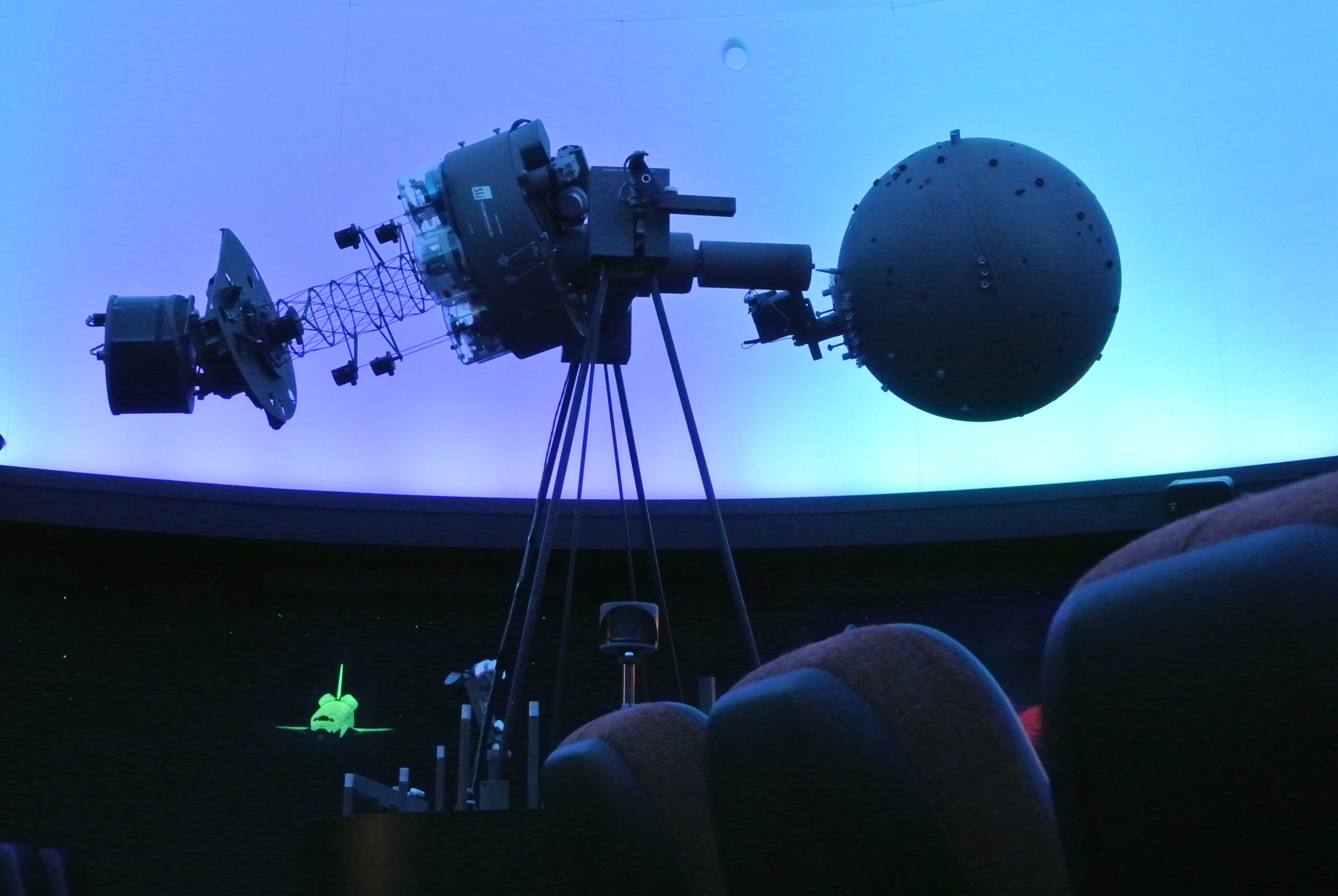
At the University of Minnesota Duluth, the Marshall W. Alworth Planetarium has been a gateway to the universe since 1967. Jessica Rogers, the planetarium’s director, described the blend of tradition and innovation that defines the space: “The planetarium started out with a starball projector, which was very common for the time.” The original starball remains “a beautiful old piece of machinery,” still functional and beloved, but now complemented by a digital system that lets visitors “fly through the solar system or the universe” and enjoy immersive full-dome movies.
Programs at the planetarium are as varied as the night sky itself. Rogers, who also teaches undergraduate astronomy classes at UMD, shared how the weekly Wednesday free shows serve as a playground for creativity: “Those are times for my students to experiment…It’s how we ended up with a show around the astronomy in Star Wars.” Fridays offer curated tours of the solar system, its moons, and beyond, while Saturdays feature family-friendly full-dome movies and night sky tours using the historic starball. Event information can be found on the planetarium’s website (bit.ly/d-umn-planetarium).
Community engagement is central to the planetarium’s mission. “I’m the only full-time staff…the majority of the staff are students. So, this place is largely student-run,” explained Rogers. Beyond regular shows, the planetarium hosts field trips, private events, and even weddings. Seasonal special events include a popular Halloween celebration, Astronomy Day in spring, and a summer Dark Sky Caravan. A portable dome allows the planetarium to bring the cosmos on the road, reaching schools and communities that might not otherwise have access.
When asked why the planetarium matters, Rogers reflected on the universal appeal of astronomy: “Everyone has some interest in astronomy. I don’t think that ever goes away.” Above all, she wants to inspire visitors, especially young people, to keep their curiosity alive. “We need scientists, even if they don’t go into astronomy. If this is a kid’s way to kind of hook into it, that’s what I want to do. I just want to show that science is fun and approachable.”
About 200 miles northeast, Fort William Historical Park in Thunder Bay offers a very different but equally compelling connection to the night sky. This living history park immerses visitors in the fur trade era of 1815, and also hosts the David Thompson Astronomical Observatory, a link between past and present.
Caroline Hunt, environmental, ecological, and outdoor education specialist at the park, explained the choice of namesake: “David Thompson was an 18th century fur trader, surveyor, astronomer, explorer, and cartographer. He traveled across the continent and used astronomical tools to create an accurate map of Western Canada.” The observatory honors that legacy.
Constructed between 2011 and 2012 with support from the Royal Astronomical Society of Canada, the observatory is home to one of the largest telescopes in Central Canada. Its Planewave telescope boasts a 20-inch mirror and the advanced Corrected Dall-Kirkham design, enabling views of nebulae and stars to distant galaxies “tens of millions of light-years into space,” said Hunt.
The observatory also serves as a portal to history. The display includes antique telescopes, a drafting kit with drawings from the 1800s, sextants—navigation tools used by fur traders—and an impressive meteorite collection. Among these rare treasures is “a tiny rock from Mars.” Visitors learn about their origins and the cosmic forces that brought them to Earth.
Programs at Fort William range from family-friendly gatherings to cultural explorations of the night sky. Tickets for the December 13 Geminid meteor shower viewing are available through the observatory’s website (fwhp.ca). In February 2026, the observatory will host a program on Indigenous storytelling about the night sky. Activities will include learning about the Anishinaabe star chart, outdoor night sky viewing, and exploration of the meteorite collection and space exhibits. Hunt noted that winter skies offer clearer views: “There’s less humidity, so it makes it a lot clearer and easier to see the stars.”
Both Rogers and Hunt emphasized the importance of public access to astronomy for inspiring young minds. Rogers sees the planetarium as a spark: “Whether your interest is in chemistry, geology, or physics, there is some connection to astronomy.” A former student is now an astrobiologist, researching the possibility of life beyond Earth. Hunt echoed this excitement, highlighting how the observatory introduces children and students to “various career opportunities…It’s not just being an astronaut. There’s so many different things you could do that are related to space.” Both believe that astronomy cultivates the critical thinking and problem-solving skills vital for any professional path.
For Hunt, even small moments carry weight: “Whenever the moon is out, I can spot exactly where Neil Armstrong landed on the moon and took his first step and imagine what it was like.” That connection to history and exploration animates her work, bridging centuries through the night sky.