The fragrant, beautiful Christmas wreaths we see decorating doors and windows in December wouldn’t be possible without the hard work of balsam bough collectors and wreath makers each fall. After the second frost of the season, when balsam needles “set” so they don’t fall off as easily, folks across northern Minnesota venture into the woods to collect balsam fir boughs to put a little extra cash in their pockets.
Jonathan Hanel, owner of Northern Connections Landscape, Greenhouse & Evergreen Products, in Two Harbors, has been making balsam wreaths and garland and buying boughs from locals for 25 years.
Hanel grew up in Mankato and made wreaths for a nursery down there. “When we came up here (to Two Harbors), I knew I wanted to be in the (wreath) business,” he said.
Last year, his company made about 2,000 wreaths. This year he expects to produce 2,500 to 3,000.
“We sell wholesale to various nurseries and organizations around the state and into Wisconsin and Michigan,” Hanel said. “And then we have our fundraisers like the Two Harbors ski team and the Cook County ski team. They turn around and sell our products, and that’s how they make their money.”
Hanel says he pays 30 to 60 cents a pound for balsam boughs.
“We pay a little higher,” he said. “We try to find people we can trust. We’re very choosey with our bough cutters. You can’t have a lot of waste in this business.”
Hanel wants just the tips of the branches. The branches should be cut no larger than pencil diameter. Also, it’s important not to cut the branch too close to the trunk.
“When the branches are cut correctly, those branches will recover and grow back in a few years,” Hanel said.
Minnesota is one of the leaders in the Christmas wreath industry. According to the DNR website, each year about 750,000 pounds of boughs are harvested from state forest lands alone, not counting county, tribal, national, and private forests. That wouldn’t be possible without independent workers going afield to harvest balsam boughs. Most harvest takes place on the region’s abundant public lands, but boughs may be harvested on private property as well.
If you’re harvesting on public lands, you’ll need a permit from the agency that owns the land. That could be your county forestry office, tribal headquarters, DNR forestry office, or national forestry office. A nominal fee is charged for the permit, based on the amount you plan to harvest. You’ll be given a sign to display in your windshield while you’re in the field, indicating you are harvesting balsam boughs. If you cut branches on private land, you need to carry written permission while doing so.
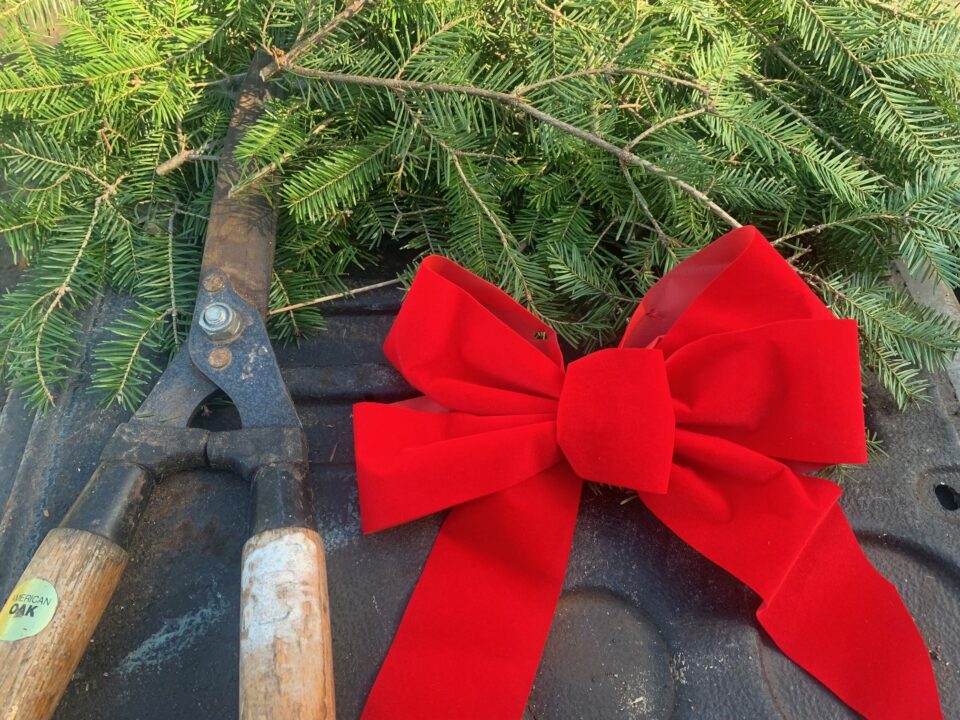
Sustainable harvest ensures the life of the tree and future harvests from the same individual tree. Therefore, don’t cut boughs from trees less than 7 feet tall, and take only branches from near the bottom of the tree. Also, don’t take more than half a tree’s branches. Avoid branches with brown needles. Pruning shears or clippers allow you to cut branches easily and cleanly.