

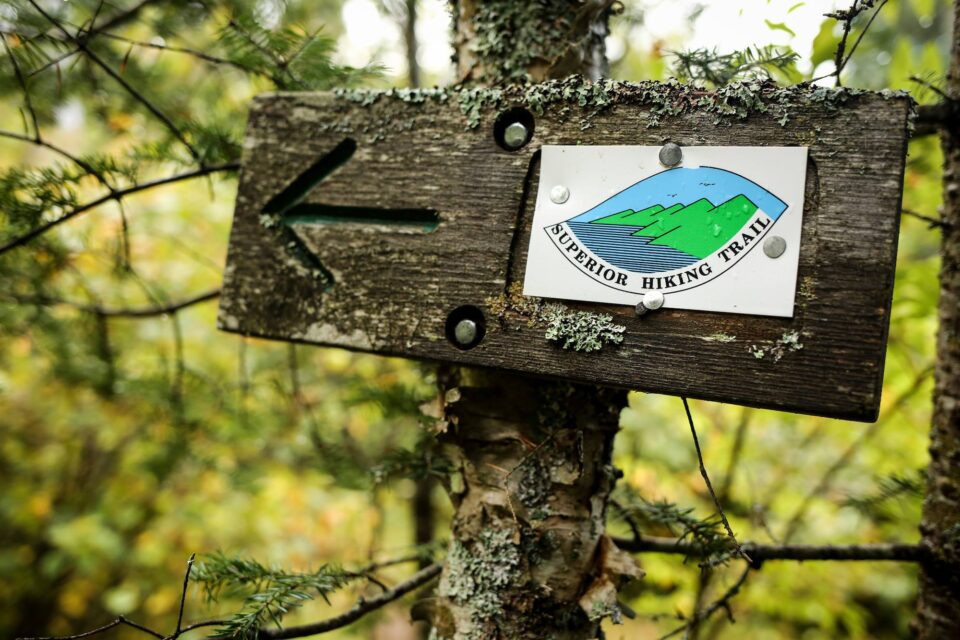
The spring melt has arrived. Lake Superior tributaries are pounding their way furiously down to the Big Lake. The ground is turning soft, and the woods are reverberating with the call of spring peepers. Everywhere you look, nature is making fresh starts. It’s this wild environment that the Superior Hiking Trail—stretching 310 miles from Jay Cooke State Park in the south to the Canadian border in the north—calls home.
The SHT, as it’s commonly known, is turning 40 this year and has evolved over the last four decades into Minnesota’s premier hiking trail. It provides users with scenic day hikes, rugged overnight backpacking trips, or a space to decompress with a walk or run after work. While the trail may not see heavy use this spring until the ground dries out a bit more, behind the scenes a team of board members, staff, and volunteers is planning a series of events to commemorate the trail’s 40th anniversary in 2026. Here’s how the Superior Hiking Trail Association has grown over the last 40 years, elevating the trail from what were once impenetrable woods into a ribbon of adventure and exploration along the Lake Superior coastline.
Lisa Luokkala, SHT executive director and head of the SHT Association, is focusing on education and outreach to new users this year, since there are so many of them. “When SHT volunteers conducted an intercept survey of trail users two years ago, they identified that 25 percent of users were brand new to the Superior Hiking Trail,” explains Luokkala.
With the trail’s popularity booming—at more than 400,000 user visits last season—people unfamiliar with the trail’s roots are making the trek to experience it firsthand. Therefore, Luokkala has been digging in the historical archives, and is spearheading an informational campaign focused on the trail’s origins.
“The idea of a long-distance hiking trail on the North Shore was batted around beginning in the late 1960s to early 1970s,” explains Luokkala. “At that time the Appalachian Trail and other long-distance hiking trails were on the up and up. Hiking was a trend on the forefront of recreation management. The possibility of building the SHT was included in a Superior National Forest trail plan as early as 1973. Then, in the early 1980s, Leland (Lee) Scharr—the Superior National Forest Tofte District ranger—built out a feasibility study for implementing the SHT.”
Scharr’s document, which he wrote as part of his studies in the Outdoor Recreation Management program at Clemson University, determined northeast Minnesota’s capacity to provide trail access, projected potential use, estimated construction costs, and gauged local interest and support. It became the guiding framework for what is today’s SHT.
Scharr later recounted the SHT Association’s first meeting in a letter he wrote in 2012: “In January 1986, we had our first meeting with local resorters and interested people to see if there was support needed to go after funding based on the demand data I found.”
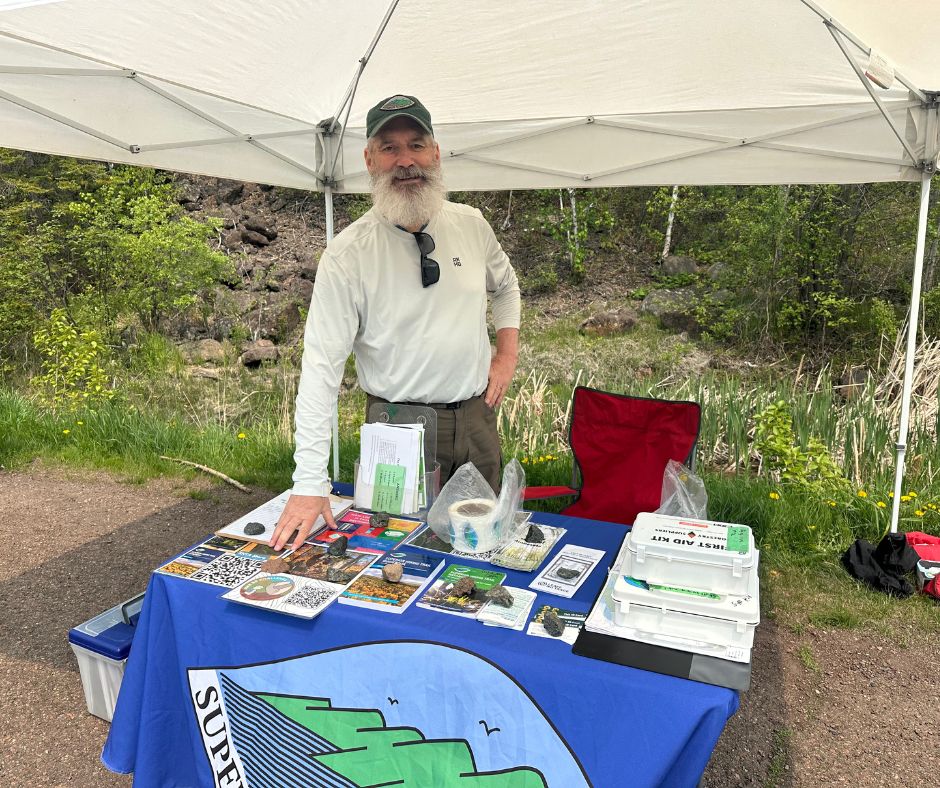
At the same time, Luokkala points out, there was no sense of ownership over the trail. “This was a big endeavor to take on. The idea was that we really needed an association of people to come together to take ownership outside of any one land manager. The Association filed as a 501(c)(3) nonprofit in the state of Minnesota in 1986.”
Over time, the SHT Association has grown to about 3,000 members a year on average. Starting at $45 annually, membership contributions fund, coordinate, and complete essential trail infrastructure improvement projects. Membership also helps educate and empower trail users to care for the SHT and the North Shore. All SHT Association members receive The Ridgeline newsletter several times a year, as well as Trail Mix e-newsletter updates each month.
Luokkala notes members’ deep commitment to volunteering: “Our members are often volunteers. When the trail idea was being floated, the original trail builders realized this idea really needed ownership from communities along the North Shore. Volunteers were from all facets of the community, and folks who saw the vision just wanted to be part of it.”
Volunteering has grown so much, in fact, that the SHT Association now has a volunteer manager position, staffed by Barbara Budd. “We recruit and retain over 600 volunteers annually,” explains Luokkala. “Barbara is at the center hub of all that. She coordinates the volunteers with the projects, doing sign-ups and trainings. This time of year, she goes to volunteer fairs and plans for the upcoming season.” Volunteers contribute over 10,000 hours a year keeping the trail in great shape.
Another focus area for the association is trail stewardship. Justin Otsea is the SHT’s trail stewardship director. Otsea works closely with over 200 land managers, securing permission to complete SHT’s trail projects.
The SHT maintains, replaces, and repairs 90 percent of its own trail, but there are some sections, like within state parks, where the Minnesota DNR does infrastructure repairs. Take the new High Bridge over the Baptism River in Tettegouche State Park, for example. This durable, flood-resistant fiberglass polymer bridge is elevated 5 feet higher than the original High Bridge, which was destroyed by flooding in 2022 and 2024. The new bridge, which is part of the SHT alignment, opened on Nov. 24, 2025.
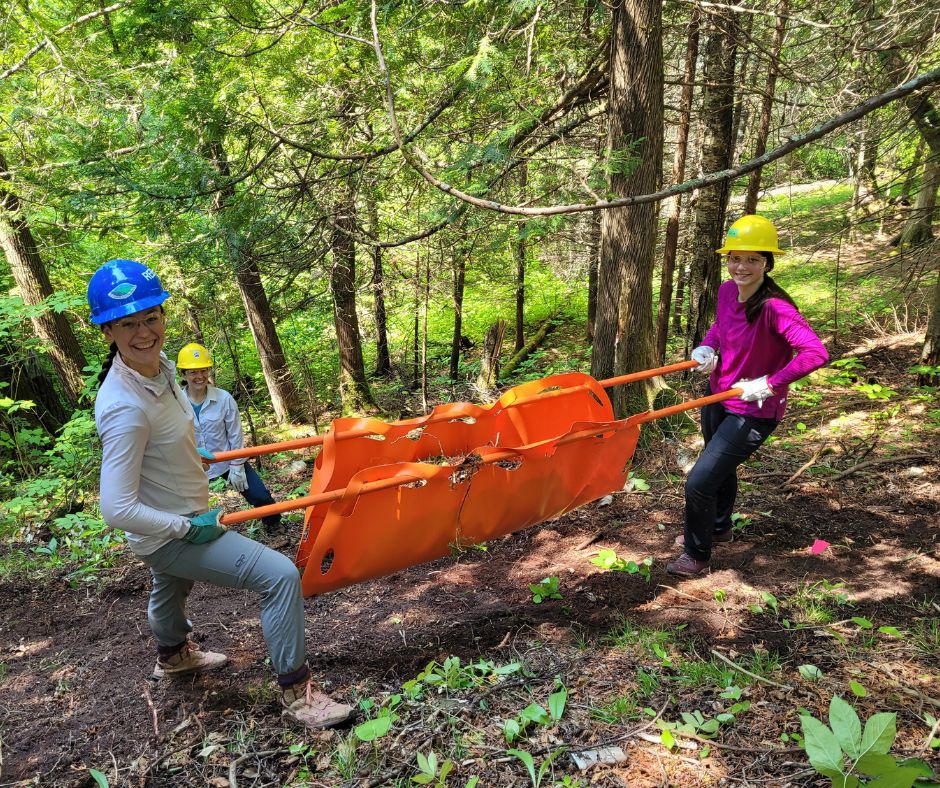
Tamer Ibrahim is the association’s trail operations director. With more than 300 miles of trail to maintain, Ibrahim has a big job. In order to get the work done each year, Ibrahim needs to intimately know trail construction maintenance and management. Ibrahim also defines which projects can only be done by paid professionals, and which ones can be done by volunteers.
Another focus area is communications, which includes the association’s newsletters, website, and trail conditions page, all managed by Mackenzie Foley and Megan Wylder. Then there’s fundraising—the association writes both state and federal grants. Finally, the SHT has both an online store and a physical storefront in Two Harbors.
For Luokkala, “We are a team of doers. We don’t often stop and celebrate what we’ve done. Part of our story is that we are still very much member-supported and volunteer-powered. That has been a focus of our organization from day one.”
To recognize volunteer contributions and share the trail’s history and purpose, Luokkala’s team has planned a series of anniversary events.
To begin with, the association is using new media such as podcasts for outreach. “We’re partnering with WTIP radio out of Grand Marais on an eight-part podcast series called Blazing Trail,” says Luokkala, “where we’re connecting with longtime volunteers and early advocates of the trail, and sharing unique aspects of how people use the trail.” Several episodes are already available on the WTIP website, with more to come.
“We’re also doing our chronological storytelling,” says Luokkala. “Once a month in our e-newsletter we’re providing historical, archival storytelling. Since were starting from the founding of our association, we have 12 issues to talk about 40 years. We had our first edition in January.” The association is shining the spotlight on all the people who have made the trail a success over the years.
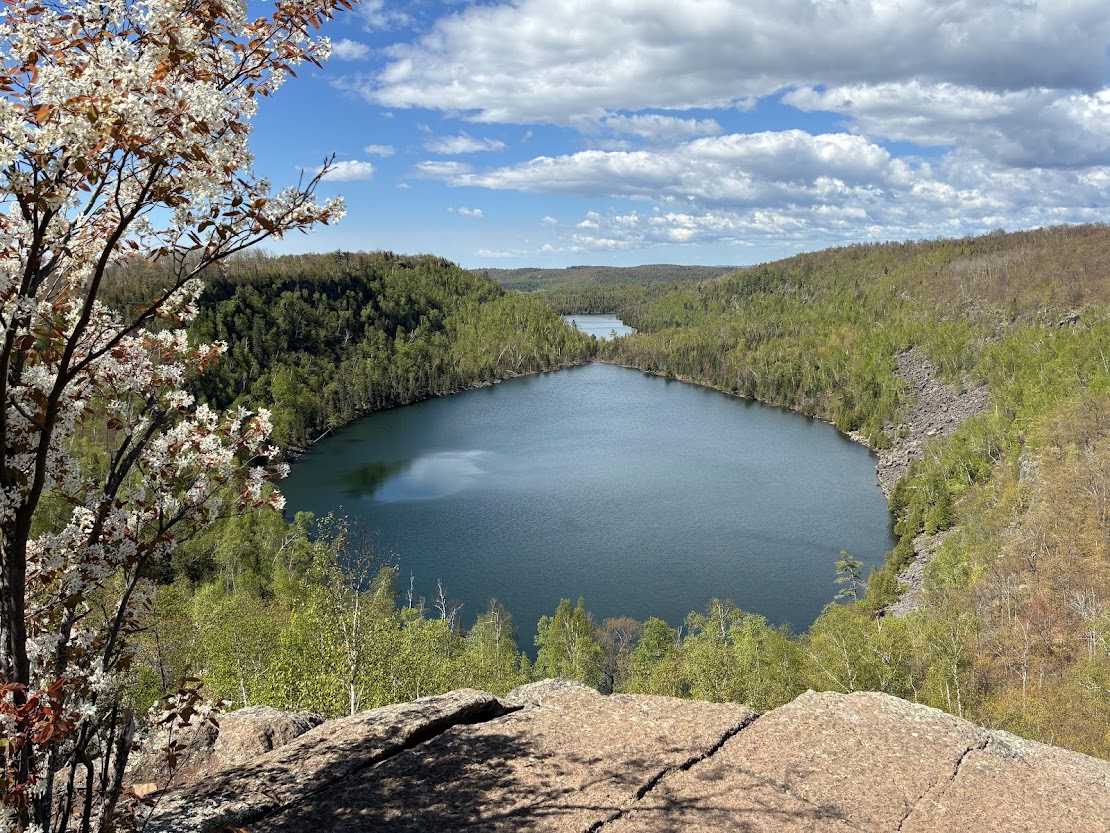
The SHT Association’s “birthday” party will take place on June 6, which is National Trails Day. “Our big event is that we’re going to be hosting the ultimate birthday celebration called ‘One Trail, One Day, One Community,’” says Luokkala. “We’re asking folks to join us on the trail to celebrate our 40th anniversary on June 6. We’ll be filling the trail with joy and celebration from end to end.”
“We’re inviting folks to hit the trail in any way they so choose,” continued Luokkala. “We’re going to have a registration, and our hope is that people will choose a section to run, walk, or saunter, and we’ll flood the trail for the day. We’ll have a sign-up, so we can distribute people to different segments, since we have limited parking at each trailhead. We’ll be partnering with some local businesses for people to stop in at after their hikes, and continue with their merriment, and meet other trail users as well.”
For Luokkala, the association’s milestone represents maturity: “The SHT Association is hitting 40. We’re growing older. We’re kind of like a 40-year-old person. We’re more stable, we’re mid-career, if you will.”
This maturity is grounded in the association’s practices as an organization. “We started as a small grassroots nonprofit,” says Luokkala, “and we retain a lot of that spirit and energy. But we have guiding documents like bylaws, a strategic plan, and a master plan that direct what projects get prioritized. Folks on our board take it really seriously.”
In a world that runs on fees or hidden costs, the SHT remains free to all users. It continues to be an untethered place where people can connect to land and water, and simply slow down. Luokkala echoes this sentiment: “We truly believe the trail is for everyone. We’re committed to keeping it barrier-free.”
Thanks to its many members and their volunteer ethic, the SHT Association serves as a testament to the proverb: Many hands make light work.