


Did you know that a city in Minnesota and an Ontario city on northeast Lake Superior both hold world titles in the history of Halloween?
Back in 1920, the city of Anoka, Minn., (located about 21 miles northwest of downtown Minneapolis) is believed to be the first in the USA to establish formal Halloween festivities to help dissuade its youngsters from carrying out destructive Halloween pranks like window soaping or egging, vandalism, opening cattle gates to let them roam loose, and tipping over outhouses. In 1937, Anoka was officially declared “World Capital of Halloween” by an act of U.S. Congress.
Celebrating its 105th year in 2025, the month-long Halloween festivities are organized by the volunteer-run nonprofit Anoka Halloween, Inc. Tens of thousands of visitors come to Anoka (U.S. Census population 17,068) to see and participate in these special events, which include the Annual Anoka Gray Ghost 5K Run and 1-Mile Walk, historical ghost tours, costume contests, gift shops, a Giant Pumpkin Expo, Light Up the Night Parade, Paint Night, Big Parade for Little Folks, the Grande Parade, and more (check out their website for details: anokahalloween.com). As the World Capital of Halloween, the month-long festivities are the oldest continuing Halloween celebrations in the U.S. (missing only the war years of 1943-44).
Who hasn’t heard the loud chanting of Halloween’s most famous “trick or treat please” by children dressed up in costumes and going door-to-door on Oct. 31? While the concept of modern costumed trick-or-treating goes back to the old Scottish custom of ‘guising’ in the 16th century, the world’s oldest known printed reference for the phrase “trick or treat” was in an article published in The Sault Daily Star newspaper on Nov. 1, 1917, in Sault Ste. Marie (aka “Soo”), Ontario. The reference was found by U.S. etymologist Barry Popik (a person who studies the origin and history of words) while searching through an online database of newspapers. The short article was about youngsters in the Soo celebrating Halloween and included: “’Trick or treats’ you could hear the gangs call out, and if the householder passed out the ‘coin’ for the ‘treats’ his establishment would be immune from attack…”
In the Sootoday article, “Origin of Phrase Trick or Treat in Print Traced to the Sault” (Nov. 1, 2022), journalist Alex Flood quotes Popik, who tried to get media attention for the find. “It’s never been told in Canada or the United States, it’s really bizarre. I didn’t even get a response from the Ontario Historical Society. It should be a story and it should be in newspapers. People need to know about this.” The first print appearance in the U.S. was in 1932, and not until 1939 in U.S. national publications.
According to folklorists and historians, Halloween is one of the world’s oldest celebrations, having evolved from the ancient Celtic harvest festival Samhain (Sow-in meaning “summer’s end”), which was held thousands of years ago from sunset on Oct. 31 (the end of the Celtic year) to sunset on Nov. 1 (the start of a new Celtic year) on lands we now call Ireland, Scotland, Wales, northern France, and Brittany. The old Samhain customs included masquerades with masks and costumes (so that unfriendly spirits could not identify them), parades, huge bonfires, dancing by the fire, and respect for the dead.
Over thousands of years, rather than obliterate ancient customs, other festivals and feasts merged and adapted them into their own remembrances. For example, Nov. 1 became All Saints Day honoring all saints—later renamed All Hallows—and Nov. 2 was All Souls’ Day, a day of prayer to honour the dead. Interestingly, the evening of Oct. 31—which had been the start of the ancient Samhain—became All Hallows Eve (E’en), which sometime in the 18th century morphed into the name Hallowe’en and then finally, by 18th century, became Halloween.
In the 2001 lecture, “Halloween Customs in the Celtic World,” Bettina Arnold, professor of anthropology at the University of Wisconsin-Milwaukee, wrote: “The association between Halloween and ghosts and spirits today comes from the Celtic belief that it was at this time of transition between the old year and the new that the barrier between this world and the Otherworld, where the dead and supernatural beings lived, became permeable.”
By the early 1900s, Halloween and “guising” had come to North America with the arrival of large numbers of Irish, Scottish, and English immigrants and was celebrated across Canada and the U.S. The earliest reference to “guising” was in 1911, when a Canadian newspaper reported small children “guising” on Halloween, which six years later was replaced by the phrase “trick or treat.”
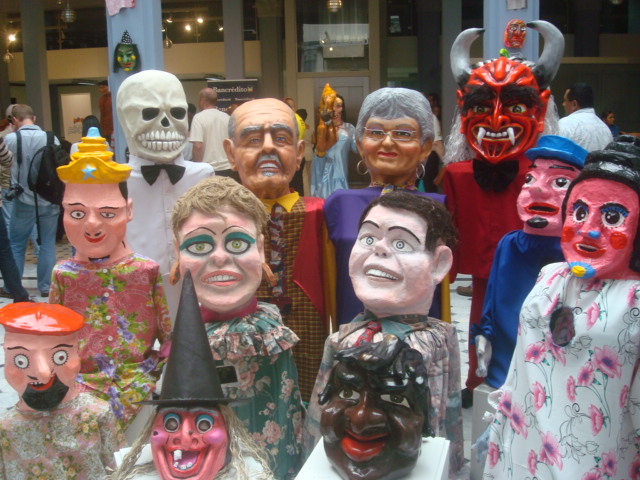
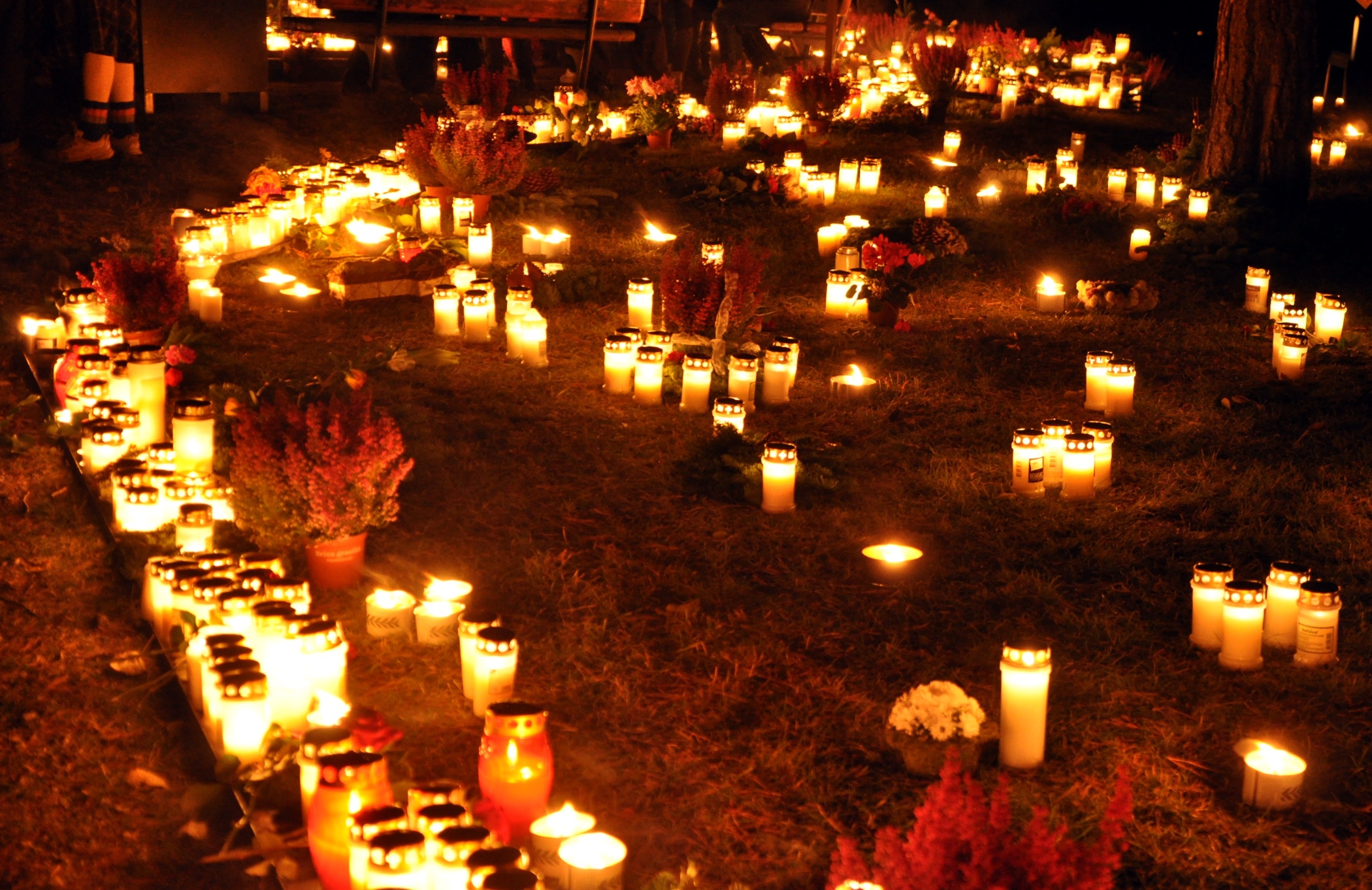
Although Halloween celebrations have now spread globally, there are countries that have other commemorations instead of Halloween. For example, in Costa Rica, Oct. 31 is the National Day of the Masquerades, a national cultural holiday where people recreate paper-mache masks painted with bright colours. In Finland and Sweden, the first Saturday after Oct. 30 is celebrated as All Saints Day, when families go to cemeteries to light candles and honor their relatives. Similarly, in nearby Estonia, All Souls’ Day is on Nov. 2—candles are lit at night on graves in memory of loved ones.
It’s pretty cool knowing that when we hand out goodies to costumed children at our door on Oct. 31, we are carrying on a historic celebration that has evolved over thousands of years.