


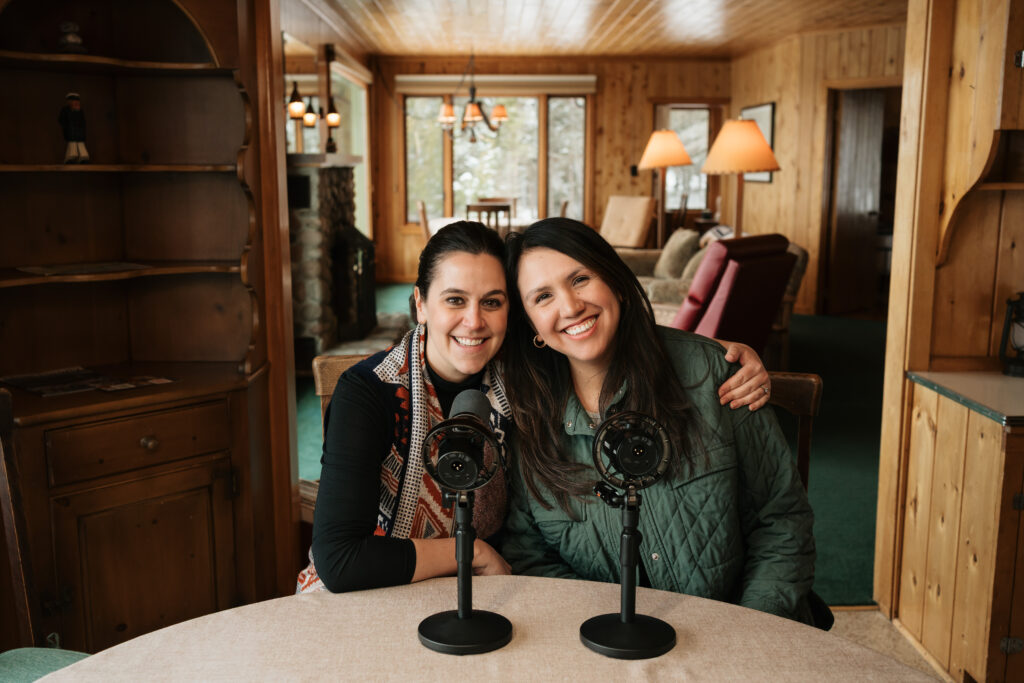
As mothers and entrepreneurs in Grand Marais, Laura Muus and Gina Joyce have found themselves facing a familiar tension: how do you build a life that makes room for both work and family—and does justice to both?
Their answer became She Does, a forthcoming book celebrating “mompreneurs” across Cook County. It is, on its surface, a collection of lush photo portraits and personal stories. But at its heart, it is something more intimate: a record of women choosing to create, persist, and belong.
“We wanted to show that you don’t have to choose,” Joyce said. “Motherhood and entrepreneurship can coexist. It looks different for everyone, but it’s possible.”
Born in Lima, Peru, Muus first visited Lutsen as an international student. She met her husband and eventually made a home in Grand Marais. After the birth of her first child, she started her photography business, motivated by a desire to be present for her family while pursuing a career she loved.
Joyce first visited Grand Marais in 2020 while firmly ensconced in her career in corporate marketing and project management at Cargill. After the birth of their daughter, Joyce and her husband relocated to Grand Marais, and she began a new chapter hosting vacation rentals and starting Roam and Whimsy, a mobile craft shop.
“I came from a very male-dominated industry,” she said. “And then I got here, and saw all these women building things. It made me feel like I could do that too.”
The two met first in passing, then more intentionally through a local creative retreat. But it was a walk in March 2025 that set everything in motion. Muus recalled speaking candidly about the challenges of sustaining a business in a seasonal economy.
“You go, go, go from May through October,” she said. “And then winter comes. It’s beautiful, but it can also be hard. You start wondering what else you can do.” By the end of the walk, Joyce had an answer.
“How about we write a book?”
“I went home feeling anxious,” Muus said. “I didn’t think I could do something like that. Books felt like something other people did.”
But the idea lingered. A few days later, over coffee, she gave her answer.
“Okay,” she said. “We’re doing this.”
Leveraging Joyce’s background in project management, they began by compiling a list of women-owned businesses through local networks, then expanded it through word of mouth.
In total, they reached out to 80 women. Thirty-eight said yes.
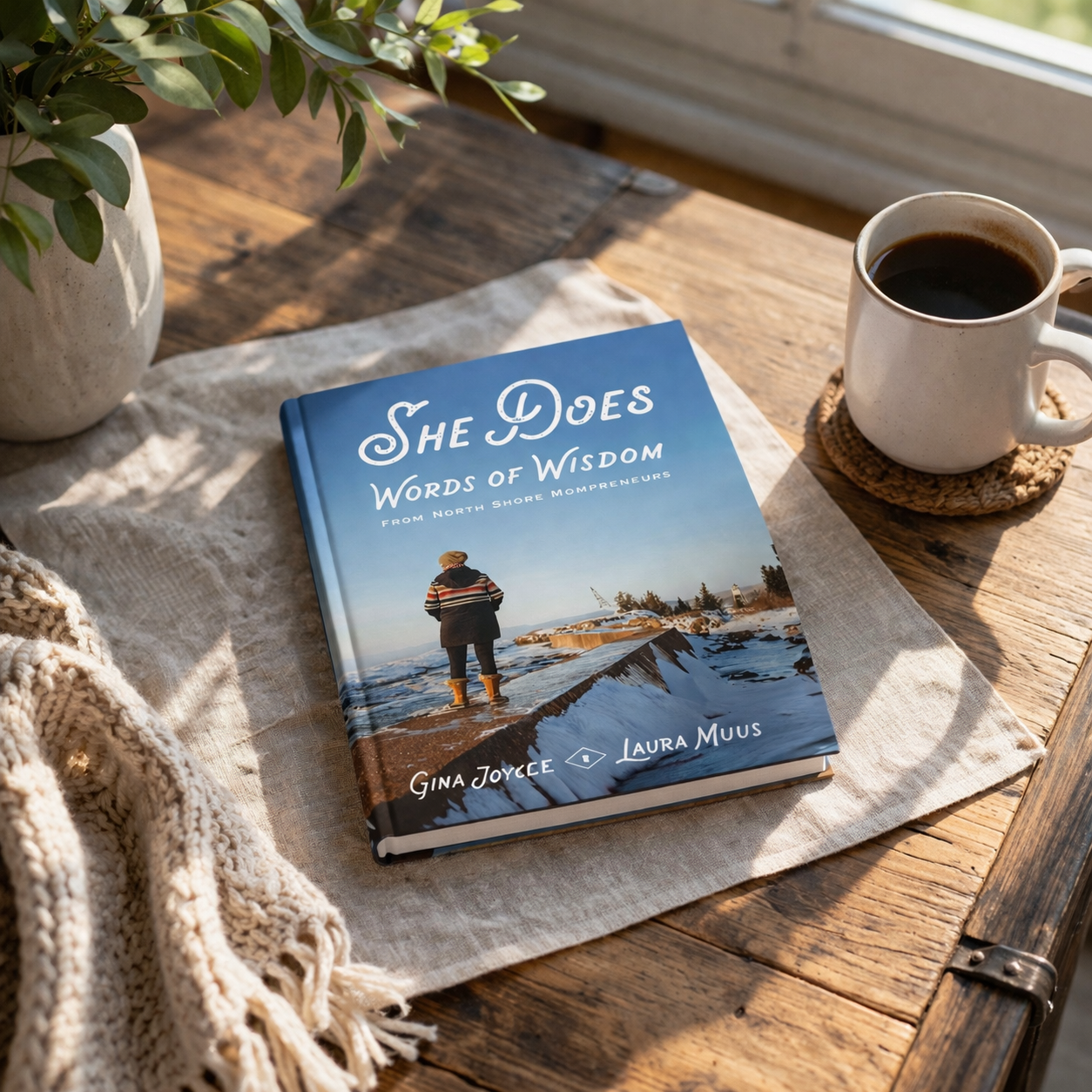
From May through November, they traveled across Cook County, visiting each participant in her own space—shops, studios, kitchens, and remote outposts on the Gunflint Trail. They conducted interviews, photographed families, and recorded video conversations, often spending long hours together on the road.
“There were so many moments where we’d get back in the car and just cry,” Muus said. “It was so powerful. You could feel that we were capturing something important.”
Certain themes emerged again and again: the centrality of community, the reality of imbalance rather than balance, and the persistence required to build something from the ground up.
“Every single woman talked about community,” Joyce said. “And how much we rely on each other here.”
Just as important were the decisions made behind the scenes. From the beginning, Muus and Joyce were clear: The book itself should reflect the same values as the stories inside it—intentionality, locality, and care.
They chose to self-publish, a decision that allowed them to maintain creative control. “We didn’t want to give up any part of it,” Joyce said. “We wanted it to look and feel exactly right.”
They worked with a local designer, collaborating closely on the layout and visual identity of the book. Muus edited the photographs, while Joyce handled the writing and editing. During the winter, they met weekly for “She Does days,” sitting side by side and assembling the book piece by piece.
Rather than outsourcing production overseas, they sought out a Minnesota-based, woman-owned printer.
“It mattered to us,” Joyce said. “We didn’t want to just send it off somewhere. We wanted to keep it local, to support another entrepreneur, and to make sure the process aligned with what the book stands for.”
She Does will launch on May 20 at the Johnson Heritage Post Art Gallery, with an initial event dedicated to the women featured in its pages.
“They’ll be the first to see it,” Joyce said. “That felt really important.”
A second, public-facing event will follow, along with additional gatherings throughout the season. Already, interest is building—not only in the book itself, but in what might come next. A podcast drawn from the recorded interviews will expand on the stories. Future projects, including retreats, and a second volume, are already taking shape.
“Think about the impact,” said Muus. “Think about the women in our community. The women who live far from us. The little girls who will grow up seeing this.”
Joyce recalls her young daughter looking at the book layout on her computer screen.
“She said, ‘Mommy, those are our friends. They’re so beautiful,’” Joyce said.
For Muus, the project is a reminder of what becomes possible when women believe in themselves.
“My daughter will see that I did something I didn’t think I could do,” she said. “And maybe she’ll think she can do anything too.”