


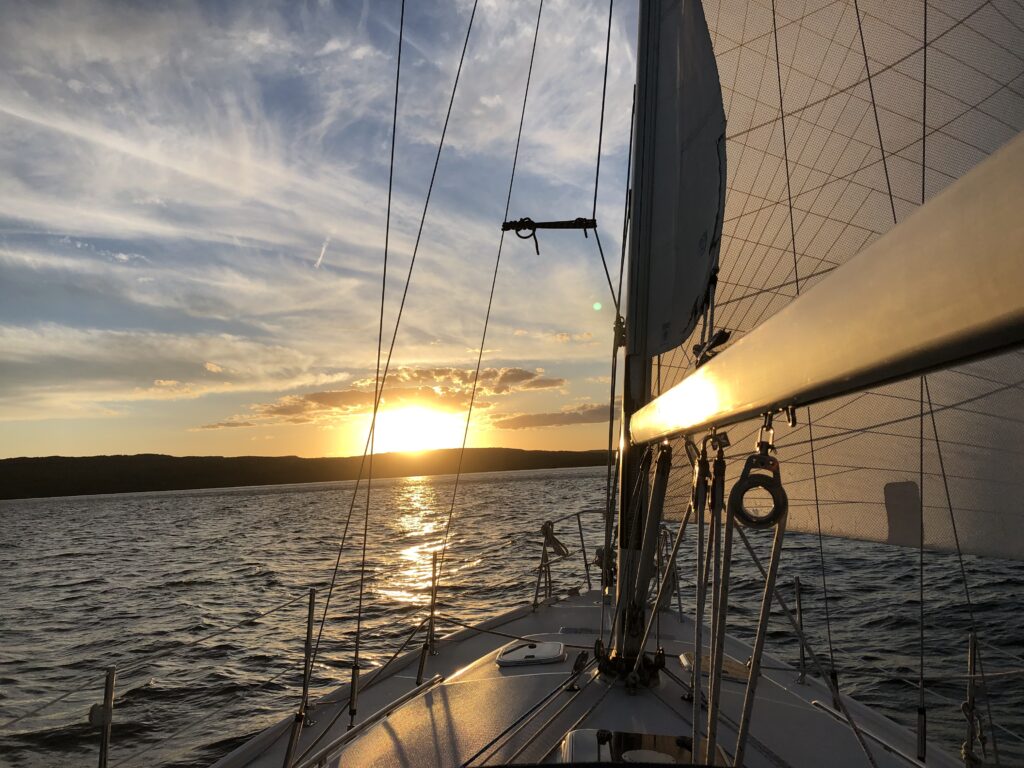
“Sailing for me is very much about people,” said Siri Anderson. “I love those people.”
For Anderson, the founder and captain behind the Grand Marais excursion business Sail the North Shore (sailthenorthshore.com), sailing has never been only about the water.
Across decades of teaching, traveling, and exploring some of the world’s most remarkable coastlines, Anderson has found herself returning to the same conclusion: The most meaningful part of sailing is not the destination or even the vessel itself, but the human, personal connections that form along the way.
That perspective shapes every excursion she offers from Grand Marais. While visitors come seeking adventure, relaxation, or a new way to experience Lake Superior, Anderson hopes they leave with something more lasting.
“In the immediate sense, I love it because it requires presence,” she said. “You have to be there attending and just focused in the moment on what’s happening. You can’t be worrying. You can’t be thinking about the future or the past. You’re just in the moment.”
For Anderson, that sense of presence is increasingly rare. It is also one of the reasons she believes sailing continues to resonate with people.
“You can’t diddle your device while you’re sailing,” she said with a laugh.
The comment reflects both her sense of humor and the perspective of someone who has spent much of her career thinking deeply about how people learn, connect, and engage with the world around them.
Before launching Sail the North Shore, Anderson spent more than 30 years in education. She taught teachers at Bemidji State University and led graduate programs at St. Catherine University, developing innovative programs and recruitment strategies for graduate students learning how to teach computer science.
That passion also appears in the way she approaches sailing.
Rather than presenting herself as an expert dispensing knowledge from the front of the boat, Anderson sees herself as a guide helping people discover what they are capable of doing.
“I don’t use any fancy language around anything on the boat,” she said. “I use words that people understand.”
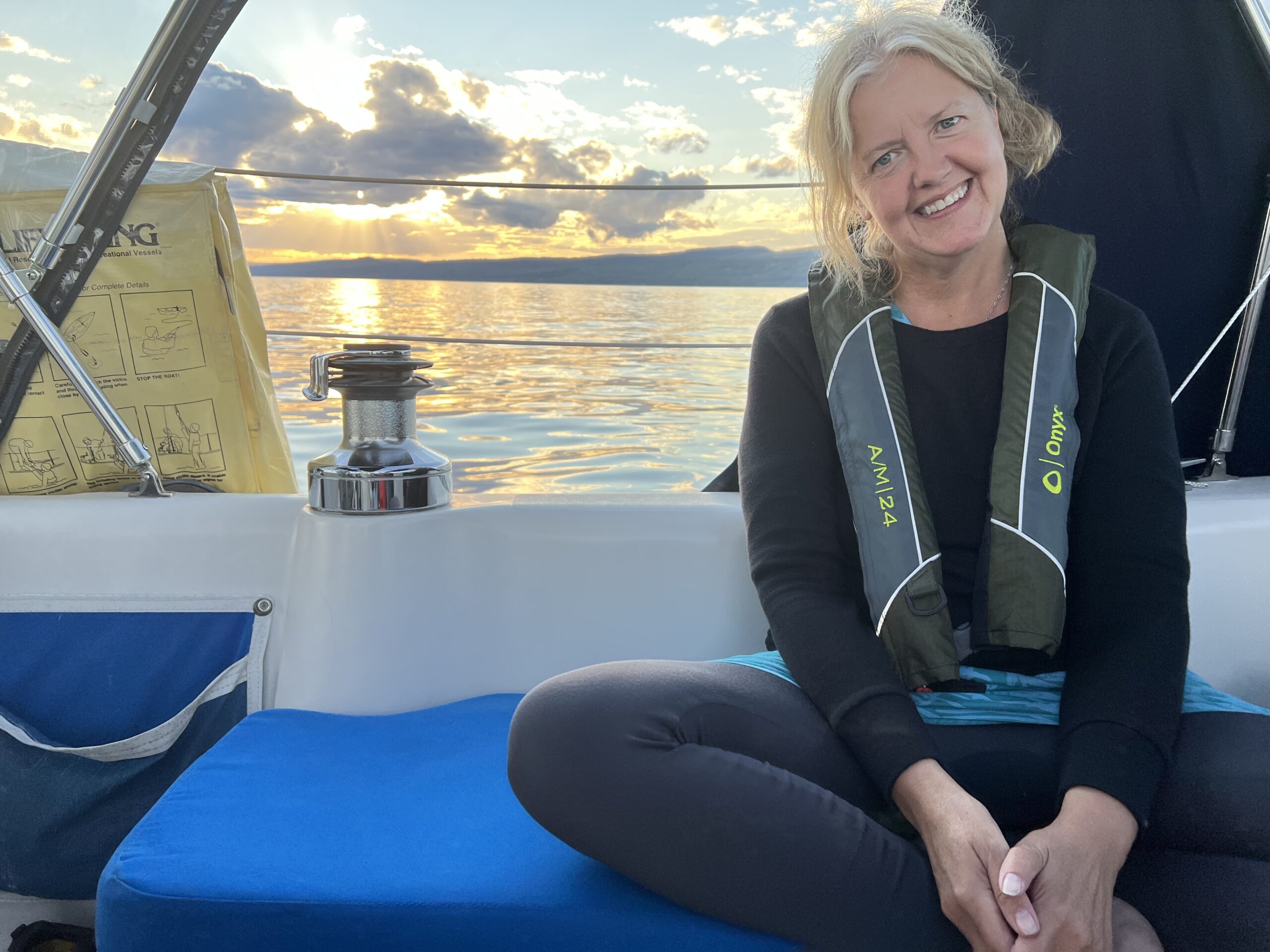
The approach is intentional. Much of Anderson’s academic work focused on accessibility and helping people overcome assumptions about their own abilities. She saw firsthand how often people—particularly women—were told that technical skills and knowledge belonged only to a select few.
Now she applies many of those same lessons on the water.
Unlike many sailors, Anderson did not grow up in yacht clubs or racing programs. Her introduction was far more informal, a fact she believes shaped her lasting relationship with the sport.
Her own sailing journey began in fourth grade, when a friend occasionally invited her to spend weekends aboard her family’s sailboat in Bayfield, Wisc.
“We would sleep on the boat, and her parents would sleep in a motel,” Anderson recalled.
Those weekends left a lasting impression, and she “fell in love with sailing on the big lake.”
Years later, her father called with an unusual opportunity: a sailboat and trailer were up for sale at the Lutheran Church auction in Lutsen. The boat turned out to be missing a tiller, so Anderson used a broomstick.
The story captures something fundamental about Anderson. She approaches challenges with curiosity, creativity, and a growth mindset.
Over the years, Anderson has sailed off the coast of Tanzania, Zanzibar, and along the Great Barrier Reef. She spent two years living in Japan, traveled extensively, and taught world geography for a decade, often using those experiences to enrich her teaching.
Among her most memorable adventures was an Atlantic crossing from Bermuda to Portugal during a hurricane.
“There were 70-knot winds for three days with two-story waves,” she said.
At times, the experience tested both her confidence and endurance. Yet even after facing some of the most challenging conditions of her life, Anderson never considered walking away from sailing.
“I’ve had a lot of experiences that made me say, ‘I’ll never do that again,’” she said. “But never, ‘I won’t sail again.’”
Indeed, she went on to spend three years as a sailboat captain in Bayfield and the Apostle Islands.
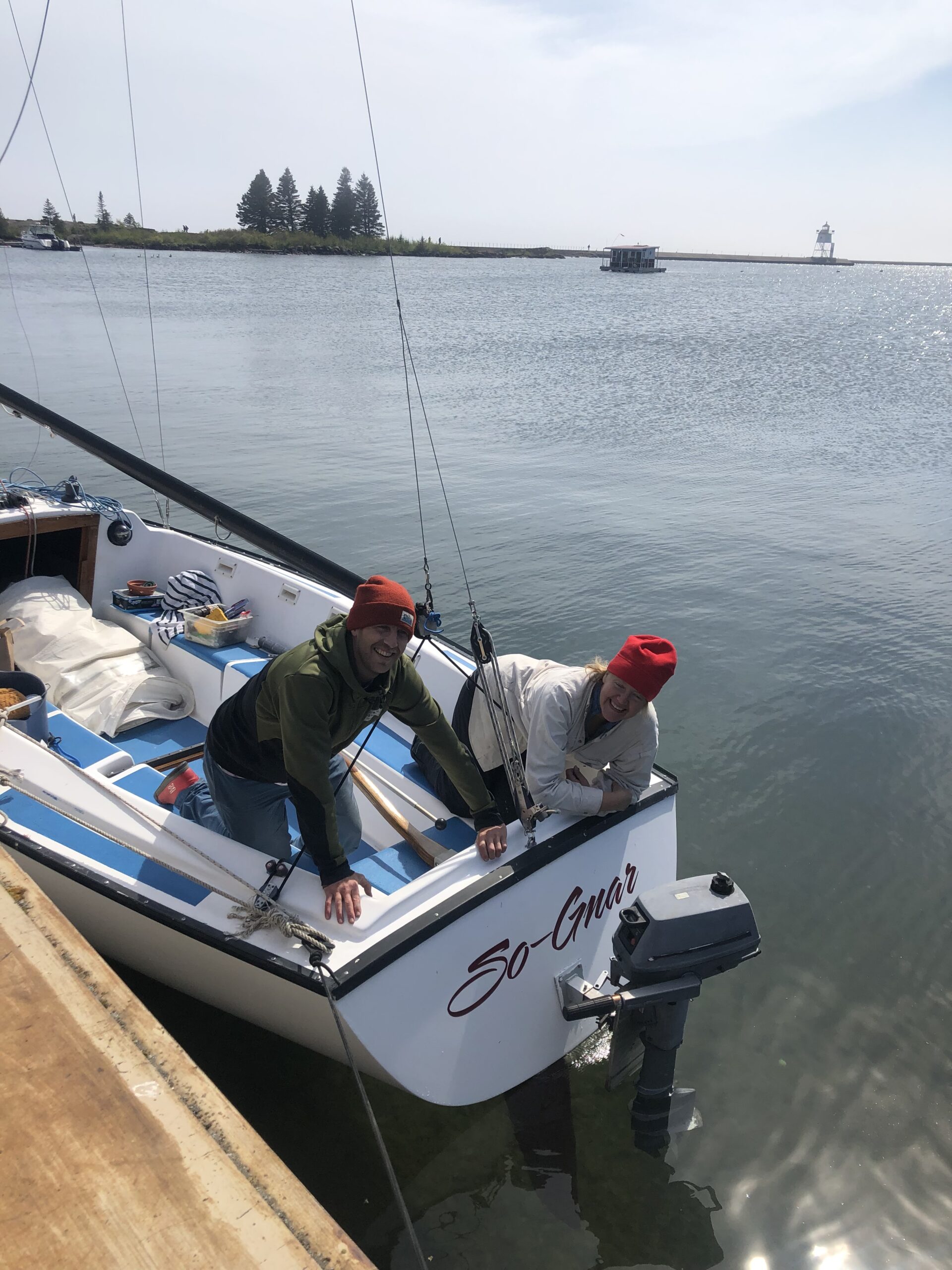
Sail the North Shore emerged from what Anderson describes as an attempt to build deeper connections to the North Shore community. Her family had long owned property in the region, but she wanted something more than occasional visits.
“I bought a sailboat up here on a whim, and a wing, and a prayer,” she said. “I had no idea it would change my life this kind of way.”
The boat introduced her to friendships, relationships, and an entirely new community.
Sail the North Shore offers private sailing excursions on Lake Superior and is expanding this season with additional opportunities on inland lakes using a deckboat that accommodates guests for whom a sailboat may not be comfortable or physically accessible.
Much like her educational work, Anderson’s goal is to make the experience approachable.
“The first thing you do, leaving the dock, is you put the least experienced person at the helm,” she said.
The results can be transformative.
“Now anyone can do anything, because you’ve got the 7-year-old backing you out of the slip.”
That focus on confidence-building is especially important to Anderson when it comes to women in sailing.
A licensed U.S. Coast Guard captain, she notes that women remain dramatically underrepresented in the field, representing only 7% of captains licensed at that level.
To help address that imbalance, Anderson is launching women’s sailing nights this summer. The goal is simple: create a welcoming environment where women can gain experience, ask questions, and discover that sailing is far more accessible than many people assume.
“Sailing is not like other physical endeavors in that strength matters because we have physics,” she said. “Anything you can’t lift, you can winch.”
The educator in Anderson remains impossible to miss.
Whether she is helping teachers develop new skills or introducing someone to sailing for the first time, the underlying philosophy is remarkably consistent. People are often capable of far more than they believe.