


While I write about food here at Northern Wilds, I’m a literary nerd at heart and I love learning about people’s stories. This is the People issue, so as I began to research people from our area who were influential in terms of culinary inventions, I discovered that there are a whole lot of famous people who come from the Northland. Folk singer Bob Dylan is famously from Duluth and graduated from high school in Hibbing. Actor Jessica Biel was born in Ely. Musician and Letterman sidekick Paul Shaffer was born and raised in Fort William. But what really sent me down the rabbit hole is learning that 1930 Nobel Prize winner Sinclair Lewis was born in Sauk Centre, Minn., and lived in Duluth for several years in the early 1940s, during which time he wrote his controversial novel Kingsblood Royal.
Everyone has an origin story, and of course every person was born and raised and graduated and lived somewhere. It just never ceases to fascinate me when my very ordinary world collides with people who have lived bigger and flashier lives. In a few weeks I will sit myself in the same stands that C.J. Ham’s parents sat in, watching my senior’s track meets, the same as they did. Most of us start out ordinary.
In this research for influential and extraordinary people, I discovered that more than a few mainstream culinary inventions owe their roots to my home state of Minnesota. The Milky Way candy bar was invented in 1923 in Minneapolis by Frank C. Mars, who named it after a popular malted milkshake (not the celestial body). In the early 1970s, a man named Ed Anderson developed the machinery necessary to make mini donuts, which were named Lil’ Orbits. To take his invention further, Ed purchased a retired mail van and turned it into a mobile concession stand—perhaps the first donut truck. And let’s be clear… I’m not even going to enter the debate of the true origins of the Juicy Lucy. I’ll leave that to Minneapolis to decide.
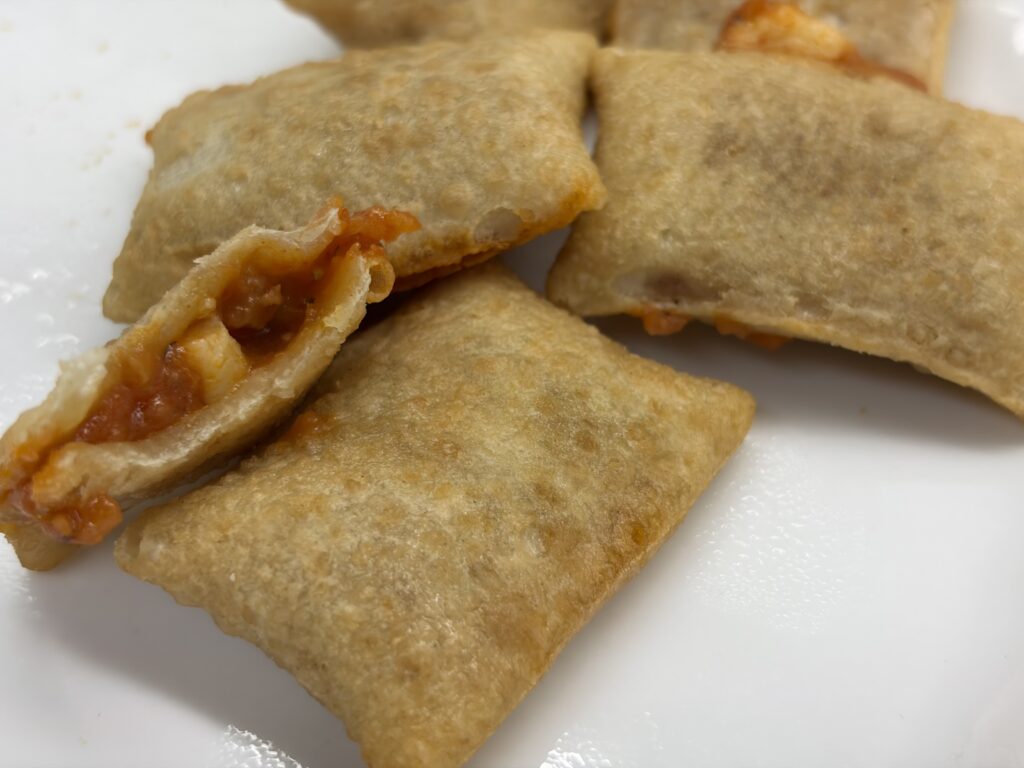
But the real star of the show, the iconic frozen snack that can be found in freezers across the country, and probably the world, owes its development to Minnesota ingenuity: the pizza roll. And for that, we have to thank Beatrice Ojakangas.
Beatrice Ojakangas, Pizza Roll Inventor
Beatrice Ojakangas is a Minnesota native who grew up with a love of cooking. That passion has brought Beatrice around the world, and eventually back to Duluth where she was essential in the development of the modern pizza roll.
Beatrice’s foray into recipe development began as early as 5 years old, when she winged a recipe and mistook the salt for sugar, and continued through her college years where she studied home economics at the University of Minnesota Duluth and met her husband, Richard. Beatrice and Dick soon married and set off for England with the U.S. Air Force. While they were there, Beatrice heard about the Pillsbury Bakeoff Contest. She decided to modify a bread recipe she had been making for a delicious cheese loaf. When Beatrice baked it at home, the cheese went everywhere, creating a mess in her oven, but the deadline was looming so she rewrote the recipe and sent it in to Pillsbury without a test of the final recipe. Months went by, Dick got out of the Air Force, and he and Beatrice moved home to Minnesota where she got an unexpected phone call. She had made it to the finals. There is much more to her story, which you’ll have to read about in her memoir, Homemade: Finnish Rye, Feed Sack Fashion, and Other Simple Ingredients From My Life in Food. This was in 1957, and Beatrice was only 23 years old, but this was only the beginning of her legacy in food and product development.
In the 1960s, the Ojakangases moved to Duluth where Beatrice took a job with Jeno Paulucci’s Chun King, a brand that specialized in canned and frozen Chinese food. Ojakangas was tasked with developing a snack-like product that would use the same machinery they used for making egg rolls. She created dozens of prototypes with various fillings, but the pizza toppings were the clear winner, and thus the pizza roll was born. Originally they were Jeno’s Pizza Rolls, the predecessor for what we now know as Totino’s Pizza Rolls. Recognizing the indispensability of the microwave, Paulucci ultimately founded microwaveable meal brand Michelina’s, which was named after his mother.
Beatrice later opened a restaurant named Somebody’s House, which my dad’s early 1970s UMD football team enjoyed dining at. She appeared on both Julia Child’s and Martha Stewart’s television baking shows, and has written more than two dozen books, mostly recipe books ranging from Scandinavian dishes to wild rice recipes and casseroles. Beatrice continues to share her love for food and specifically for Scandinavian cuisine. As recently as December 2025, she appeared in a panel discussion with the Minnesota Historical Society in partnership with their “Julia Child: A Recipe for Life” exhibit (which is available for viewing at the Minnesota History Center in St. Paul until May 31).
Beatrice has a fascinating story, and her influence on snacks as we know it is indisputable. The pizza roll is ubiquitous and versatile. They make for a quick lunch, a midnight snack, and a halftime snack for a Super Bowl party. They are portable, poppable, and pretty darn good. In the end, we have Beatrice to thank for her innovation as a product developer, and isn’t it interesting that her extraordinary innovation was so thoroughly embraced and relevant that it kind of became… ordinary? Thank you, Beatrice Ojakangas, for sharing your stories, and for giving the world the almighty pizza roll.