


In Two Harbors, nestled among a grove of cedar trees a little past Super One, a combination bike shop and coffeehouse is built around a single idea: community. But long before there was coffee or custom bike packs, there were canoe trips.
“We were going up to the Boundary Waters every year,” owner Dan Cruikshank said about his early 20s. “That’s how I got passionate about it.”
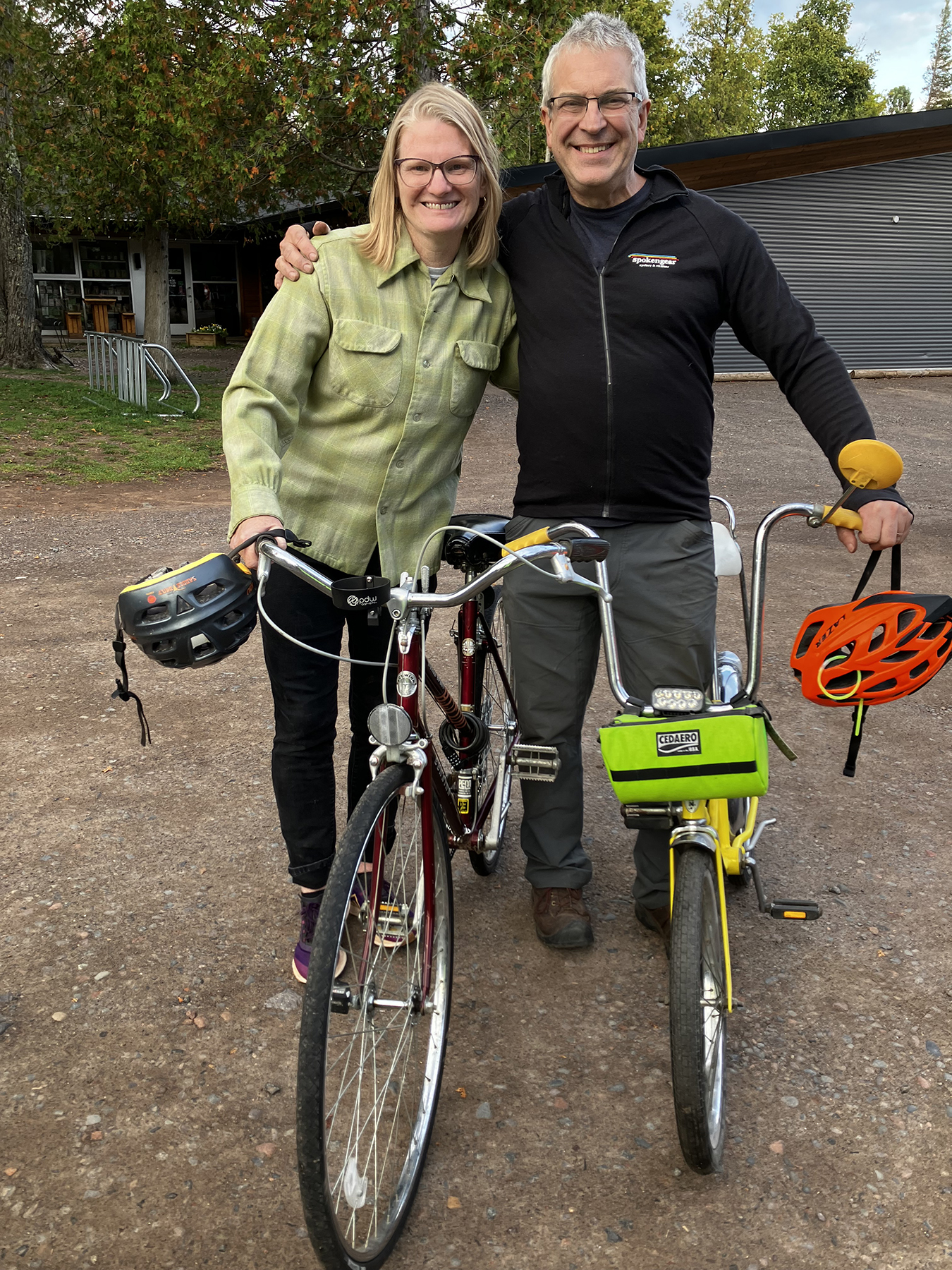
In 1986, he decided he wanted to start a backpack business more than he wanted to finish college. He and his canoeing companion, Jeff Knight, founded Granite Gear, launching it from a Twin Cities warehouse before relocating to Two Harbors. Around the same time, he had recently met Kirsten, his soon-to-be wife. They married by Lake Superior.
Over the next 27 years, Granite Gear grew from a scrappy startup into a nationally respected outdoor brand known for innovation and durability. In 2013, the founders sold the company, agreeing to a noncompete clause that covered most product lines—with one notable exception: bike packs.
“Bicycling has always been a passion of mine,” Dan said.
Bike packs had never been Granite Gear’s biggest sellers. “There’s a small crossover, but not a huge crossover in the markets,” he said.
Soon after the sale, the couple began planning their next venture. “Most of it started around the dining room table,” Kirsten said.
“We kept coming back to the idea that Two Harbors needed a place where people could gather,” Dan said.
The result was three businesses under one roof—a coffee shop, Cedar Coffee Company; a bike shop, Spokengear Cyclery and Outdoor; and a bike-pack sewing operation called Cedaero, a name combining the words cedar and aerodynamic.
“They’re not all doing great at the same time,” Kirsten said. “But over 10 years now, there have been different times where they kind of help hold each other.” She calls the synergy of the three businesses “magic.”
On a recent morning, that interlocking model was easy to see.
The coffee grinder hummed as floor-to-ceiling windows framed northern white cedar outside. Some of those trees from the same grove, cleared to make way for the building, were milled into boards that now line the ceiling.
Customers of all ages filled the café. A father read a board book to his 10-month-old son while, near the entrance, an elderly man eased through the door with a walker.
Megan and Eric Long have made Cedar Coffee Company a weekly coffee and brunch stop. “This has the vibe,” Eric said. “It’s not a chain.”
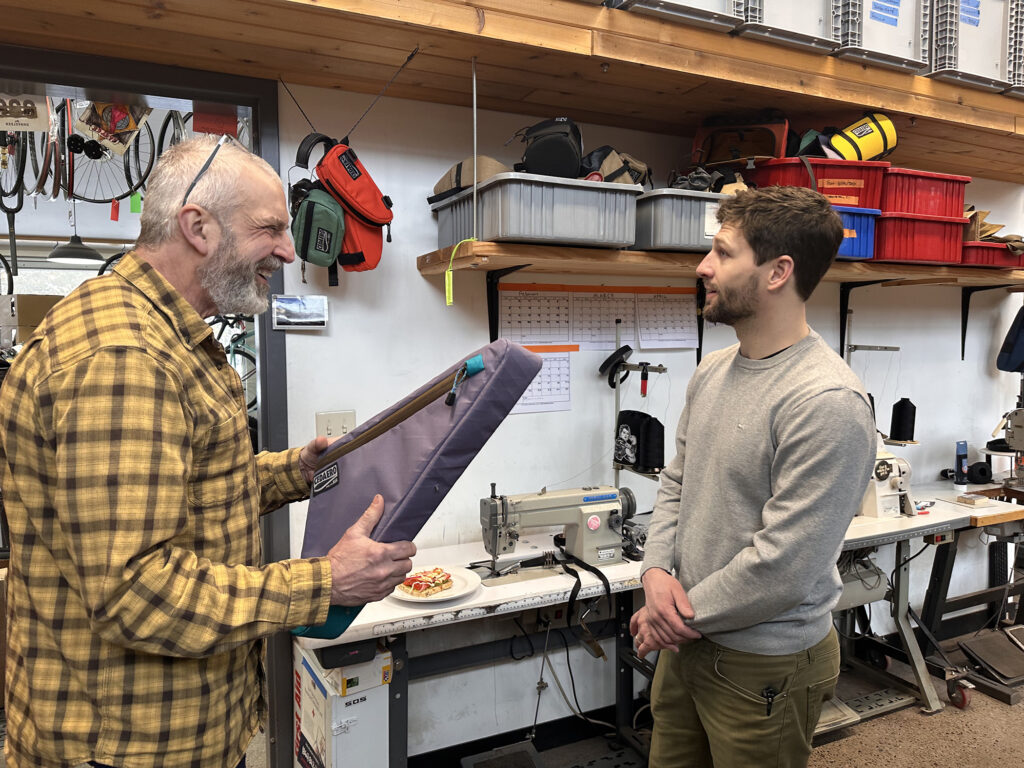
In the bike shop, a married couple wandered the displays with their two dogs in tow. In the back, the sewing shop waited for the day’s work. Bolts of bikepacking fabric lined the walls, and sewing machines stood ready at long tables. A barista set down two plates of avocado toast topped with egg and aioli in front of Dan as he talked in the sewing room with a visiting bike sales representative from the Twin Cities.
Building here required persistence. Early work involved wetland delineation—mapping what could be disturbed and what needed to be protected. There was a time, Kirsten said, when there “wasn’t even a culvert.” Extending utilities required coordination with the city and outside support through a grant from the IRRRB. A cycling friend, Cheryl Fosdick of CF Design, planned the building.
The Cruikshanks closed on the property in 2014 and began clearing and preparing the site in 2015. They hoped to open by Memorial Day 2016—and somehow did—building out the kitchen, espresso area, and retail spaces in only a few months. The sewing shop, Cedaero, followed in 2017.
Cedar Coffee serves fresh food; staff make syrups and sauces in-house, pairing thoughtfully prepared food with carefully brewed drinks. Last year, the Cruikshanks added a Bellwether roaster and began roasting beans on site, giving them greater control over quality and consistency.
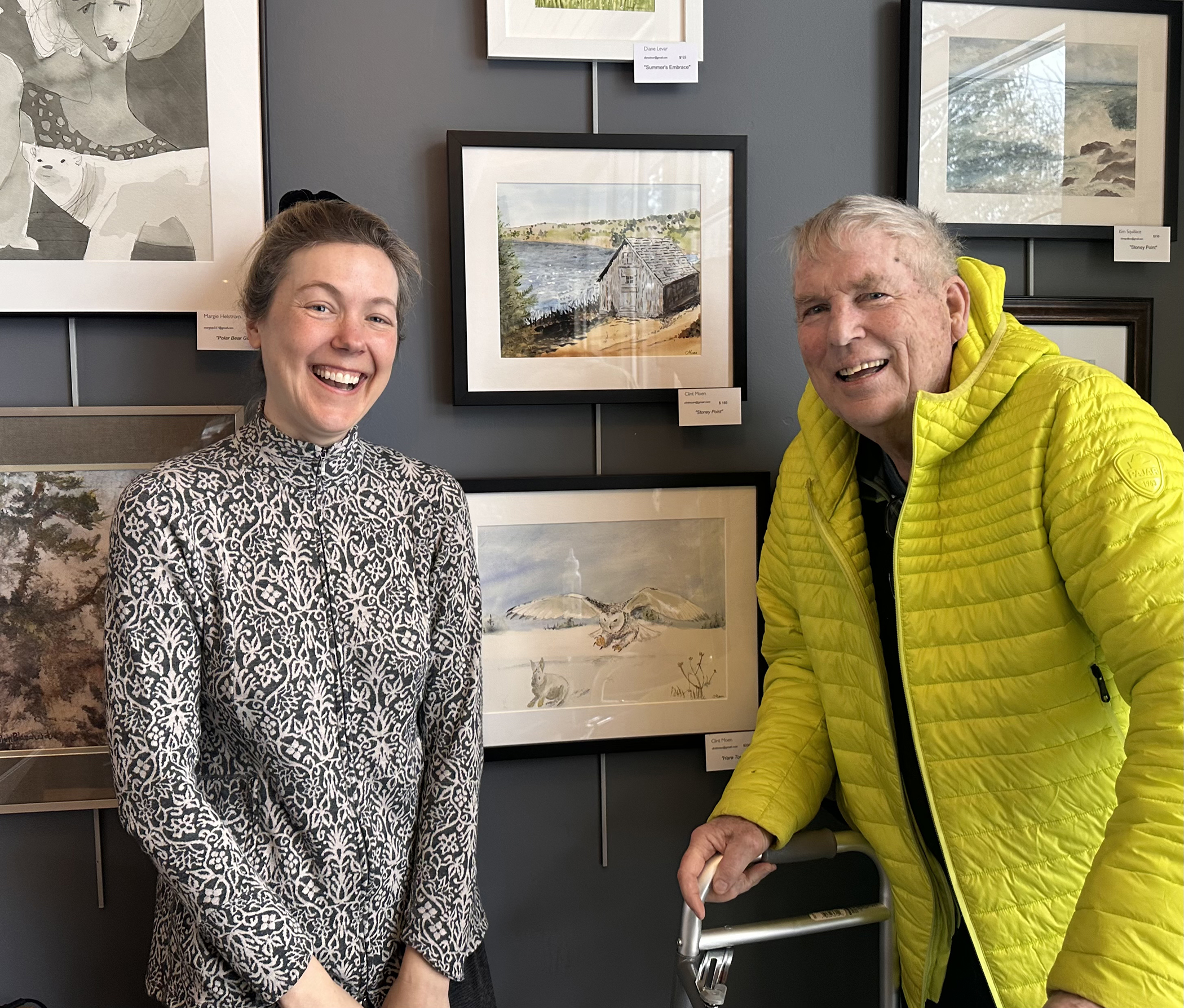
Community also hangs on the walls, where rotating exhibits showcase regional artists.
Flexibility proved essential during COVID. The café had been built as a gathering place—“never like a drive-through kind of thing,” Kirsten said. Without an immediate takeout system, the coffee shop closed for three months. Sewing machines moved into the café space, spread several feet apart.
“Socially distanced sewing machines,” she joked.
Employees shifted to sewing and packaging face masks, allowing the business to keep staff working during the shutdown.
Reinvention, for the Cruikshanks, hasn’t been a single bold leap. It has been steady and deliberate—much like a paddle stroke or a long ride—always circling back to community.
The Cruikshanks will celebrate 10 years in business May 28-30. They are asking artists to submit designs for a commemorative coffee bag and they will plan bike rides, family activities, and a vendor fair.