


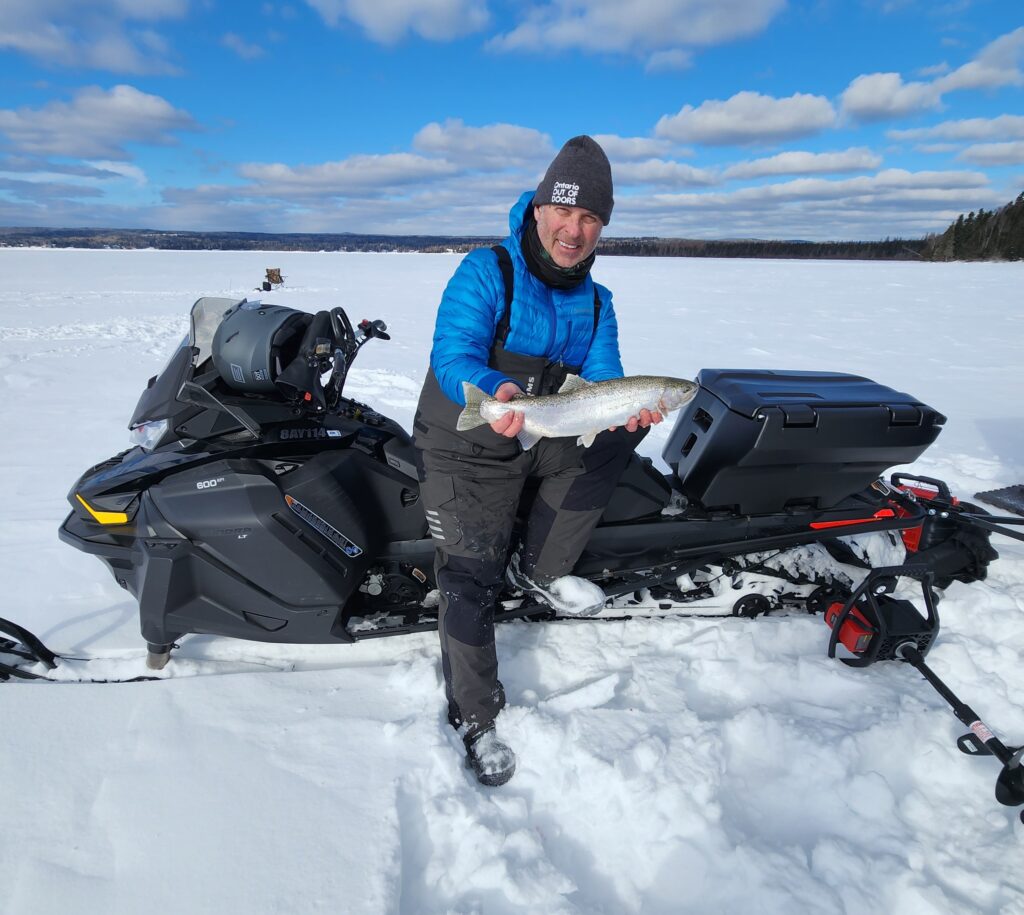
There are few winter situations potentially colder than being out on the ice while fishing. The wind can blow down the lake, and -10 C (14 F) rapidly turns into a -30 C (-22 F) wind chill. Being improperly dressed for those conditions is both uncomfortable and potentially dangerous. However, there is a lot of clothing and technology available now that can really keep you dry and toasty on the ice. Here are some of the products and tricks that will keep the chill off you this winter.
Boots
What you have on your feet will have a direct impact on how the rest of your body feels on the ice. Boots for ice fishing should be insulated, top off just below the knee, and be waterproof. Truly waterproof normally means an insulated rubber boot. Most boots made for snowmobiling and other winter activities have a rubber lower but leather or fabrics on top. These boots may be water resistant but often are not fully waterproof. If you get into slush on the ice, cold water can get into a boot that is not watertight.
I have experienced the feeling of having ice water run into boots on ice, and it is not good. I once had to nearly cut a friend out of his winter “moon boots” when he got into the slush and they froze up on his feet. It could have been dangerous if we weren’t close to a cabin. Ice fishing boots should also be good to -40 C (-40 F) or lower. I like a decent amount of tread and at least one extra insole in the boot. Battery-operated heated insoles can be a real godsend in boots. The insoles apply just enough heat to evaporate perspiration. This little adjustment is a game changer, as frozen sweat is like packing your feet in ice. Good ice fishing boots are not cheap, but they are critical to your comfort.
Base Layers
The clothing you have against your skin is another critical element to keeping yourself warm in cold weather and on ice. Over the years, I’ve used a wide variety of base layer and underwear garments with wide-ranging results. I think merino wool base layers are the warmest for situations like ice fishing, where you may not be moving a lot. Wool provides great warmth and retains heat even when you are sweating. Merino wool products tend to be quite expensive, however.

Many athletic-wear-style base layers are primarily polyester blends with elastin for stretch. Polyester base layers are especially good if you are active, such as when walking or snowshoeing into a lake. They also tend to be a little less bulky than wool and wick moisture well. There are wool-synthetic blends as well, which can provide the best of both. But if you are worried about getting cold on the ice, good old-fashioned merino is the choice.
Snow/Ice Suits
There was a time, not terribly long ago, when the only ice or winter suits you could get were made for skiing or snowmobiling. However, in 2026, there are a world of suits specifically made for ice fishing. A staggering number of companies, including Simms, Striker, FXR, and Clam, have clothing that is warm, water resistant, and features things ice anglers appreciate. These items include deep, zippered pockets; reinforced knees and seats; heavy-duty zippers that can be used with gloves; and an overall roomy fit for when you need to layer. A large hood that cuts the wind is also a valuable addition.
Some ice suits have reflective tape for on-ice safety. And speaking of safety, several companies, including Mustang, have been making ice suits that will float you if the ice ever gives way—a good idea, especially if you ice fish early and late season. This may sound like an unlikely situation, but you’d only have to go through the ice once to appreciate being buoyant on the water. There are ice suits that are heavily insulated for very cold weather and being outdoors all day, and others meant for anglers who are in and out of a shelter and a little more active.
Toques, Gloves, and Socks
Although gloves, toques, and socks are smaller-ticket items, very few of us would last long without any of them. Toques—or wool caps—are required in all but the mildest situations. Some have more insulation than others, and a wool cap that does well in ultra-cold weather may be a bit too much inside a shelter. Get yourself a nice selection. A balaclava or “face coat” is very useful in cold winds and when you are snowmobiling or driving an ATV to a fishing spot and wearing a helmet.

Gloves are also a key part of the ice anger’s repertoire. I like insulated, fingered gloves for the actual ice fishing and for digging holes, setting tents up, etc. However, for sheer warmth, you will want a good set of mitts. If you are driving a snowmobile, you’ll need insulated, windproof mitts that go well up your arm. A long mitten keeps the wind and snow off your hands.
There are some very good battery-powered heated gloves that can really improve hand warmth. Inserting hand warmers into gloves is another way to improve comfort. You can also get battery-powered socks, but that starts to be a lot of battery power. My preference is to have a thin sock close to my feet—organic cotton, polyester, or nylon—and then a warmer merino wool sock on top. In some situations, a fleece sock can replace the wool sock. A thin fleece sock can also be a layer between two socks if your feet are that extra susceptible to cold.
Heated Vest
In recent years, heated vests have become a favourite for outdoor-minded people. Many companies make these vests, which use a small, portable power source plugged into a USB port. The vests are adjustable with a built-in button to regulate heat. I have the Whitewater version of this vest, and it works extremely well. I highly recommend the heated vest to ice anglers as an additional way to fight off the cold.
That’s a look at dressing for the ice and staying warm. Follow these basic guidelines, and I guarantee you will have the most comfortable season on the ice ever.